-
Oak Brook
📍📞 630-705-99992625 Butterfield Rd. Suite 102E
Oak Brook, IL 60523📠 Fax: 630-705-1422✉️ inquiry@vervecollege.edu 🗺️ Open in Google Maps 🍎 Open in Apple Maps🕒Office HoursMon–Fri: 9:30 AM – 6:00 PM
Sat: 8:00 AM – 12:00 PM
Sun: Closed -
Chicago
📍📞 312-920-8822216 W. Jackson Blvd. Suite 900
Chicago, IL 60606📠 Fax: 630-705-1422✉️ inquiry@vervecollege.edu 🗺️ Open in Google Maps 🍎 Open in Apple Maps🕒Office HoursMon–Fri: 9:30 AM – 6:00 PM
Sat: 8:00 AM – 12:00 PM
Sun: Closed - Email:inquiry@vervecollege.edu
- Make a Payment
 Sign up
 Login
Login
- Home
- Programs
- Admission
- Resources
- ATI Entrance Exam Resources
- New E-Digital Library
- Refer a Friend
- School Newsletter
- Events
- Employers
- Job-Network
- Alpha Beta Kappa Candidates
- Verve College Library
- Graduation and Pinning Ceremony Photo Galleries
- Textbook Information
- Career Services
- Tutoring
- School Catalog
- FAQ
- Constitution Day Program
- Alumni
- Verve College Plans
- Financial Aid
- HEERF Reporting
- Satisfactory Academic Progress
- Apply For Financial Aid
- Net Price Calculator
- Return of Title IV Funds (R2T4)
- Financial Aid Office Code of Conduct
- Contact
- FAQs
- Verification Policy
- Vaccination Policy
- Student Right-to-Know Act
- Misrepresentation
- Information Security Program
- Academic Award Year
- Availability of Employee
- Cost of Attendance
- Health & Safety Exemption Requirement
- Students Rights and Responsibilities
- Leave of Absence
- Pell Formula
- Military Students
- Grants/ Scholarship Policy
- Contact Us
- Testimonials
- Blog
Is a Nursing Career Right For You?
Take The Free Quiz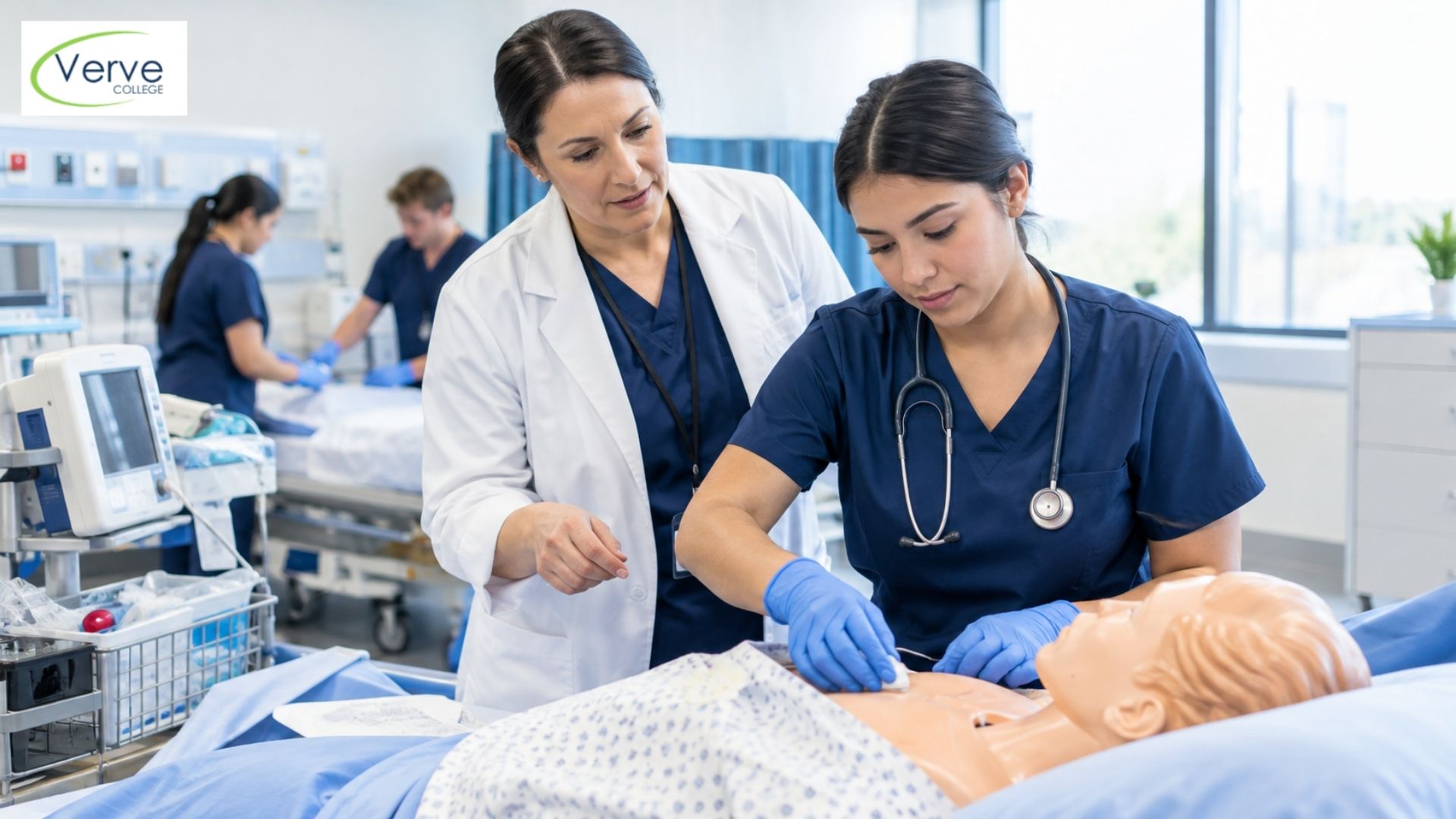
7 Benefits of Hands-On Nursing Education for Future LPNs
7 Benefits of Hands-On Nursing Education for Future LPNs
Hands-on nursing education gives future Licensed Practical Nurses (LPNs) the chance to practice patient-care skills before they are expected to use them in clinical settings.
If you are comparing LPN programs, understanding how practical learning works can help you ask better questions. This guide explains seven benefits of hands-on nursing education, how it differs from classroom instruction and clinical experience, and what to look for in a program.
Key Takeaways
- Hands-on nursing education lets students practice foundational skills with instructor supervision.
- Skills labs help connect classroom theory with realistic patient-care situations.
- Practice and feedback can support confidence, critical thinking, communication, and safe habits.
- Classroom instruction, skills-lab practice, and clinical experience each play a different role.
- The structure of hands-on LPN training varies by program, so ask schools specific questions.
What Is Hands-On Nursing Education?
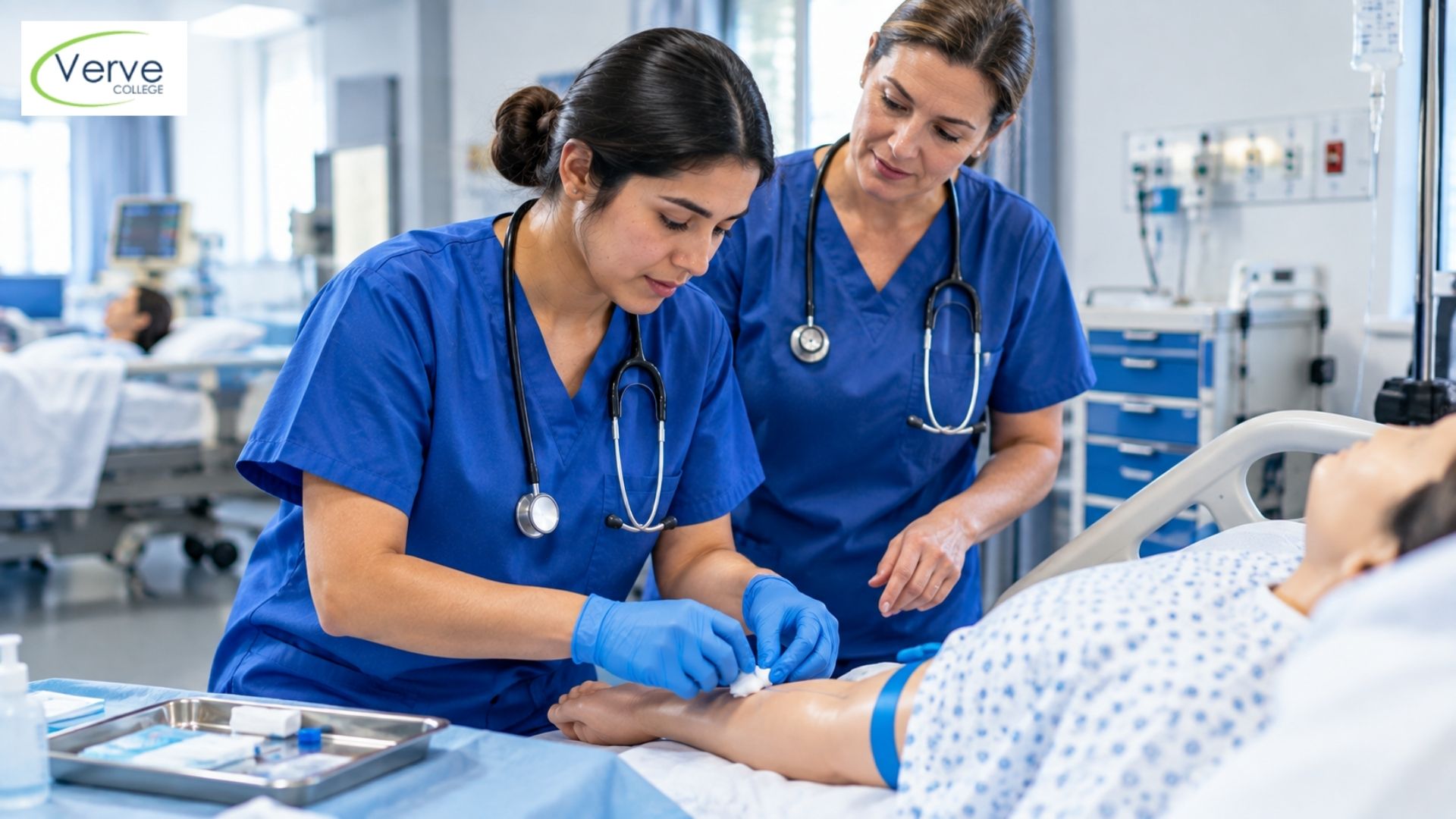
Hands-on nursing education is learning by doing. Instead of only reading about a procedure or watching a demonstration, students practice it themselves in a controlled setting with guidance from instructors.
In an LPN program, this often happens in a skills lab with training mannequins, hospital-style beds, and common medical equipment. Students may practice tasks such as taking vital signs, positioning patients, and documenting observations.
Hands-on nursing education does not replace classroom learning. It complements it. Lectures and readings build the knowledge base, and practical sessions give students a way to use that knowledge.
Many prospective students also search for practical nursing education when comparing schools. The term covers the full learning experience, including theory, lab practice, and supervised clinical learning.
7 Benefits of Hands-On Learning for Future LPNs
- Builds Practical Nursing Skills
Supervised practice helps students develop the foundational skills used in daily patient care. Repeating a task in a skills lab lets students learn the steps, correct mistakes, and build smoother technique over time.
Students may practice measuring blood pressure, assisting with mobility, performing hand hygiene, and documenting care. The exact skills vary by program, so review each school’s curriculum.
Strong hands-on LPN training gives students a safe place to learn before they work with patients.
- Connects Classroom Knowledge With Real Situations
Anatomy, physiology, and nursing fundamentals can feel abstract on paper. Practical sessions show why those concepts matter.
For example, a student who studies how the cardiovascular system works can then practice taking a pulse and noting changes. A student who learns about skin integrity can practice safe positioning and careful observation.
This connection helps knowledge stick. Hands-on nursing education turns lecture content into actions students can explain and repeat.
- Helps Students Develop Confidence
Confidence usually grows through preparation. Repeated practice helps students become familiar with equipment, steps, and expectations.
Constructive instructor feedback matters too. Hearing what went well and what to adjust helps students improve without the pressure of a live patient situation.
A supportive lab also encourages questions. Hands-on nursing education works best when students feel comfortable trying, making mistakes, and trying again. Confidence does not guarantee performance, but it can help students approach new tasks with a clearer plan.
- Strengthens Critical Thinking
Nursing involves more than completing tasks. Students learn to notice changes, ask what they mean, and decide what to do next.
Realistic lab scenarios may ask students to assess a simulated patient, prioritize tasks, and report concerns. These exercises encourage careful observation and sound decision-making.
Students also learn when to seek guidance. Recognizing the limits of your role and asking an instructor or team member for help is an important professional habit. Hands-on nursing education gives students a place to practice that judgment.
- Improves Communication and Teamwork
Clear communication is central to nursing. Practical sessions give students chances to explain procedures, listen carefully, and use professional language.
Students may role-play patient interactions, practice reporting observations to an instructor, and work with classmates on shared tasks. These activities build habits used across healthcare teams.
Teamwork matters as well. Programs with strong hands-on nursing education often build these communication moments into everyday lab work, so students see how respectful collaboration supports safe care.
- Reinforces Patient Safety
Patient safety is part of every nursing task. Skills practice helps students turn safe habits into routine.
Students may practice hand hygiene, using personal protective equipment, following procedures step by step, and confirming patient information. They also learn to record accurate observations and follow protocols.
Just as important, students learn to escalate concerns. If something looks wrong, reporting it promptly to the right person is part of safe practice. These habits are a core reason hands-on nursing education matters to prospective students.
- Prepares Students for Clinical Experiences
Clinical learning takes place in real healthcare settings under supervision. Arriving with practiced foundational skills can help students focus on learning from patients, instructors, and care teams.
Skills-lab practice can ease the learning curve for basic tasks. That leaves more attention for observation, communication, and teamwork. It also helps students understand what instructors expect.
Results vary by student and program, and practice does not guarantee a specific clinical outcome. Still, hands-on nursing education builds the foundation that supervised clinical learning depends on. To see how real-world placements fit in, read about LPN clinical training
Hands-On Nursing Education vs. Classroom Learning (H3)
Nursing education usually combines three learning settings. Each plays a different role.
Classroom instruction: Students learn the concepts behind care, including anatomy, physiology, and nursing fundamentals. This is where knowledge is built.
Skills-lab practice: Students practice procedures on mannequins or with classmates under instructor guidance. This is where hands-on nursing education is most visible.
Clinical experience: Students apply what they have learned in real healthcare settings under supervision. Clinical hours often follow skills-lab preparation.
Together, these settings support one another. Theory explains why, the lab teaches how, and clinical experience shows how care works in practice. The structure and timing vary by program, so ask each school how the three are balanced.
What to Look for in an LPN Program’s Practical Training
Use this checklist when comparing schools that offer practical nursing education in Illinois .
- Skills-lab facilities and equipment: Are labs equipped with mannequins, beds, and current supplies?
- Opportunities for supervised practice: How many lab hours are scheduled, and can students practice outside class?
- Instructor feedback: How do instructors guide students and correct technique?
- Skills assessments: How are skills evaluated, and can students retry?
- Clinical rotation requirements: How many clinical hours are required, and how are placements arranged?
- Patient safety education: How are infection control and safe practice taught?
- Support for students who need additional practice: Are there open lab times, tutoring, or extra coaching?
Is Hands-On LPN Training Important When Choosing a Program?
For most prospective students, it is a major factor. Hands-on LPN training is one of the main ways a program turns knowledge into skill. Still, the right fit depends on how you learn and what you need from a school.
If you learn best by doing, ask about lab time and instructor supervision. If your schedule requires flexibility, explore a flexible practical nursing education option such as an Online Hybrid Practical Nursing Program, and ask how the practical components are scheduled.
Questions to ask admissions staff:
- What does a typical skills-lab session look like?
- How much instructor supervision is available during practice?
- How are clinical placements arranged?
- What support is available if I need extra practice?
The answers will show how each program approaches hands-on nursing education. Remember that no learning format can guarantee employment or licensure, so also ask schools about licensure requirements and student outcomes.
Get Your Nursing Career Training Readiness Score Now!
Frequently Asked Questions
Why is hands-on learning important for LPN students?
It gives students a chance to practice skills, receive feedback, and apply classroom knowledge in a safe setting. Hands-on nursing education also supports communication, critical thinking, and patient safety habits.
What skills do students practice in an LPN program?
Skills vary by program, but students often practice vital signs, hand hygiene, patient positioning, mobility assistance, and documentation. Ask each school for its skills list.
Does hands-on nursing education include clinical rotations?
Often, yes, but they are different parts of a program. Skills labs prepare students on campus, while clinical rotations take place in healthcare settings under supervision. Requirements vary, so confirm the details with the school.
Most Popular Blogs Posts
7 Benefits of Hands-On Nursing Education…
October 12, 2026 Read More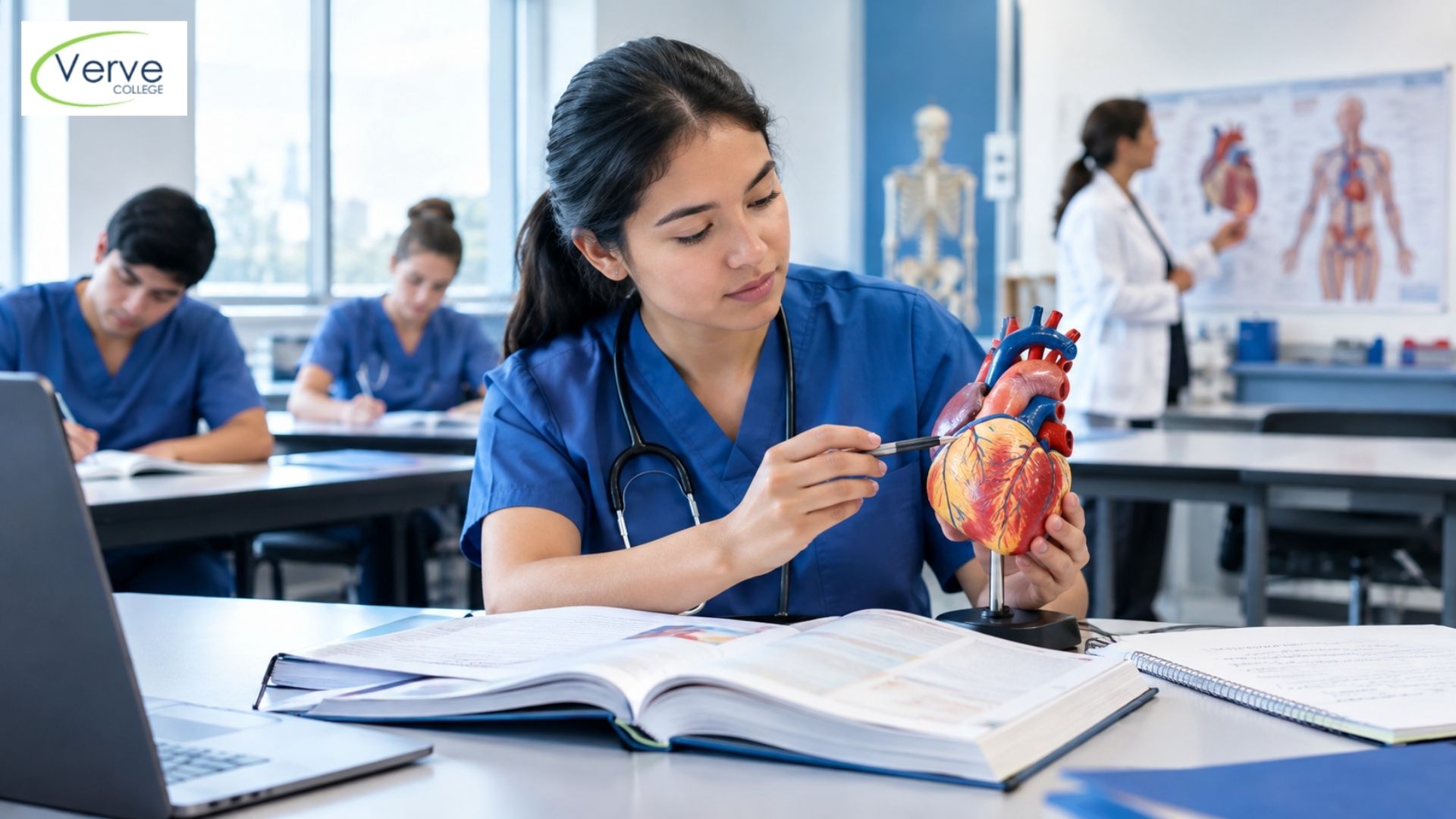
What Is Tissue Perfusion? A Simple…
October 12, 2026 Read More
Best Nursing Colleges Near Oak Brook:…
October 8, 2026 Read More
How to Compare LPN Program Schedules…
October 7, 2026 Read More