-
Oak Brook
📍📞 630-705-99992625 Butterfield Rd. Suite 102E
Oak Brook, IL 60523📠 Fax: 630-705-1422✉️ inquiry@vervecollege.edu 🗺️ Open in Google Maps 🍎 Open in Apple Maps🕒Office HoursMon–Fri: 9:30 AM – 6:00 PM
Sat: 8:00 AM – 12:00 PM
Sun: Closed -
Chicago
📍📞 312-920-8822216 W. Jackson Blvd. Suite 900
Chicago, IL 60606📠 Fax: 630-705-1422✉️ inquiry@vervecollege.edu 🗺️ Open in Google Maps 🍎 Open in Apple Maps🕒Office HoursMon–Fri: 9:30 AM – 6:00 PM
Sat: 8:00 AM – 12:00 PM
Sun: Closed - Email:inquiry@vervecollege.edu
- Make a Payment
 Sign up
 Login
Login
- Home
- Programs
- Admission
- Resources
- ATI Entrance Exam Resources
- New E-Digital Library
- Refer a Friend
- School Newsletter
- Events
- Employers
- Job-Network
- Alpha Beta Kappa Candidates
- Verve College Library
- Graduation and Pinning Ceremony Photo Galleries
- Textbook Information
- Career Services
- Tutoring
- School Catalog
- FAQ
- Constitution Day Program
- Alumni
- Verve College Plans
- Financial Aid
- HEERF Reporting
- Satisfactory Academic Progress
- Apply For Financial Aid
- Net Price Calculator
- Return of Title IV Funds (R2T4)
- Financial Aid Office Code of Conduct
- Contact
- FAQs
- Verification Policy
- Vaccination Policy
- Student Right-to-Know Act
- Misrepresentation
- Information Security Program
- Academic Award Year
- Availability of Employee
- Cost of Attendance
- Health & Safety Exemption Requirement
- Students Rights and Responsibilities
- Leave of Absence
- Pell Formula
- Military Students
- Grants/ Scholarship Policy
- Contact Us
- Testimonials
- Blog
Is a Nursing Career Right For You?
Take The Free Quiz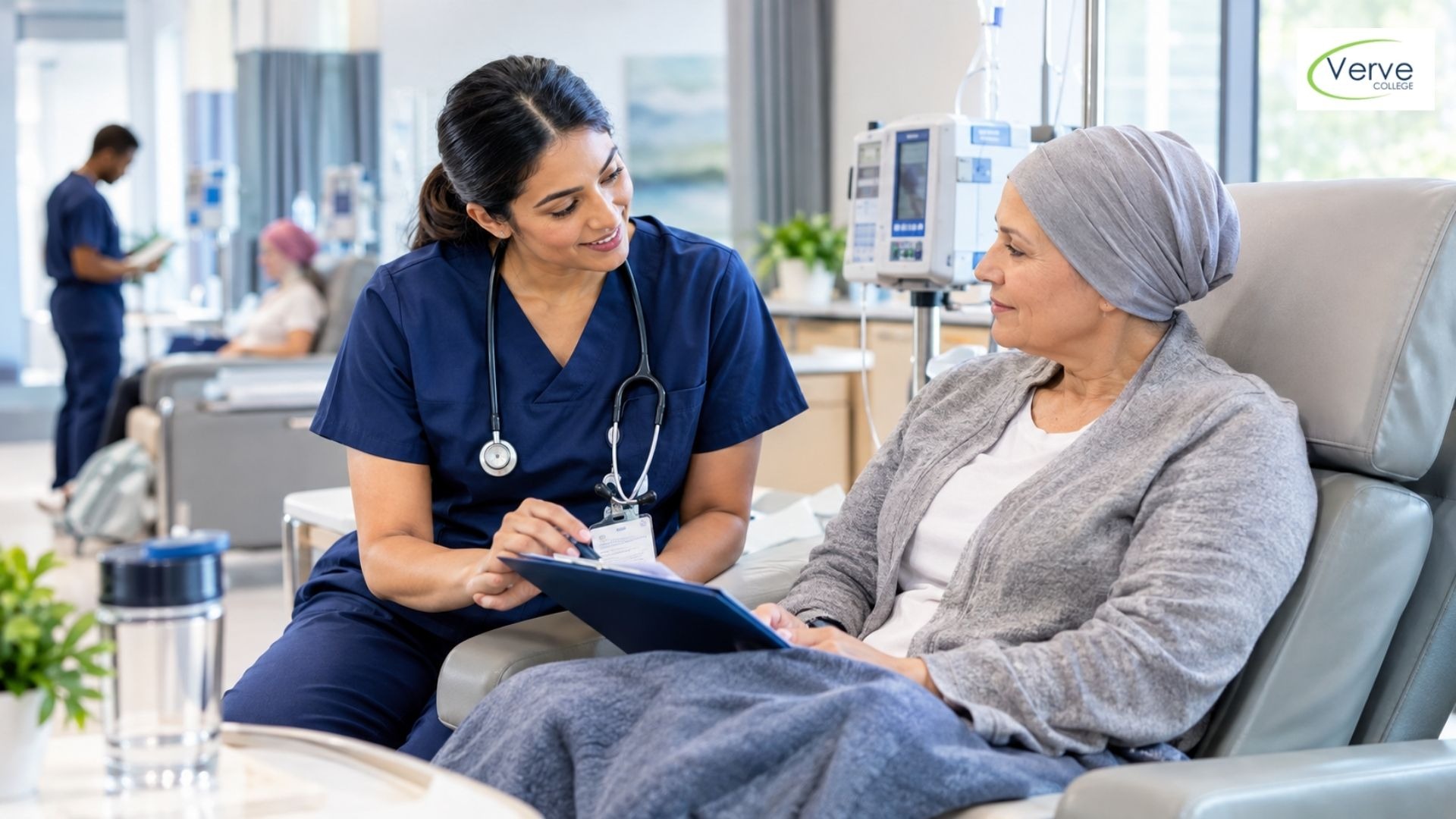
Oncology Nursing: What Nurses Do in Cancer Care
Oncology Nursing: What Nurses Do in Cancer Care
Caring for patients facing cancer is one of the most meaningful and challenging areas of nursing. Oncology nursing specializes in supporting patients throughout their cancer journey, from initial diagnosis through treatment and recovery or end-of-life care. An oncology nurse combines clinical expertise with deep compassion, managing complex medical needs while providing emotional support during one of patients’ most difficult experiences. Oncology nursing extends far beyond chemotherapy administration. It encompasses patient education, symptom management, treatment support, psychological care, and helping patients navigate the healthcare system during their cancer journey. If you’re exploring nursing specialties and wondering how nurses make a difference for vulnerable patients, understanding oncology nursing reveals the profound impact nurses have during life-altering experiences.
Key Takeaways
- Oncology nursing focuses on caring for patients with cancer, addressing medical, emotional, and practical needs throughout the cancer journey.
- Oncology nurses work in diverse settings including cancer centers, hospitals, clinics, research facilities, and palliative care environments.
- Key responsibilities include patient education, symptom management, treatment support, safety monitoring, emotional support, and coordination of complex care.
- Oncology nurses must understand cancer treatments, manage side effects, recognize complications, and support patients through challenging experiences.
- Strong communication, compassion, clinical expertise, and resilience are essential qualities for oncology nurses.
- Oncology nursing appeals to nurses who find meaning in supporting vulnerable patients and making a difference during life-changing situations.
- Becoming an oncology nurse requires nursing licensure, clinical experience, and often specialized certification through organizations like the Oncology Nursing Society.
What Is Oncology Nursing?
Oncology nursing is a specialized nursing field focused on caring for patients with cancer. Oncology nurses provide comprehensive care addressing patients’ physical, emotional, psychological, and practical needs during cancer diagnosis, treatment, recovery, or end-of-life care.
Cancer care involves complex medical treatments, significant emotional and psychological challenges, and major life disruptions. Oncology nurses navigate this complexity with patients, providing expert clinical care while offering compassion and support during frightening, uncertain times.
Oncology nursing is about far more than administering chemotherapy. While that’s one responsibility some oncology nurses perform, it’s just one aspect of comprehensive cancer care. Oncology nurses educate patients about cancer and treatments, manage treatment side effects, monitor for complications, coordinate complex care, provide emotional support, and help patients make decisions aligned with their values.
The Role of an Oncology Nurse
Oncology nurses serve multiple roles within cancer care teams. They’re clinicians providing direct patient care, educators helping patients understand complex information, advocates supporting patient rights and preferences, and emotional support providers helping patients cope with cancer’s impact.
As clinicians, oncology nurses assess patients, monitor vital signs, recognize complications, administer treatments, manage symptoms, and provide hands-on care. They combine clinical expertise with practical knowledge of cancer and its treatments.
As educators, oncology nurses explain diagnoses, discuss treatment options and side effects, teach self-care strategies, and help patients make informed decisions. Cancer patients need understandable information at times when they’re frightened and overwhelmed. Skilled oncology nurses present information compassionately and clearly.
As advocates, oncology nurses ensure patients’ preferences are respected, rights are protected, and concerns are heard. When patients feel unheard or overwhelmed by the healthcare system, oncology nurses advocate for them.
As emotional support providers, oncology nurses listen to patient fears, validate feelings, offer encouragement, and connect patients with counseling or support resources when appropriate.
Common Oncology Nursing Responsibilities
Oncology nursing responsibilities vary by setting and specific role, but common duties include the following.
Patient and Family Education
Patients and families need to understand cancer diagnosis, treatment options, what to expect during treatment, possible side effects, signs to monitor, and when to seek care. Oncology nurses provide ongoing education supporting informed participation in cancer care.
Symptom Management
Cancer and its treatments cause various symptoms: nausea, fatigue, pain, appetite loss, and others. Oncology nurses implement strategies addressing symptoms and improving quality of life.
Treatment Administration and Support
Depending on role and setting, some oncology nurses administer chemotherapy, immunotherapy, or other cancer treatments. All oncology nurses monitor patients receiving treatments, watch for complications, and provide support during treatment.
Side Effect Monitoring
Cancer treatments cause side effects ranging from mild to severe. Oncology nurses recognize side effects, implement management strategies, adjust care as needed, and escalate serious side effects to physicians.
Infection Prevention
Certain cancer patients have weakened immune systems and increased infection risk. Oncology nurses implement infection prevention measures and monitor for signs of infection.
Psychosocial Support
Cancer affects patients emotionally and psychologically. Oncology nurses recognize emotional distress, provide support, and connect patients with counseling, support groups, or other mental health resources.
Care Coordination
Cancer treatment often involves multiple providers and settings. Oncology nurses coordinate care, ensuring communication between services and helping patients navigate complex healthcare systems.
Palliative and End-of-Life Care
Not all cancer patients recover. Oncology nurses provide skilled symptom management, comfort care, and dignity-focused support for patients facing end-of-life situations.
Cancer Treatments in Nursing Context
Understanding cancer treatments helps nurses provide appropriate care and education.
Chemotherapy
Chemotherapy involves systemic medications designed to kill cancer cells. Chemotherapy affects rapidly dividing cells, including some healthy cells, causing various side effects. Oncology nurses understand chemotherapy agents, recognize potential side effects, and manage treatment-related complications.
Radiation Therapy
Radiation uses high-energy beams targeting tumors. Side effects depend on treatment location and intensity. Oncology nurses educate patients about radiation side effects and provide symptom management.
Immunotherapy and Targeted Therapy
Newer cancer treatments work through different mechanisms than traditional chemotherapy. Oncology nurses understand these treatments, educate patients about different side effect profiles, and monitor appropriately.
Surgery
Cancer surgery removes tumors and affected tissue. Oncology nurses support patients through surgical recovery and transition to other cancer treatments if needed.
Supportive Care
Beyond cancer-directed treatment, oncology nurses address symptoms, prevent complications, manage pain, and support quality of life.
Supporting Patients Throughout the Cancer Journey
Cancer care extends beyond initial treatment. Oncology nurses support patients through multiple phases.
Diagnosis and Decision-Making
When patients receive cancer diagnoses, they face overwhelming information and difficult decisions. Oncology nurses provide education, clarify understanding, help patients identify their values and preferences, and support decision-making aligned with patient goals.
Treatment Phase
During active cancer treatment, oncology nurses provide clinical care, manage side effects, offer encouragement through challenging treatment, and celebrate patient resilience.
Recovery and Surveillance
After treatment completion, patients face surveillance appointments and concerns about recurrence. Oncology nurses help patients transition to survivorship, manage ongoing effects from treatment, and address concerns about returning to normal life.
Palliative and Supportive Care
For patients with advanced cancer, oncology nurses focus on comfort, symptom management, and supporting quality of remaining life.
Interdisciplinary Cancer Care Team
Cancer care requires collaboration among multiple specialists. Oncology nurses work with medical oncologists, radiation oncologists, surgeons, social workers, counselors, nutritionists, physical therapists, and others.
Effective cancer care depends on team communication and coordination. Oncology nurses often serve as coordinators between services, ensuring all team members understand patient goals and that care remains coordinated across providers.
Skills Essential for Oncology Nurses
Successful oncology nurses develop specific competencies beyond basic nursing.
Clinical Expertise
Oncology nurses must understand cancer, cancer treatments, side effects, and complications. They recognize subtle changes in patient condition and respond appropriately.
Patient Education Skills
Explaining complex medical information clearly and compassionately to frightened patients requires skill. Oncology nurses break down information into understandable pieces and check patient understanding.
Emotional Resilience
Caring for patients facing life-threatening illness is emotionally demanding. Oncology nurses develop healthy coping mechanisms and self-care practices, preventing burnout.
Active Listening and Compassion
Patients need to feel heard and supported. Oncology nurses listen without judgment, validate feelings, and offer genuine compassion.
Problem-Solving and Flexibility
Each patient’s situation is unique. Oncology nurses adapt approaches to individual needs and find creative solutions when standard interventions don’t work.
Communication
Communicating clearly with patients, families, and healthcare teams is essential. Oncology nurses explain medical information, advocate for patients, and ensure everyone understands care plans.
Work Settings for Oncology Nurses
Oncology nurses practice in diverse settings.
Cancer Centers
Dedicated cancer centers provide comprehensive cancer care in one location. Oncology nurses work across outpatient clinics, infusion centers, and hospital units.
Hospital Oncology Units
General hospitals often have specialized cancer units where oncology nurses provide care for hospitalized cancer patients.
Infusion Centers
Outpatient infusion centers deliver chemotherapy and other IV treatments. Oncology nurses administer treatments, monitor patients, and manage side effects.
Physician Offices
Oncologists’ offices employ oncology nurses coordinating care, providing patient education, and managing outpatient treatment.
Palliative Care and Hospice
Specialized palliative care services and hospice programs provide comfort-focused care. Oncology nurses support patients facing advanced cancer or end-of-life situations.
Research Settings
Cancer research centers employ oncology nurses coordinating clinical trials and supporting research participants.
Education and Career Pathway
Becoming an oncology nurse requires foundational nursing education and licensure.
Most oncology nurses begin with either an LPN or RN credential. After initial licensure and gaining clinical experience, nurses often transition to oncology nursing. Some best nursing schools in Illinois offer strong clinical foundations supporting eventual specialization in cancer care.
The Oncology Nursing Certification Board (ONCB) offers certification for oncology nurses. The certified oncology nurse (OCN) credential demonstrates specialized knowledge and commitment to the field. Certification typically requires clinical experience in oncology and passing a comprehensive examination.
Many nurses develop oncology expertise gradually through clinical experience and education. Others seek oncology specialty early in their careers. There’s no single pathway to oncology nursing, though clinical experience in acute care often precedes specialization.
Is Oncology Nursing Right for You?
Consider whether oncology nursing aligns with your values and strengths.
Oncology nursing appeals to nurses motivated by supporting vulnerable patients, finding meaning in difficult situations, and making a difference during life-changing experiences. If you’re energized by building deep patient relationships and offering compassionate care during challenging times, oncology nursing offers deep satisfaction.
It’s less suitable for nurses who struggle emotionally when patients don’t recover, prefer minimal emotional involvement in care, or become overwhelmed by frequent patient loss. Oncology nursing requires emotional resilience.
Exploring oncology experiences during nursing education helps determine if this specialty matches your interests. Practical nursing programs in Illinois may offer clinical rotations in cancer care settings. Experiencing these environments firsthand helps clarify whether oncology nursing appeals to you.
Career Development in Oncology Nursing
Experienced oncology nurses develop diverse career paths beyond direct patient care. Some transition to education, teaching future nurses about cancer care. Others move into leadership roles, program development, or administration. Some specialize further in specific cancers or patient populations.
Hybrid practical nursing programs allow working professionals to pursue advanced education while developing oncology expertise. Career development in oncology nursing depends on individual interests, education pursued, and opportunities available.
As you develop nursing expertise generally, nursing career growth paths become clearer based on your interests. Some nurses discover oncology nursing is their calling. Others find meaning in different specialties. Both choices are valid.
Conclusion
Oncology nursing focuses on caring for patients with cancer, addressing complex medical needs alongside profound emotional and psychological challenges. Oncology nurses provide clinical expertise, patient education, emotional support, and advocacy during patients’ most difficult experiences.
If you find meaning in supporting vulnerable patients, communicate compassionately with people facing fear and uncertainty, and believe nursing can make a difference during life-altering situations, oncology nursing might be your calling. The specialty offers the unique satisfaction of building meaningful relationships with patients during their most challenging times and seeing how skilled nursing care improves quality of life.
Becoming an oncology nurse requires nursing licensure, clinical experience, and developing specialized knowledge about cancer and its treatment. Whether you pursue this specialty early in your nursing career or after working in other areas, oncology nursing offers opportunities to make profound differences in patients’ cancer journeys and lives.
Get Your Nursing Career Training Readiness Score Now!
Frequently Asked Questions (FAQs)
What does an oncology nurse actually do?
An oncology nurse cares for patients with cancer throughout their cancer journey. Responsibilities include patient education about cancer and treatments, symptom management, administering or supporting cancer treatments, monitoring for complications, managing treatment side effects, providing emotional support, helping patients make treatment decisions, coordinating care across providers, and sometimes supporting end-of-life or palliative care. Specific responsibilities vary by setting and role.
Is oncology nursing just about chemotherapy?
No. While some oncology nurses administer chemotherapy, oncology nursing encompasses much broader care. Oncology nurses address all patient needs related to cancer and its treatment, including emotional support, education, symptom management, coordinating complex care, and supporting patients through various cancer phases from diagnosis through recovery or end-of-life care.
What makes someone a good oncology nurse?
Good oncology nurses combine clinical expertise with genuine compassion. They communicate clearly with frightened patients, listen without judgment, advocate for patient preferences, manage complex medical situations, solve problems creatively, build meaningful relationships, remain emotionally resilient despite challenging situations, and find meaning in supporting patients through difficult experiences.
Most Popular Blogs Posts
What Is Capillary Refill? A Guide…
October 13, 2026 Read More
How to Evaluate an LPN Program’s…
October 13, 2026 Read More
7 Benefits of Hands-On Nursing Education…
October 12, 2026 Read More
What Is Tissue Perfusion? A Simple…
October 12, 2026 Read More