-
Oak Brook
📍📞 630-705-99992625 Butterfield Rd. Suite 102E
Oak Brook, IL 60523📠 Fax: 630-705-1422✉️ inquiry@vervecollege.edu 🗺️ Open in Google Maps 🍎 Open in Apple Maps🕒Office HoursMon–Fri: 9:30 AM – 6:00 PM
Sat: 8:00 AM – 12:00 PM
Sun: Closed -
Chicago
📍📞 312-920-8822216 W. Jackson Blvd. Suite 900
Chicago, IL 60606📠 Fax: 630-705-1422✉️ inquiry@vervecollege.edu 🗺️ Open in Google Maps 🍎 Open in Apple Maps🕒Office HoursMon–Fri: 9:30 AM – 6:00 PM
Sat: 8:00 AM – 12:00 PM
Sun: Closed - Email:inquiry@vervecollege.edu
- Make a Payment
 Sign up
 Login
Login
- Home
- Programs
- Admission
- Resources
- ATI Entrance Exam Resources
- New E-Digital Library
- Refer a Friend
- School Newsletter
- Events
- Employers
- Job-Network
- Alpha Beta Kappa Candidates
- Verve College Library
- Graduation and Pinning Ceremony Photo Galleries
- Textbook Information
- Career Services
- Tutoring
- School Catalog
- FAQ
- Constitution Day Program
- Alumni
- Verve College Plans
- Financial Aid
- HEERF Reporting
- Satisfactory Academic Progress
- Apply For Financial Aid
- Net Price Calculator
- Return of Title IV Funds (R2T4)
- Financial Aid Office Code of Conduct
- Contact
- FAQs
- Verification Policy
- Vaccination Policy
- Student Right-to-Know Act
- Misrepresentation
- Information Security Program
- Academic Award Year
- Availability of Employee
- Cost of Attendance
- Health & Safety Exemption Requirement
- Students Rights and Responsibilities
- Leave of Absence
- Pell Formula
- Military Students
- Grants/ Scholarship Policy
- Contact Us
- Testimonials
- Blog
Is a Nursing Career Right For You?
Take The Free QuizThe Diagnostic Mindset: How an A&P Prep Class Redesigns the Way You Think About the Human Body
The Diagnostic Mindset: How an A&P Prep Class Redesigns the Way You Think About the Human Body
Most nursing students walk into their first clinical experience and feel completely overwhelmed. Not because they haven’t studied, but because nobody taught them how to think like a clinician. That shift, from memorizing facts to actually understanding the body, starts much earlier than you’d expect. It starts in anatomy and physiology classes.
This blog breaks down what that mindset shift looks like, why it matters for your nursing career, and how the right prep course can change the way you approach everything from patient symptoms to clinical decisions.
Key Takeaways
- A&P is not just a prerequisite. It’s the foundation for how nurses think through problems.
- Learning how body systems connect helps you spot patterns, not just memorize symptoms.
- The diagnostic mindset is a skill that can be built, and A&P is where it begins.
- Students who enter nursing programs with a strong A&P foundation tend to feel less overwhelmed during clinicals.
- Understanding structure and function helps you ask better questions as a future nurse.
- If you’re in Illinois and want to build this foundation before nursing school, an a&p prep course Illinois can give you a serious head start.
What Does “Thinking Like a Clinician” Actually Mean?
Most people assume nursing is about following instructions. Give this medication. Check that vital sign. Follow the protocol.
But real nursing requires something deeper. It requires you to understand why things happen in the body, not just what to do when they do.
That’s clinical thinking. And it doesn’t start in a hospital. It starts the moment you learn how the cardiovascular system connects to the respiratory system, or how the kidneys regulate blood pressure in ways that affect the heart.
When you understand those connections, you stop seeing symptoms as random events. You start seeing them as signals. That’s the diagnostic mindset.
Why A&P Is the Starting Point
Anatomy and physiology is often treated like a hoop to jump through before the real nursing content begins. That’s a mistake.
A&P is where you build the mental map of the human body. Every nurse, every doctor, every clinical professional uses that map every single day.
Anatomy tells you where things are. Physiology tells you how they work. Together, they explain why the body responds the way it does to illness, injury, stress, and treatment.
Without that understanding, clinical knowledge becomes a collection of disconnected facts. With it, everything starts to fit together.
The Three Mindset Shifts That Happen in a Good A&P Course
1. You Stop Memorizing and Start Understanding
Early on, most students try to memorize everything. Bone names. Muscle attachments. Organ locations. It feels productive, but it doesn’t stick.
A well-structured A&P course teaches you to ask “why” instead of just “what.” Why does this muscle attach here? What function does it serve? How does its position relate to the movement it produces?
That question-based thinking is the beginning of the diagnostic mindset.
2. You Start Seeing the Body as a System, Not a Collection of Parts
The kidneys don’t work alone. Neither does the heart, the lungs, or the brain. Every system in the body talks to every other system constantly.
When you understand those conversations, you can start predicting what happens when something goes wrong. A drop in oxygen levels doesn’t just affect the lungs. It affects the brain, the heart rate, blood flow, and more.
Nurses who understand this think three steps ahead. That’s not instinct. That’s education.
3. You Become Comfortable With Uncertainty
One thing that surprises new nursing students is how rarely the answer is obvious. Patients don’t always present with textbook symptoms. Conditions overlap. Histories are incomplete.
The diagnostic mindset isn’t about having every answer. It’s about knowing how to work through a problem when you don’t have all the information. A&P teaches you to reason from structure and function, which gives you a framework to fall back on even in unfamiliar situations.
How a Prep Course Is Different From a Standard A&P Class
A standalone prep course is designed differently from a full-semester college course. It’s built for students who need a focused, practical foundation before entering a nursing program.
The goal isn’t to cover every detail in the textbook. The goal is to help you build the thinking patterns that will carry you through nursing school and into clinical practice.
At Verve College, the A&P prep class does exactly that. It’s structured to help aspiring nurses understand the material in a way that connects directly to what they’ll encounter in a practical nursing program. If you’re considering lpn programs after your prep course, that connection matters more than you might think.
A Common Misconception Worth Addressing
Many students assume that if they struggled with science in high school, A&P will be too hard for them. That’s not accurate.
A&P at the college level, especially in a prep format, is taught with adult learners in mind. You’re not being graded on how quickly you memorize the periodic table. You’re being asked to understand how the body works and why that understanding makes you a better caregiver.
The students who succeed in these courses are not always the ones who were great at science before. They’re the ones who showed up consistently, asked questions, and stayed curious.
Conclusion
The diagnostic mindset is not something you’re born with. It’s something you develop, and it starts with understanding the human body at a foundational level. Anatomy and physiology classes are where that development begins.
If you’re planning a career in nursing, don’t treat A&P as an obstacle. Treat it as your first real clinical lesson. The way you learn to think about the body now will shape the kind of nurse you become later.
Verve College’s A&P prep program is built for students exactly like you: career-focused, time-aware, and ready to start building something real.
Get Your Nursing Career Training Readiness Score Now!
Frequently Asked Questions (FAQs)
Do I need to take A&P before applying to a nursing program?
Many practical nursing programs require or strongly recommend A&P as a prerequisite. Even when it’s not required, students who take it beforehand tend to perform better once the program begins. It builds the foundational understanding that nursing content builds on.
What if I took A&P a few years ago? Do I need to retake it?
It depends on how much you remember and how recently you took it. If it’s been several years, a prep course can help you refresh the key concepts before entering a nursing program. Think of it as a tune-up, not starting from scratch.
How do I know if a prep course is the right next step for me?
If you’re planning to apply to an LPN or practical nursing program and feel uncertain about your science background, a prep course is almost always worth it. It reduces the learning curve, builds your confidence, and helps you start nursing school already thinking like a clinician.
Most Popular Blogs Posts

Hypoxia in Nursing Guide: Causes, Signs,…
October 22, 2026 Read More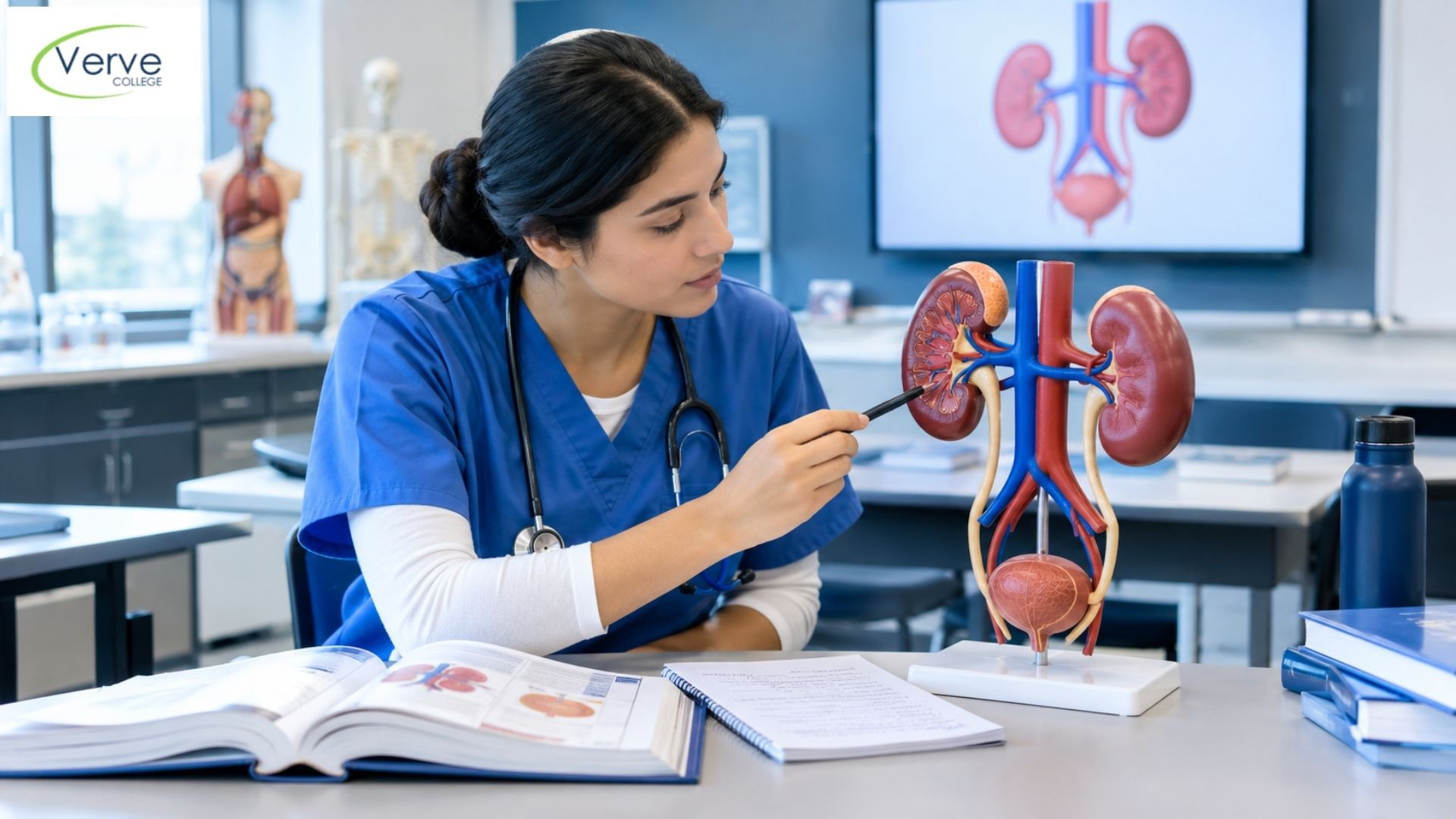
Kidney Fluid Balance Nursing Guide: How…
October 21, 2026 Read More
What Is Stroke Volume? Understanding How…
October 20, 2026 Read More
5 Signs an LPN Program Provides…
October 19, 2026 Read More