Sign up
 Login
Login
Is a Nursing Career Right For You?
Take The Free QuizWhat is Professionalism in Healthcare and Why It Matters?
What is Professionalism in Healthcare and Why It Matters?
Professionalism in healthcare is more than just wearing a uniform or following protocols. It is a combination of ethics, behavior, accountability, and communication that ensures patients receive the best care possible. Every healthcare worker, from nurses to allied professionals, is expected to demonstrate professionalism in every interaction. This approach fosters trust, improves patient outcomes, and creates a respectful work environment. For those pursuing nursing careers, programs like LPN weekend classes can help build foundational skills and professional habits essential for future success.
Key Takeaways
- Professionalism in healthcare encompasses ethics, accountability, communication, and respect.
- Maintaining professional behavior builds patient trust and enhances care quality.
- Effective teamwork and collaboration are rooted in professional conduct.
- Continuous learning and ethical decision-making strengthen healthcare delivery.
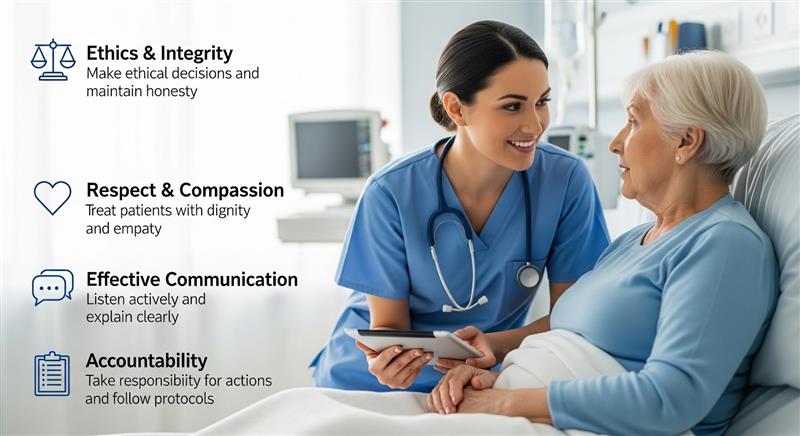
What is Professionalism in Healthcare and Why It Matters?
Professionalism in healthcare refers to the attitudes, behaviors, and values that guide medical staff in their daily interactions with patients, families, and colleagues. It is grounded in ethics, respect, responsibility, and competence. Professionalism is visible in small actions, such as listening carefully to a patient, maintaining confidentiality, following protocols, and communicating clearly with the healthcare team.
Why is professionalism important in healthcare?
- Building Patient Trust
Patients are more likely to share critical information and follow treatment plans when they trust their healthcare providers. Professional behavior ensures that patients feel respected and valued, leading to better outcomes and higher satisfaction. - Improving Teamwork and Collaboration
Healthcare is a team-based profession. Professionalism encourages clear communication, mutual respect, and cooperation among team members. This reduces errors and ensures coordinated patient care, which is critical in fast-paced medical settings. - Ensuring Safety and Quality Care
Healthcare professionals who adhere to professional standards are more careful, attentive, and accountable. This reduces mistakes, prevents breaches in patient safety, and maintains high standards of care. - Promoting Ethical Practice
Professionalism requires adherence to ethical codes, confidentiality rules, and fairness. Healthcare providers who act ethically gain credibility, protect patient rights, and foster trust in the medical system.
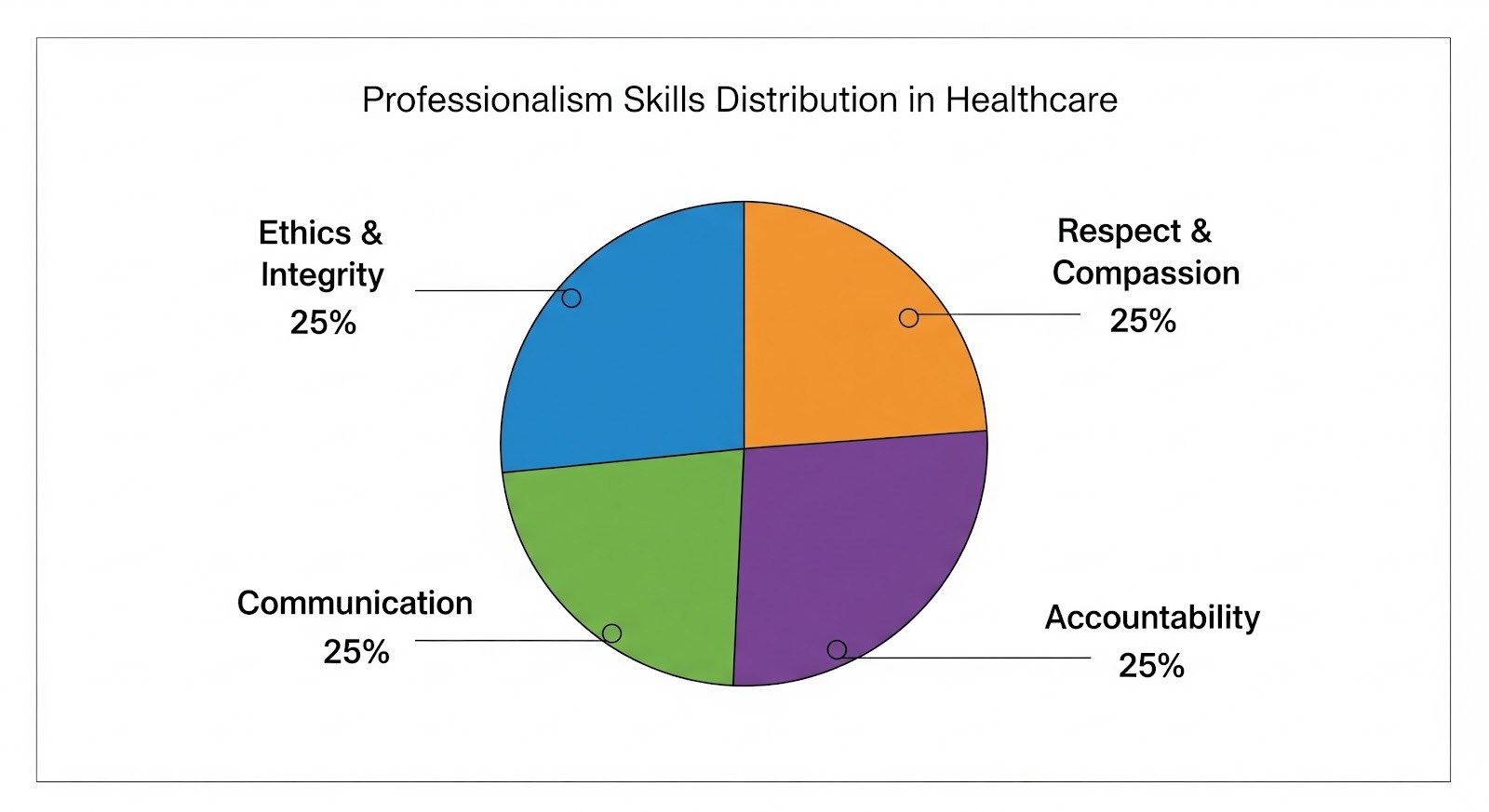
For students and professionals looking to enhance their skills, LPN classes near me can provide hands-on experience in practicing professionalism while learning essential nursing techniques.
Real-Life Examples of Professionalism in Healthcare
Professionalism is best understood through real-life situations. For example, a nurse who greets patients warmly, listens carefully to their concerns, and explains procedures clearly demonstrates professional behavior. This approach builds patient trust and reduces anxiety.
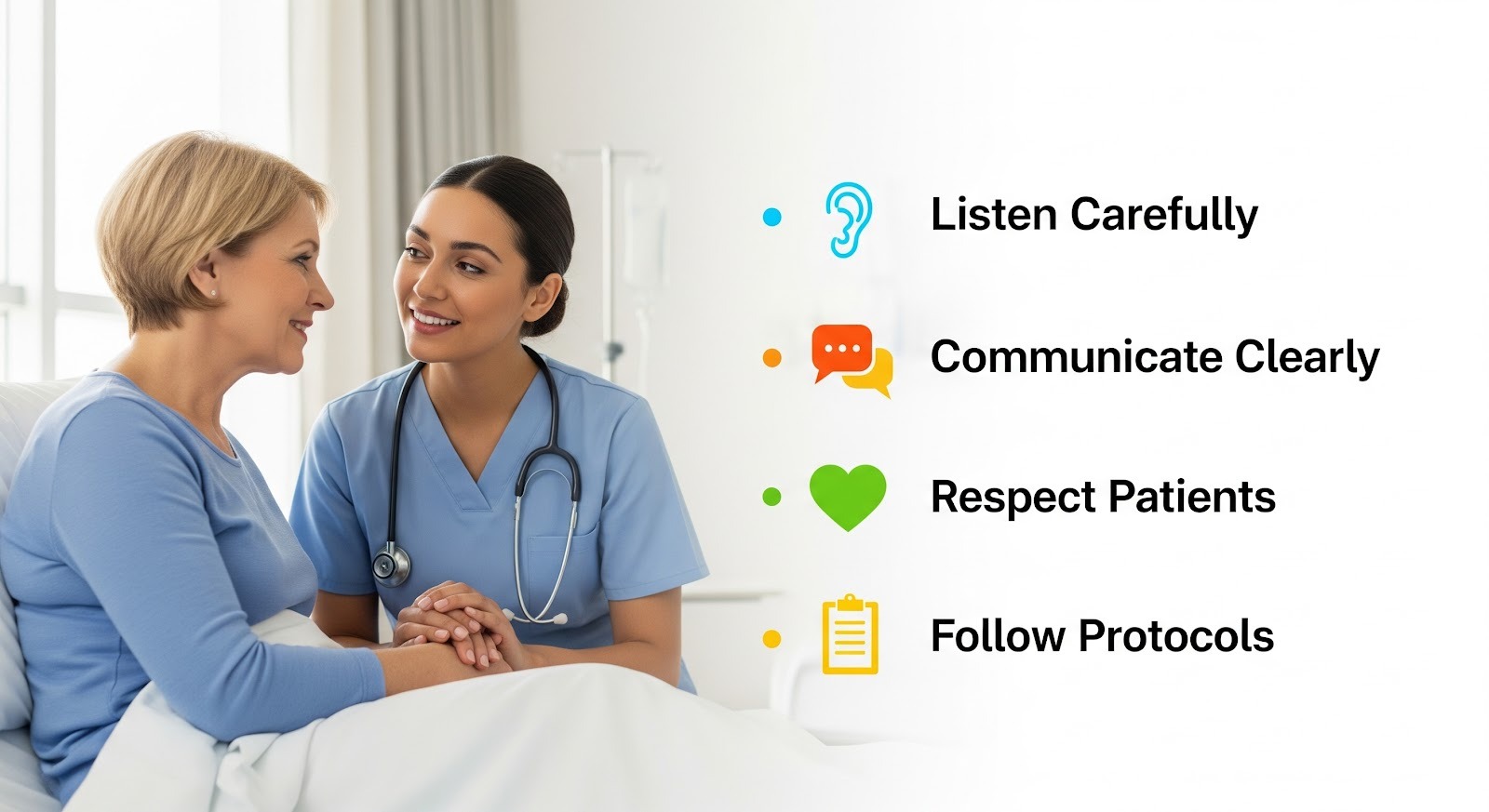
On the other hand, an unprofessional scenario might involve a healthcare worker ignoring patient questions, using disrespectful language, or failing to follow safety protocols. Such behavior can harm patient trust, lower satisfaction, and even lead to medical errors. Similarly, in team settings, a professional doctor who shares information clearly and respects colleagues’ opinions encourages collaboration and reduces mistakes.
Case studies like these highlight that professionalism affects not only patient outcomes but also workplace morale and safety. Learning from these examples helps healthcare workers adopt behaviors that ensure respect, accountability, and high-quality care.
Practical Tips to Maintain Professionalism
- Effective Communication: Speak clearly, listen actively, and use respectful language with patients and colleagues. Good communication minimizes misunderstandings and improves patient care.
- Ethical Practice: Always follow professional codes, maintain confidentiality, and make decisions with integrity. Acting ethically builds trust and credibility.
- Continuous Learning: Healthcare is constantly evolving. Professionals should stay updated through workshops, courses, and training to provide the most effective care.
- Appearance and Demeanor: Dressing appropriately, maintaining hygiene, and demonstrating respectful behavior create a positive impression and inspire confidence in patients.
Each of these steps reinforces professionalism and ensures that healthcare providers meet both patient and institutional expectations.
Conclusion
Professionalism is the backbone of quality healthcare. Understanding what is professionalism in healthcare and why is professionalism important in healthcare helps nurses and other medical professionals deliver care safely, ethically, and effectively. It strengthens patient trust, improves teamwork, and enhances overall healthcare outcomes. Those interested in advancing their careers and learning essential professional skills can explore nursing schools in chicago Il. Adopting professional habits early on ensures long-term career growth and a positive impact on the lives of patients.
Want to Make a Career in Nursing? Get More Information About Our Courses!
FAQs
- What are the main qualities of a professional healthcare worker?
A professional healthcare worker is ethical, accountable, respectful, and competent. They communicate effectively, maintain confidentiality, and continuously update their skills to ensure quality patient care. - How does professionalism affect patient outcomes?
Professionalism builds trust, encourages patients to follow treatment plans, and reduces errors. Teams that demonstrate professionalism work more efficiently, ensuring better and safer patient outcomes. - Can professionalism be taught or improved in healthcare settings?
Yes, professionalism can be developed through education, mentorship, training programs, and real-world experience. Nursing classes, workshops, and continuing education help reinforce professional behaviors.
Most Popular Blogs Posts

Hypoxia in Nursing Guide: Causes, Signs,…
October 22, 2026 Read More
Kidney Fluid Balance Nursing Guide: How…
October 21, 2026 Read More
What Is Stroke Volume? Understanding How…
October 20, 2026 Read More
5 Signs an LPN Program Provides…
October 19, 2026 Read More