Sign up
 Login
Login
Is a Nursing Career Right For You?
Take The Free QuizJustice in Nursing Practice: Definition, Principles, and Examples
Justice in Nursing Practice: Definition, Principles, and Examples
Justice in nursing is one of the fundamental principles of ethical care. It ensures that every patient receives fair, unbiased, and equitable treatment. This principle is not just about following rules; it’s about actively promoting fairness in decisions, advocating for patients’ rights, and ensuring equal access to healthcare. Nurses who understand and practice justice help build trust, improve patient outcomes, and strengthen professional integrity.
For students enrolled in LPN courses, learning about justice in nursing is critical. It provides a framework for making ethical decisions, handling conflicts, and ensuring fair treatment for all patients. Understanding this principle early helps prepare future nurses for real-world challenges in hospitals, clinics, and community health settings.
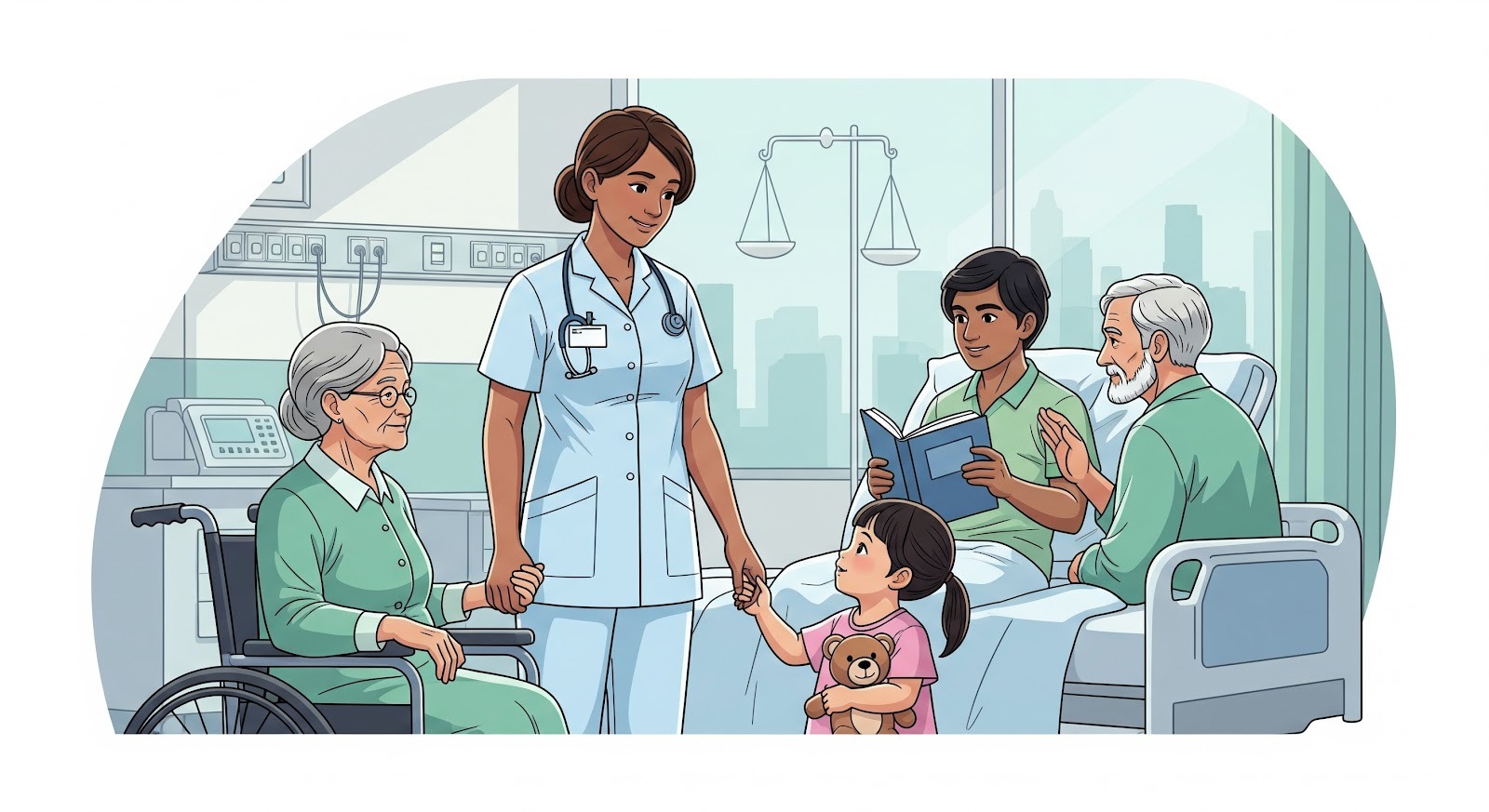
Key Takeaways
- Justice in nursing ensures fairness and equity in patient care.
- Ethical decision-making in healthcare often revolves around justice.
- Practicing justice strengthens trust between patients and healthcare providers.
- Nursing students in night and weekend nursing programs can apply justice in real-world clinical situations.
Define Justice in Nursing
Justice in nursing means treating every patient fairly, equally, and without discrimination at all times. It is the idea that no patient should be treated better or worse because of their age, gender, culture, language, religion, education, disability, or financial situation. Every patient deserves the same level of respect, care, and attention.
In nursing practice, justice guides how nurses make decisions—especially when resources, time, or staff are limited. It ensures that all patients get equal access to medicines, tests, education, emotional support, and safety measures. Justice also means following ethical and legal standards, respecting patient rights, and protecting vulnerable patients who may not be able to speak for themselves.
Nurses practice justice when they avoid personal bias, treat everyone with dignity, and make choices based on patient needs rather than personal preference. It also involves speaking up if something unfair happens, like unequal treatment or discrimination.
In simple words, justice in nursing means:
- No favoritism toward any patient
- No bias or discrimination based on personal traits
- Sharing care, time, and resources fairly
- Respecting every patient as a human being
- Making decisions that are ethical, honest, and equal
When nurses follow the principle of justice, patients feel safe, valued, and respected. This builds trust, improves cooperation, and leads to better health outcomes.
Why Justice Matters in Nursing?
Justice is more than an ethical obligation; it is vital to providing effective, compassionate, and high-quality care. Nurse ensuring equal care and fair treatment for all patients.

1. Improves Patient Outcomes
Patients treated fairly are more likely to follow treatment plans, attend follow-up visits, and feel confident in their care providers. Fairness promotes better communication, reduces errors, and increases patient satisfaction. For example, when a nurse ensures that all patients have equal access to medication or therapy sessions, recovery times often improve, and patients feel respected.
2. Builds Trust Between Patients and Providers
Trust is a cornerstone of effective healthcare. Patients who feel treated fairly are more likely to share critical information about their symptoms and concerns. This open communication helps nurses make informed decisions, reduces misunderstandings, and strengthens the therapeutic relationship. Justice in nursing fosters confidence in the healthcare system.
3. Enhances Professional Satisfaction
Nurses who practice justice often experience greater job satisfaction. Knowing that they have treated patients equitably and ethically provides a sense of pride and accomplishment. It also promotes a positive work environment, encourages collaboration, and helps prevent moral distress that can occur when fairness is compromised.
4. Supports Ethical Decision-Making
Healthcare often involves complex situations, such as triaging multiple patients with varying needs. Justice serves as a guiding principle, helping nurses make unbiased and ethically sound decisions under pressure. By applying justice, nurses balance fairness with clinical judgment, ensuring the best outcomes for all patients.
5. Critical for Students in Night and Weekend Programs
Students in alternative programs often work during high-pressure off-peak hours when staffing is limited. Applying justice in these settings teaches them how to allocate resources fairly, prioritize care appropriately, and advocate for patients effectively. Early exposure to justice strengthens their ethical foundation for future practice.
Challenges in Practicing Justice in Nursing
While justice is essential, nurses face challenges in implementing it consistently:
- Limited Resources
Many healthcare settings experience staff shortages, high patient loads, or insufficient supplies. Nurses must make difficult decisions about prioritizing care. Ensuring fairness under these conditions requires skill, patience, and careful judgment. - Implicit Bias
Unconscious biases can influence decisions without the nurse realizing it. Bias may affect which patients receive attention first or how treatment options are explained. Nurses must engage in self-reflection and ongoing training to minimize bias and uphold justice. - High Workload and Stress
Busy shifts, emotional stress, and long hours can compromise fairness. A nurse might unintentionally give more attention to one patient over another due to fatigue or stress. Maintaining justice requires mindfulness, teamwork, and adherence to ethical standards even under pressure. - Ethical Dilemmas
Situations such as emergency triage or resource rationing often present ethical conflicts. Deciding which patient receives limited resources first is challenging. Nurses must balance urgency, fairness, and ethical principles to make decisions aligned with justice. - Balancing Policies and Individual Needs
Sometimes hospital policies may conflict with individual patient needs or cultural considerations. Nurses must navigate these situations thoughtfully to ensure that care remains just without violating professional or legal guidelines.
Want to Make a Career in Nursing? Get More Information About Our Courses!
Conclusion
Justice in nursing is a key part of ethical and high-quality patient care. When nurses focus on fairness, equal treatment, and unbiased decision-making, they help create a safe and trustworthy healthcare environment. This principle ensures that every patient receives the respect, dignity, and resources they deserve, which leads to better communication, improved outcomes, and stronger patient satisfaction.
For students exploring nursing assistant programs in Illinois or preparing for future healthcare roles, learning about justice early is essential. Understanding this principle helps future nurses make fair choices, handle ethical challenges, and advocate confidently for patients. By practicing justice in daily care, nurses strengthen professional integrity and build a healthcare system where every patient feels valued and supported.
Most Popular Blogs Posts

LPN School for Working Adults: What…
October 15, 2026 Read More
How to Prepare for Nursing School…
October 14, 2026 Read More
How Practical Nursing Students Build Clinical…
October 14, 2026 Read More
What Is Capillary Refill? A Guide…
October 13, 2026 Read More