Sign up
 Login
Login
Is a Nursing Career Right For You?
Take The Free Quiz
Top 5 Charges that Prevent You From Becoming a Nurse
Top 5 Charges that Prevent You From Becoming a Nurse
If you’ve ever wondered what charges can stop you from being a nurse, you’re not alone. Understanding the disqualifying charges for becoming a nurse is important for anyone planning a nursing career.Becoming a nurse requires not only education and skill but also moral integrity and trustworthiness. Because nurses work with vulnerable patients, healthcare boards take background checks seriously. Even one criminal charge can affect your eligibility to earn or keep a nursing license.
Before enrolling in weekend nursing programs, it’s crucial to understand which offenses may stand between you and your nursing career dreams.
Key Takeaways
- Nursing boards prioritize patient safety and ethical conduct.
- Felony convictions, violent crimes, or drug-related charges are major red flags.
- Some charges can be appealed or reviewed depending on the state’s nursing board.
- Always disclose your record honestly when applying for licensure or nursing school.
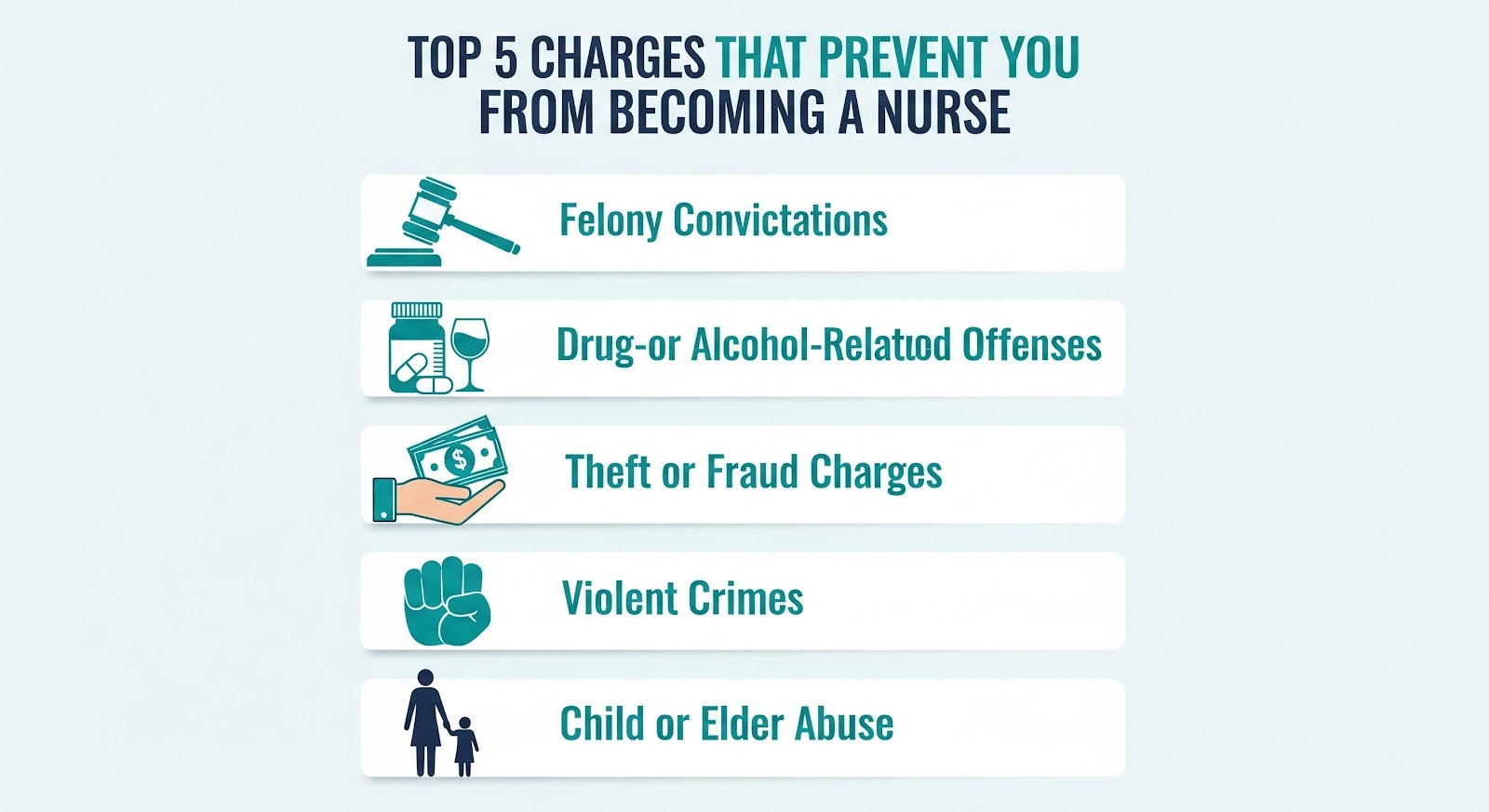
5 Charges That Can Stop You From Being a Nurse
1. Felony Convictions
Felony charges are among the most serious offenses that can stop you from becoming a nurse. They often include crimes such as fraud, embezzlement, or aggravated assault. Nursing boards consider these offenses as indicators of poor judgment and a lack of moral character—two qualities essential for patient care.
Even if your felony is several years old, it can still delay or deny your application. However, some boards allow individuals to reapply after demonstrating rehabilitation through community service, counseling, or a clean record for several years.
2. Drug- or Alcohol-Related Offenses
Substance abuse-related offenses, such as DUI (Driving Under the Influence) or possession of controlled substances, can raise concerns about your reliability in a clinical setting. These charges often suggest potential impairment risks that could endanger patients.
Many state nursing boards require proof of rehabilitation, such as participation in substance treatment programs or regular testing. If you’re pursuing nursing schools in Chicago IL, note that Illinois requires applicants to report any history of drug or alcohol abuse to the Department of Financial and Professional Regulation (IDFPR).
3. Theft or Fraud Charges
Nurses handle sensitive patient data, financial information, and medications. Therefore, any record of theft, identity fraud, or embezzlement can seriously harm your credibility. Nursing boards view these charges as a breach of trust, which directly conflicts with the ethical standards of the profession.
Applicants may need to provide evidence of restitution or rehabilitation before the board considers licensure. Demonstrating integrity through volunteer work, recommendations, and a clean recent record can help strengthen your case.
4. Violent Crimes
Violence-related charges—including assault, domestic violence, or battery—are significant barriers to becoming a nurse. Since nurses must provide compassionate care and maintain composure under stress, any history of aggression raises doubts about their ability to handle patients safely.
Even misdemeanor assaults can be a concern, especially if they occurred recently. Each state reviews such cases individually, often requiring character references or proof of anger management counseling.
5. Child or Elder Abuse
Abuse-related crimes are perhaps the most disqualifying of all. Because nurses work closely with both children and the elderly, any involvement in abuse—whether physical, emotional, or neglectful—can permanently disqualify you from obtaining a license.
State boards rarely make exceptions for these charges due to the severe risk they pose to patient safety. Even if a conviction occurred years ago, nursing regulators place patient protection above all else.
How to Move Forward If You Have a Record?
Having a criminal record doesn’t always mean the end of your nursing dreams. It’s important to understand which offenses can stop you from getting a nursing license.Some state boards review each case individually and may grant conditional licenses. Here’s what you can do:
- Gather all court and rehabilitation documents.
- Be transparent during your application process.
- Seek legal or professional guidance before applying.
- Demonstrate how you’ve grown through rehabilitation or education.
Completing accredited LPN classes near me can also show your commitment to personal and professional improvement.
Conclusion
Understanding what charges can stop you from being a nurse is essential before investing your time and effort in nursing school. Felony convictions, drug-related charges, theft, violent crimes, and abuse-related offenses are among the most significant disqualifiers. However, with transparency, rehabilitation, and persistence, many aspiring nurses can still build rewarding healthcare careers.
Remember, the goal is not just to meet state requirements—but to uphold the trust and integrity that define the nursing profession.
Want to Make a Career in Nursing? Get More Information About Our Courses!
FAQs
- Can I become a nurse if I have a misdemeanor?
It depends on the type of misdemeanor. Minor offenses may not disqualify you if you can demonstrate rehabilitation and honesty during the application process. - Will expunged charges affect my nursing license application?
Expunged charges typically don’t appear in background checks, but you should still check your state’s nursing board requirements to ensure compliance. - Can I appeal a denied nursing license?
Yes. Most states allow applicants to appeal or request a hearing if their license is denied due to past charges. Providing documentation of rehabilitation and character references can strengthen your appeal.
Most Popular Blogs Posts

What Is Inflammation? A Simple Guide…
October 1, 2026 Read More
What Are Synovial Joints? Types and…
September 30, 2026 Read More
What Is a Nursing Compact License?…
September 30, 2026 Read More
Forensic Nurse Career Path: Education, Skills,…
September 29, 2026 Read More