- Oak Brook:(630) 705-9999
- Chicago:(312) 920-8822
- Email:inquiry@vervecollege.edu
- Make a Payment
 Sign up
 Login
Login
- Home
- Programs
- Admission
- Resources
- ATI Entrance Exam Resources
- New E-Digital Library
- Refer a Friend
- School Newsletter
- Events
- Employers
- Job-Network
- Alpha Beta Kappa Candidates
- Verve College Library
- Graduation and Pinning Ceremony Photo Galleries
- Textbook Information
- Career Services
- Tutoring
- School Catalog
- FAQ
- Constitution Day Program
- Alumni
- Verve College Plans
- Financial Aid
- HEERF Reporting
- Satisfactory Academic Progress
- Apply For Financial Aid
- Net Price Calculator
- Return of Title IV Funds (R2T4)
- Financial Aid Office Code of Conduct
- Contact
- FAQs
- Verification Policy
- Vaccination Policy
- Student Right-to-Know Act
- Misrepresentation
- Information Security Program
- Academic Award Year
- Availability of Employee
- Cost of Attendance
- Health & Safety Exemption Requirement
- Students Rights and Responsibilities
- Leave of Absence
- Pell Formula
- Military Students
- Grants/ Scholarship Policy
- Contact Us
- Testimonials
- Blog
Is a Nursing Career Right For You?
Take The Free Quiz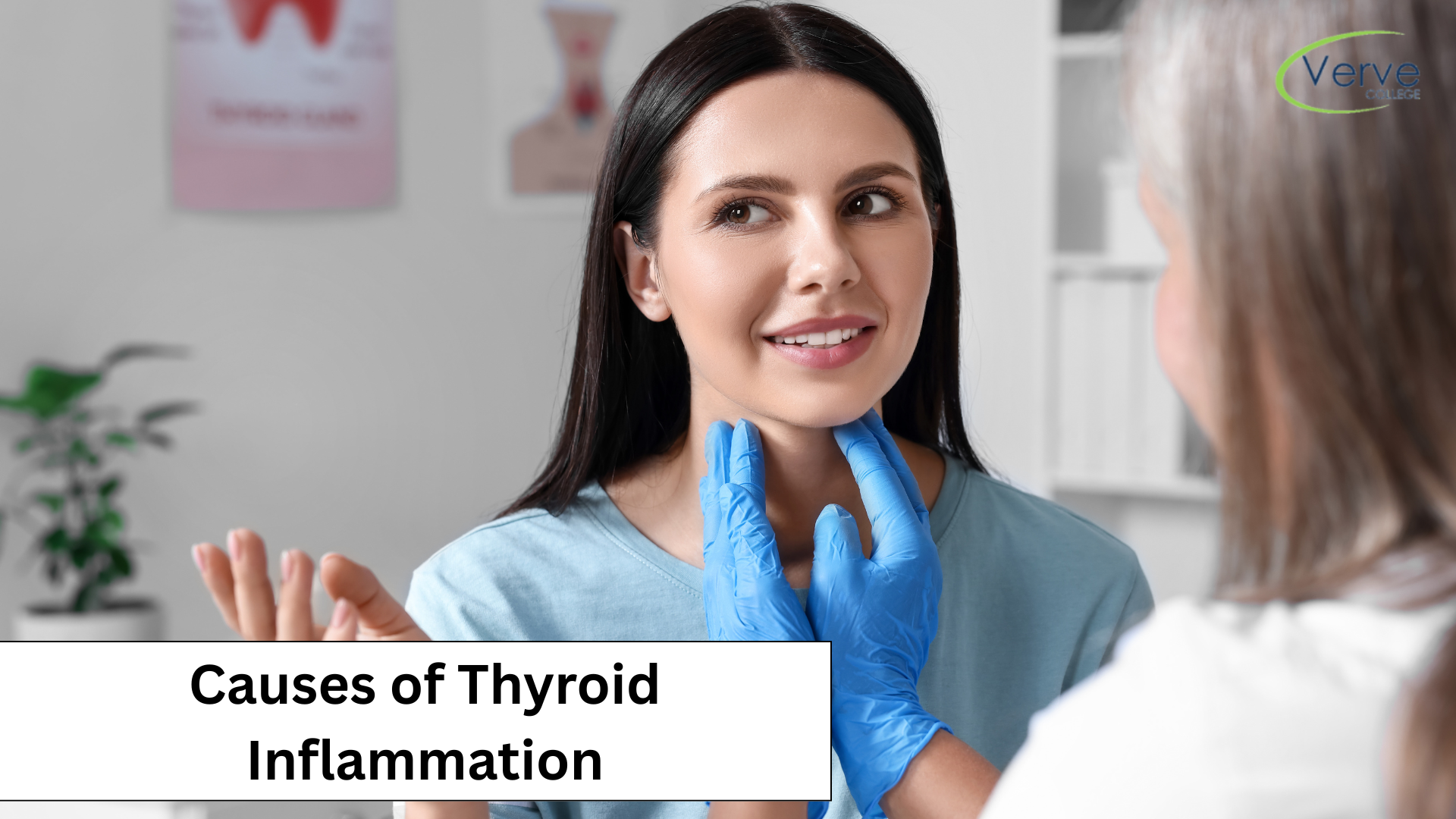
What Causes Thyroid Inflammation: A Nurse’s Perspective
What Causes Thyroid Inflammation: A Nurse’s Perspective
Research indicates that more than one in ten Americans will experience a thyroid disorder during their lifetime. The thyroid, a small gland located in the neck, helps regulate energy, growth, and heart function. Many people are unaware of how common thyroid inflammation is. This article looks at what causes thyroid inflammation and shares practical takeaways.
You can check A&P classes if you want to learn more about the thyroid and how the body works.
What Causes Thyroid Inflammation?
Thyroid inflammation happens for several reasons. Knowing the main triggers can help people spot symptoms early and talk to a healthcare provider. Here’s a breakdown of the most common causes in easy-to-understand language.
You can learn about the thyroid by taking anatomy and physiology classes if you’re interested in understanding how glands and hormones work.
Autoimmune reactions
In some people, the immune system mistakenly attacks the thyroid. This often happens in conditions such as Hashimoto’s thyroiditis and Graves’ disease. Autoimmune reactions like these are common causes of thyroid inflammation because the ongoing attack damages thyroid tissue and makes it swell or work poorly.
Infections
Viral or bacterial infections can irritate the thyroid. A common cold or upper respiratory infection may spread to the gland and lead to temporary swelling or pain. This kind of inflammation often improves on its own but can still cause discomfort while it lasts.
Hormonal or life changes
Major hormonal shifts can also play a role. For some women, stages like pregnancy, postpartum recovery, and menopause can spark thyroid-related inflammation. These changes may stress the immune system and make the gland more sensitive, and they are seen in several types of thyroiditis linked to hormonal changes.
Medications or radiation exposure
Certain medicines, such as some heart or mood drugs, can irritate thyroid tissue as a side effect. Radiation therapy used for cancer or repeated imaging scans of the neck can also harm the gland and cause swelling over time. These factors are recognized causes of thyroid inflammation and may increase the risk of long-term thyroid problems.
Iodine imbalance or environmental factors
The thyroid needs the right amount of iodine to work well. Getting too little or too much can inflame the gland. Exposure to environmental toxins such as heavy metals or industrial chemicals may also increase the risk of thyroid problems.
Conclusion
Thyroid inflammation can develop from many different causes, including autoimmune reactions, infections, hormonal changes, certain medications, and environmental factors. Understanding what causes thyroid inflammation helps people spot problems early. Early evaluation makes a big difference because treatment works best when issues are caught soon.
Nurse insights remind us that regular checkups, balanced nutrition, and careful use of medication can help protect thyroid health. If you notice new symptoms or swelling, talk with a qualified healthcare professional to get timely advice and support for long-term wellness.
Want to Make a Career in Nursing? Get More Information About Our Courses!
You can check out programs that help you become a licensed practical nurse if you’re interested in learning more about thyroid care and other hands-on healthcare skills.
Most Popular Blogs Posts

What Is Operant Conditioning? Behavior and…
September 14, 2026 Read More
What Is Classical Conditioning? Guide for…
September 14, 2026 Read More
Nursing Certification: What Is It and…
September 10, 2026 Read More
Nursing Resume Skills: What Employers Look…
September 9, 2026 Read More