-
Oak Brook
📍📞 630-705-99992625 Butterfield Rd. Suite 102E
Oak Brook, IL 60523📠 Fax: 630-705-1422✉️ inquiry@vervecollege.edu 🗺️ Open in Google Maps 🍎 Open in Apple Maps🕒Office HoursMon–Fri: 9:30 AM – 6:00 PM
Sat: 8:00 AM – 12:00 PM
Sun: Closed -
Chicago
📍📞 312-920-8822216 W. Jackson Blvd. Suite 900
Chicago, IL 60606📠 Fax: 630-705-1422✉️ inquiry@vervecollege.edu 🗺️ Open in Google Maps 🍎 Open in Apple Maps🕒Office HoursMon–Fri: 9:30 AM – 6:00 PM
Sat: 8:00 AM – 12:00 PM
Sun: Closed - Email:inquiry@vervecollege.edu
- Make a Payment
 Sign up
 Login
Login
- Home
- Programs
- Admission
- Resources
- ATI Entrance Exam Resources
- New E-Digital Library
- Refer a Friend
- School Newsletter
- Events
- Employers
- Job-Network
- Alpha Beta Kappa Candidates
- Verve College Library
- Graduation and Pinning Ceremony Photo Galleries
- Textbook Information
- Career Services
- Tutoring
- School Catalog
- FAQ
- Constitution Day Program
- Alumni
- Verve College Plans
- Financial Aid
- HEERF Reporting
- Satisfactory Academic Progress
- Apply For Financial Aid
- Net Price Calculator
- Return of Title IV Funds (R2T4)
- Financial Aid Office Code of Conduct
- Contact
- FAQs
- Verification Policy
- Vaccination Policy
- Student Right-to-Know Act
- Misrepresentation
- Information Security Program
- Academic Award Year
- Availability of Employee
- Cost of Attendance
- Health & Safety Exemption Requirement
- Students Rights and Responsibilities
- Leave of Absence
- Pell Formula
- Military Students
- Grants/ Scholarship Policy
- Contact Us
- Testimonials
- Blog
Is a Nursing Career Right For You?
Take The Free QuizWhat Is Perfusion in Nursing? A Guide for Future LPNs
What Is Perfusion in Nursing? A Guide for Future LPNs
When you enter a patient’s room during a clinical shift, you will instantly look at the color of their skin and check their vital signs. Many beginners wonder how seasoned healthcare workers know exactly when an internal organ system is struggling before a lab result comes back. The secret lies in checking a physiological process known as perfusion in nursing. By studying this baseline mechanism in accredited practical nursing programs, you learn how to identify dangerous cardiovascular changes immediately.
Key Takeaways
- Oxygen Distribution Pathway: Understand how the body circulates oxygen and vital nutrients through blood vessels to tissues.
- Clinical Tracking Tips: Learn how to check capillary refill, skin temperature, and pulses on a real shift.
- Spotting Malfunctions Early: Discover the physical warning signs that point to poor circulation or internal organ stress.
- Foundational Class Goals: See how science prerequisite classes build the academic habits you need for medical training.
What Is Tissue Perfusion?
Perfusion refers to the normal movement of blood through your blood vessels into your organs and tissues. Your cells depend entirely on this continuous delivery system to get the fresh oxygen and nutrients they need to survive.
If this delivery pipeline stops working for even a few minutes, cell damage begins to occur. When we talk about tissue perfusion, we are evaluating whether your heart, lungs, and arteries are pushing enough oxygenated blood to the furthest edges of the body.
Why Blood Circulation Matters for Patient Safety
When you evaluate an adult patient in a clinic or hospital, measuring circulation tells you how well their heart is functioning. A sudden drop in circulating blood can cause rapid, life-threatening damage to vital systems like the kidneys and brain.
Nurses perform a rapid nursing assessment on every shift to verify that blood is moving smoothly. By looking at trends in blood pressure, breathing rates, and heart rhythms, you can spot poor circulation before a patient loses consciousness.
Building a complete picture of these interior pathways requires a strong background in human science. Taking high-quality anatomy and physiology classes gives you the precise structural map you need to study how blood vessels contract, dilate, and respond to stress.
How Nurses Track Poor Circulation at the Bedside
Practical nurses use several simple, fast physical checks to make sure an adult patient has proper blood movement:
- Checking Capillary Refill: Pressing down gently on a patient’s fingernail until it turns white, then watching how many seconds it takes to turn pink again.
- Evaluating Skin Appearance: Looking for pale, gray, or blue skin tones, which signal that tissues are starved for oxygen.
- Feeling Pulse Quality: Touching points on the wrists or ankles to check if the heartbeat feels strong or weak and thready.
- Monitoring Core Temperatures: Noting if a patient’s hands or feet feel unusually cold compared to the rest of their body.
Learning to spot these physical clues can feel challenging for adult learners or career changers. However, these clinical observational habits quickly become second nature when you practice them in a structured environment.
Turning Lab Simulations into Clinical Confidence
Many incoming healthcare students worry about performing physical exams on real people for the first time. Modern nursing programs solve this problem by providing high-tech simulation labs.
In these training spaces, you practice finding pulses and assessing skin conditions on advanced, life-like mannequins. Making these choices in a zero-risk lab allows you to learn from your mistakes and build confidence before your official hospital rotations.
Your Educational Pathway into Medical Care
If you are a working adult looking to enter the healthcare field quickly, finding a school that focuses on real-world training is essential. Enrolling in top-tier licensed practical nurse programs ensures you can complete your coursework efficiently while building strong bedside clinical instincts.
Verve College offers focused certificate options designed to prepare you for your licensing exams without making you take years of unrelated general electives. Our instructors provide personalized tutoring and job placement assistance to help you move out of the classroom and straight into a rewarding nursing career.
Misconceptions About Cardiovascular Monitoring
A common mistake that introductory nursing students make is assuming that a patient has great blood flow simply because their blood pressure reading looks normal on a machine. In reality, the body can work overtime to temporarily hide internal circulation issues by beating faster or narrowing its blood vessels. If you want to understand how this connects to hands-on training, learning about foundational body systems can give you a clearer picture of your daily clinical responsibilities.
Conclusion
Understanding the mechanics of oxygen delivery and blood movement is a fundamental step toward becoming a safe, observant, practical nurse. Mastering these evaluation methods allows you to protect your patients from preventable complications throughout your career. Developing these life-saving habits takes focused practice, supportive instructor feedback, and an encouraging learning environment. Choosing a specialized training track will give you the tools and resources you need to excel in the medical field. Contact an admissions representative at Verve College today to find out about our upcoming course schedules and start your healthcare journey.
Get Your Nursing Career Training Readiness Score Now!
Frequently Asked Questions (FAQs)
What is a normal capillary refill time during a nursing assessment?
A healthy capillary refill time is generally two seconds or less. If it takes longer than two seconds for the skin under a patient’s nail bed to turn pink again, it often means their peripheral circulation is delayed.
How do practical nursing programs teach students to recognize circulation issues?
Practical nursing programs combine interactive classroom lectures with hands-on practice in simulation labs. You will practice measuring blood pressure, tracking vital signs, and using clinical logic to identify when an organ system is failing.
How do I apply for courses or check financial aid options at Verve College?
You can get started by visiting our website to connect with an admissions counselor. Our team will guide you through entry exam preparation, campus visit options, and available financial aid plans for qualifying student pathways.
Most Popular Blogs Posts

LPN School for Working Adults: What…
October 15, 2026 Read More
How to Prepare for Nursing School…
October 14, 2026 Read More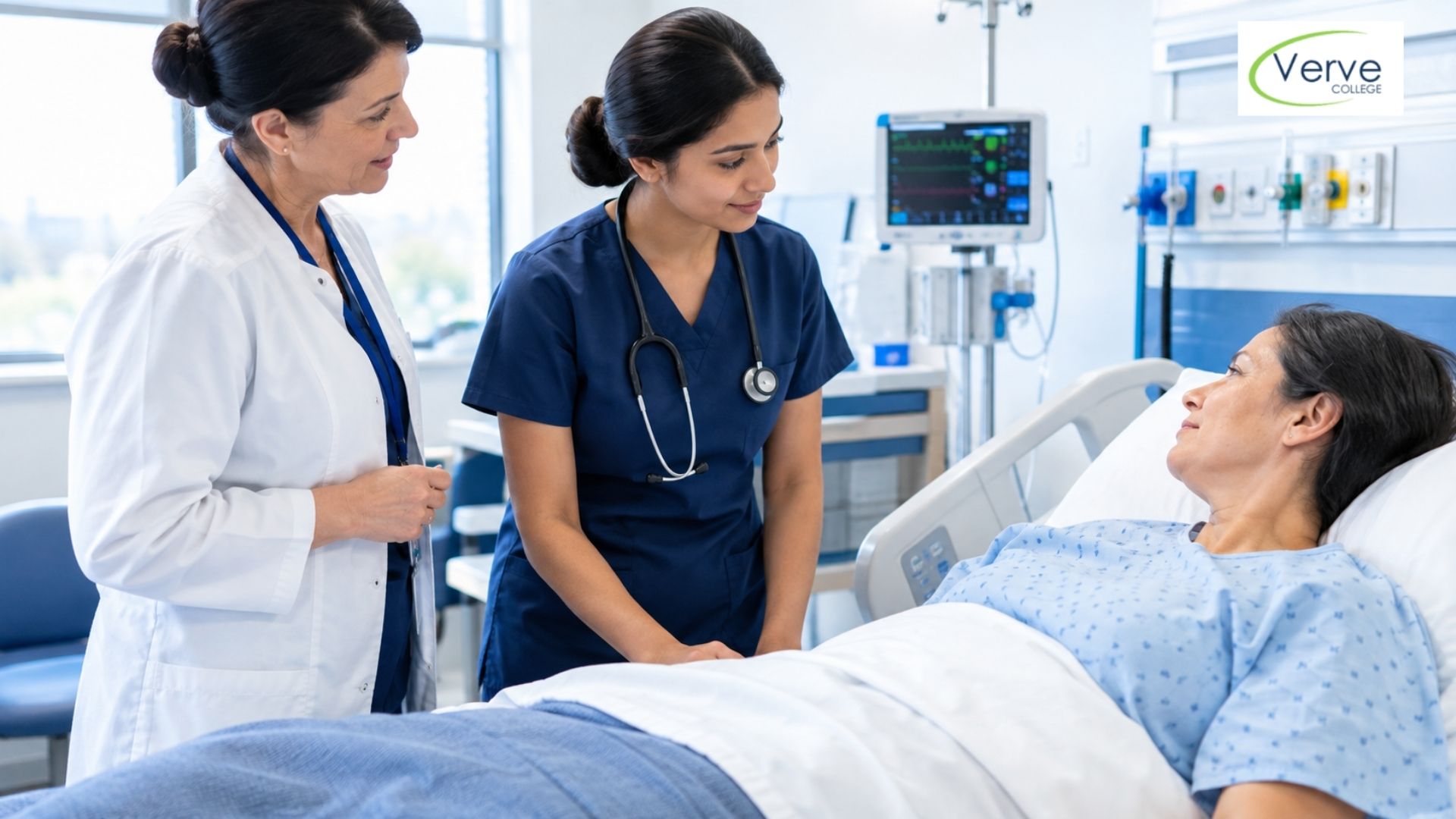
How Practical Nursing Students Build Clinical…
October 14, 2026 Read More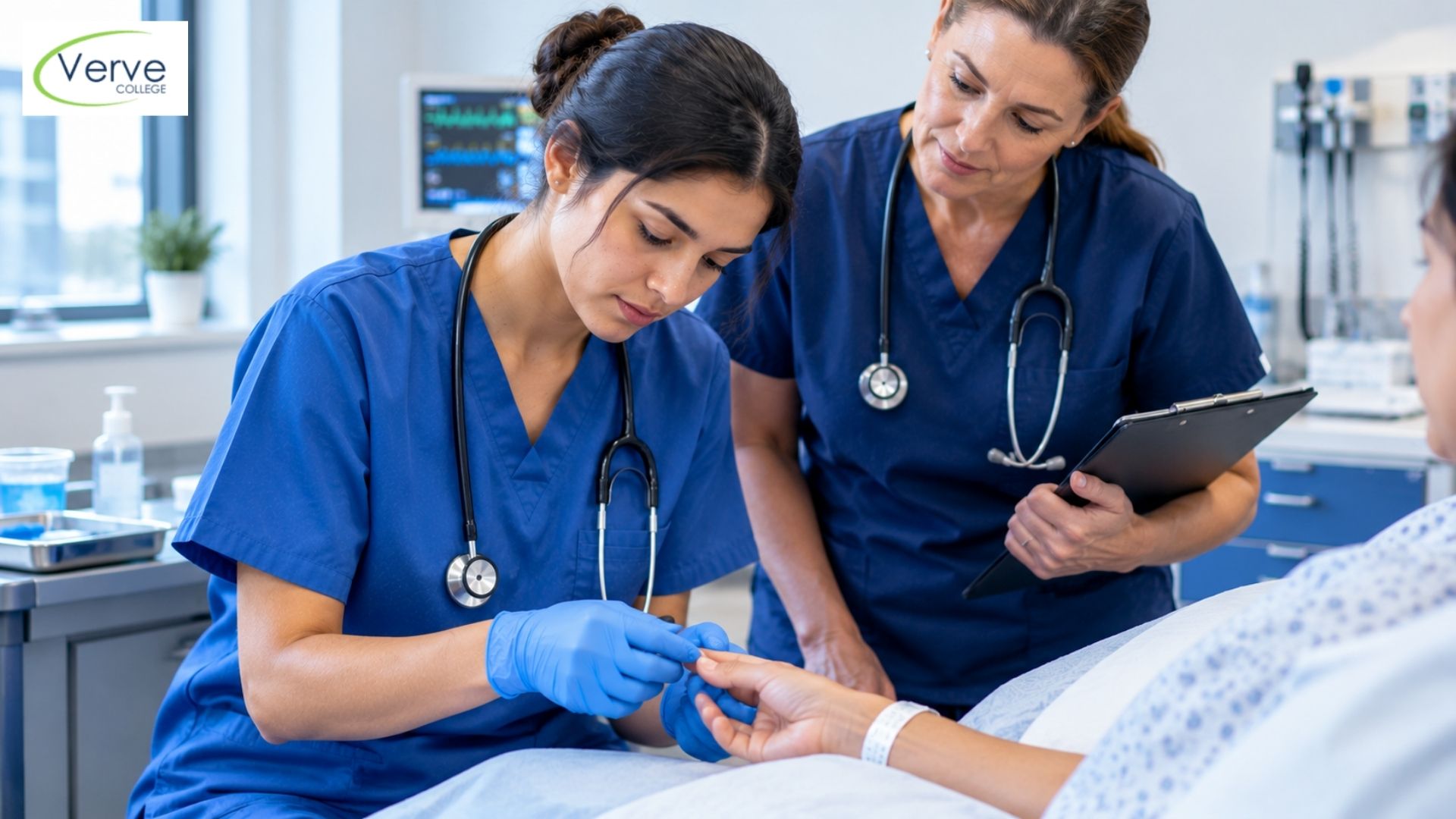
What Is Capillary Refill? A Guide…
October 13, 2026 Read More