- Oak Brook:(630) 705-9999
- Chicago:(312) 920-8822
- Email:inquiry@vervecollege.edu
- Make a Payment
 Sign up
 Login
Login
- Home
- Programs
- Admission
- Resources
- ATI Entrance Exam Resources
- New E-Digital Library
- Refer a Friend
- School Newsletter
- Events
- Employers
- Job-Network
- Alpha Beta Kappa Candidates
- Verve College Library
- Graduation and Pinning Ceremony Photo Galleries
- Textbook Information
- Career Services
- Tutoring
- School Catalog
- FAQ
- Constitution Day Program
- Alumni
- Verve College Plans
- Financial Aid
- HEERF Reporting
- Satisfactory Academic Progress
- Apply For Financial Aid
- Net Price Calculator
- Return of Title IV Funds (R2T4)
- Financial Aid Office Code of Conduct
- Contact
- FAQs
- Verification Policy
- Vaccination Policy
- Student Right-to-Know Act
- Misrepresentation
- Information Security Program
- Academic Award Year
- Availability of Employee
- Cost of Attendance
- Health & Safety Exemption Requirement
- Students Rights and Responsibilities
- Leave of Absence
- Pell Formula
- Military Students
- Grants/ Scholarship Policy
- Contact Us
- Testimonials
- Blog
Is a Nursing Career Right For You?
Take The Free Quiz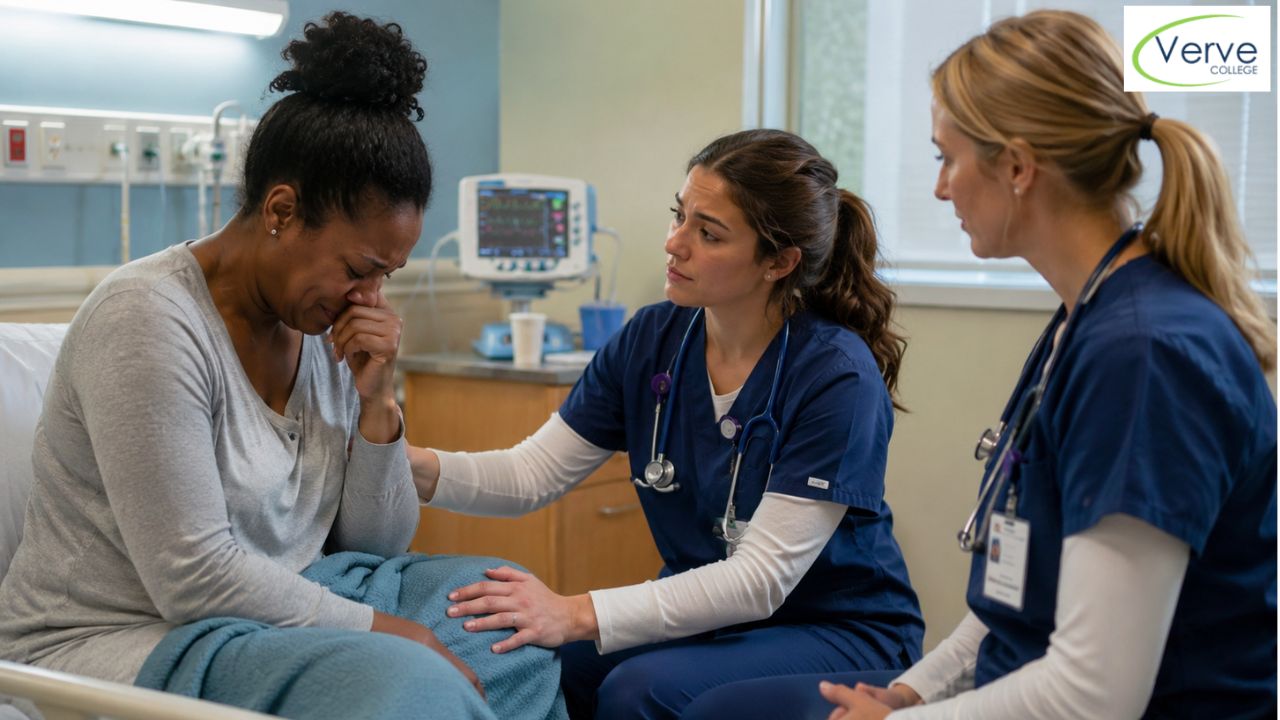
How to Use Therapeutic Communication Techniques When Caring for Grieving Patients
How to Use Therapeutic Communication Techniques When Caring for Grieving Patients
Grief does not follow a schedule. A patient might receive a devastating diagnosis on a Tuesday afternoon, or a family might lose someone unexpectedly in the middle of a busy shift. As a nurse, you will encounter these moments often, and what you say and how you say it matters more than most people realize.
This article walks you through the core therapeutic communication techniques nursing students need when supporting grieving patients, why these skills are essential, and how to build them before you ever step into a clinical setting.
Key Takeaways
- Therapeutic communication in nursing goes beyond being kind. It is a structured set of skills that builds trust and supports healing
- Grieving patients need nurses who can listen actively, respond with empathy, and avoid common communication mistakes
- Silence, open-ended questions, and reflection are some of the most powerful tools you have
- Students in practical nursing programs practice these skills as part of their clinical and patient-centered care training
- Knowing what not to say is just as important as knowing what to say
- These techniques apply across settings: bedside care, end-of-life situations, post-diagnosis conversations, and family support
What Therapeutic Communication Actually Means
Therapeutic communication is a purposeful way of interacting with patients that supports their emotional and physical wellbeing. It is not casual conversation, and it is not just about being polite. It is intentional, patient-focused, and grounded in listening as much as speaking.
For grieving patients specifically, therapeutic communication creates a safe space. It tells the patient that they are seen, that their pain is real, and that the person sitting with them is not going to brush past it.
This matters clinically too. Patients who feel heard are more likely to share important symptoms, follow care plans, and ask questions. Communication is not separate from clinical care. It is part of it.
Core Therapeutic Communication Techniques for Grieving Patients
Active Listening
Active listening means giving your full attention to what the patient is saying, not planning your next response while they talk. It involves eye contact, open body language, and small verbal cues like “I hear you” or “go on” that show you are present.
For a grieving patient, being truly listened to can feel rare. Many people in their lives may be uncomfortable with grief and try to change the subject. A nurse who stays in that space with them makes a real difference.
Open-Ended Questions
Instead of asking questions that can be answered with yes or no, use questions that invite the patient to share more. “How have you been feeling since you received that news?” opens a conversation. “Are you feeling okay?” closes it.
Open-ended questions give patients control over how much they want to share, which is important when someone is in emotional pain.
Reflection and Restatement
Reflection means mirroring back what the patient has said in your own words. It shows you were listening and gives the patient a chance to clarify or expand. For example, if a patient says “I just feel like no one understands what I’m going through,” you might respond, “It sounds like you’re feeling very alone right now.”
This is not about repeating words back robotically. It is about showing that you understood the meaning behind what was said.
Silence as a Tool
Many nursing students feel uncomfortable with silence. The instinct is to fill it. But silence, used thoughtfully, communicates that you are present and that there is no rush. It gives the patient space to process and speak when they are ready.
A hand on the arm, eye contact, and a quiet presence can communicate more than any scripted response.
Empathy Statements
Empathy is not the same as sympathy. Sympathy says “I feel sorry for you.” Empathy says “I understand this is painful, and I am here with you in it.”
Empathy statements acknowledge the patient’s experience without judgment or false reassurance. Phrases like “This must be incredibly hard” or “It makes sense that you feel that way” validate what the patient is going through without minimizing it.
Clarifying and Exploring
Sometimes grieving patients say things that are vague because they are still processing. Asking clarifying questions, like “Can you tell me more about what you mean by that?” helps ensure you understand what they need and shows them that you care enough to ask.
What to Avoid When Communicating With Grieving Patients
Knowing what not to say is just as valuable as knowing what to say. Some common communication mistakes can unintentionally close a patient down or make them feel dismissed.
Avoid these patterns:
- False reassurance: Saying “Everything will be okay” or “Stay positive” can feel dismissive, especially when the patient is facing a serious or terminal situation
- Changing the subject: Moving too quickly to clinical tasks when a patient is emotional signals that their feelings are not welcome
- Giving advice too soon: Jumping to solutions before the patient has finished sharing interrupts their process and shifts focus away from them
- Using clichés: Phrases like “They’re in a better place” or “At least you had time together” are often unhelpful, even when well-meaning
- Making it about yourself: Sharing your own experiences with loss can unintentionally shift the focus off the patient
These barriers are easy to fall into, especially under time pressure. Recognizing them is the first step to avoiding them.
How These Skills Connect to Real Clinical Settings
Therapeutic communication with grieving patients comes up in more situations than most students expect. You will encounter it in end-of-life care, when delivering difficult diagnostic news alongside a provider, when supporting a family in the waiting room, and when caring for patients dealing with chronic illness and loss of function.
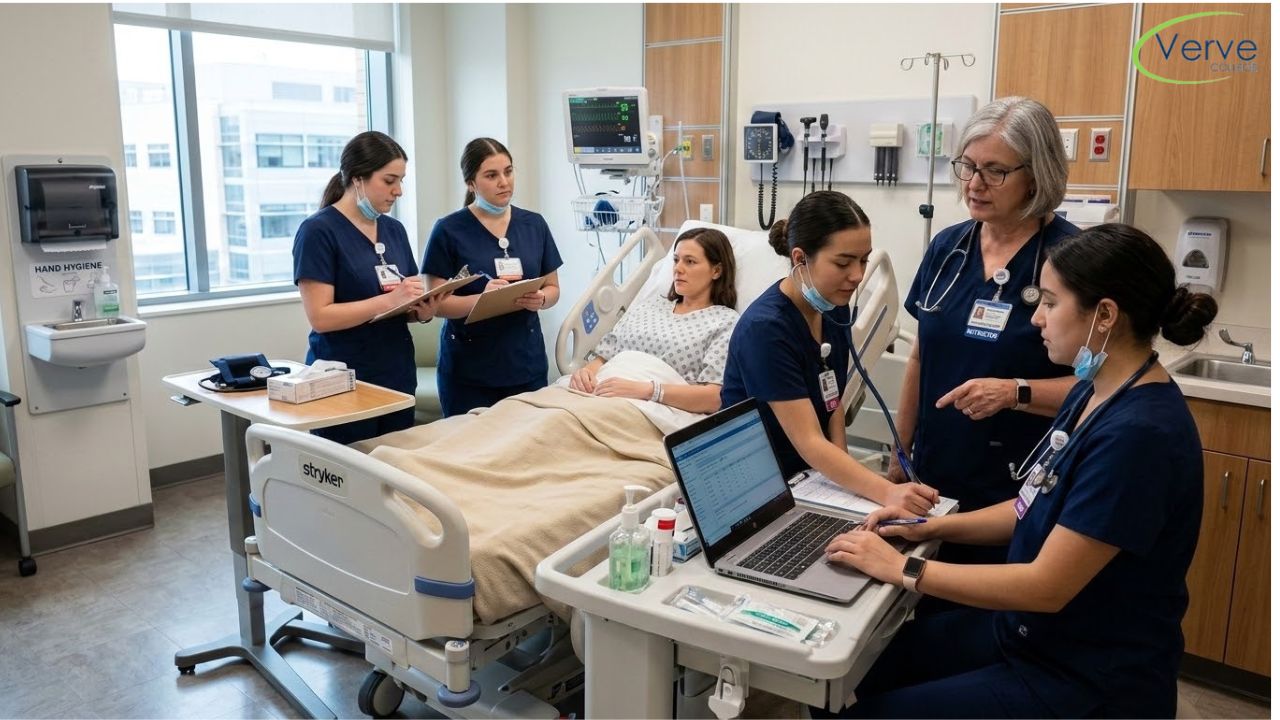
In each of these settings, your communication approach directly affects the patient’s experience of care. Students enrolled in licensed practical nurse programs are trained to apply these techniques in structured clinical environments so that they become natural, not scripted, by the time they reach the bedside.
The Foundation Behind the Communication
It might seem surprising, but understanding the body plays a role in becoming a better communicator with grieving patients. When you understand how stress affects the nervous system, how grief manifests physically, and how chronic emotional distress can impact health outcomes, you approach patient care differently.
That connection between physiological understanding and patient interaction is one reason anatomy and physiology classes are such an important part of nursing preparation. When you understand why the body responds to grief the way it does, your empathy becomes more informed and your assessments become more complete.
Conclusion
Therapeutic communication in nursing is not a soft skill. It is a clinical one. The ability to sit with a grieving patient, listen without flinching, and respond with genuine empathy is something that improves patient outcomes and shapes the kind of nurse you become.
These techniques take practice, and they develop over time with the right training and exposure. If you are preparing to enter a nursing career and want to build both the clinical and communication skills that define great patient care, Verve College offers structured programs designed to get you there. The work you do in the classroom and in clinical training becomes the foundation for every conversation that matters.
Get Your Nursing Career Training Readiness Score Now!
Frequently Asked Questions (FAQs)
What is therapeutic communication in nursing and why does it matter for grieving patients?
Therapeutic communication is a set of intentional, patient-focused interaction skills that nurses use to build trust and support wellbeing. For grieving patients, it creates a space where they feel safe, heard, and supported rather than rushed or dismissed. These skills directly influence how patients cope with loss and engage with their care.
What if I say the wrong thing to a grieving patient?
It happens, and it does not make you a bad nurse. What matters most is that you stay present and do not retreat from the conversation. If something you said missed the mark, a simple “I want to make sure I’m supporting you the right way. Can you tell me how you’re feeling?” can redirect the interaction with honesty and care.
How do nursing programs teach students to handle emotionally difficult patient conversations?
Good nursing programs integrate communication skills training alongside clinical coursework, giving students practice in realistic scenarios before they face them in real settings. At Verve College, students develop these skills through hands-on learning in a structured, supportive environment that prepares them for the full range of patient interactions they will encounter in their careers.
Most Popular Blogs Posts
From Classroom to Clinic: The Value…
June 9, 2026 Read More