Sign up
 Login
Login
Is a Nursing Career Right For You?
Take The Free Quiz
The Essential Role of Nurses in Managing Workplace Conflict
The Essential Role of Nurses in Managing Workplace Conflict
Workplace conflict is a natural part of any healthcare environment, but how it’s handled can make a big difference in team performance, patient safety, and job satisfaction. Nurses often stand at the center of these interactions, making the role of nurse in conflict management incredibly important. Their communication skills, empathy, and leadership abilities allow them to defuse tension and guide teams toward healthier, more productive interactions.
Whether you’re preparing through an A&P prep course Illinois, starting clinical rotations, or advancing in your nursing journey, learning to navigate conflict is a must-have skill.

Key Takeaways
- Nurses play a central role in resolving conflicts because of their teamwork and patient-centered responsibilities.
- Effective conflict management requires communication, emotional intelligence, and problem-solving skills.
- Healthy conflict resolution improves team morale, reduces medical errors, and strengthens patient care.
- Understanding different conflict styles helps nurses address issues professionally and confidently.
- Creating a positive workplace culture starts with respectful communication and early intervention.
Role of Nurses in Conflict Management
Nurses interact with physicians, nursing assistants, patients, family members, and administrators every day. Because they bridge these relationships, they often notice misunderstandings early and step in before issues escalate. Their ability to promote cooperation and protect patient safety makes the role of the nurse in conflict management essential.
Why Conflict Happens in Healthcare?
Conflict can arise from:
- High-pressure situations
- Miscommunication
- Differences in values or work styles
- Unequal workloads
- Limited staffing or resources
Healthcare settings move fast, and nurses must think clearly, communicate openly, and maintain professionalism even during emotionally tense moments.
Key Responsibilities Nurses Take in Conflict Situations
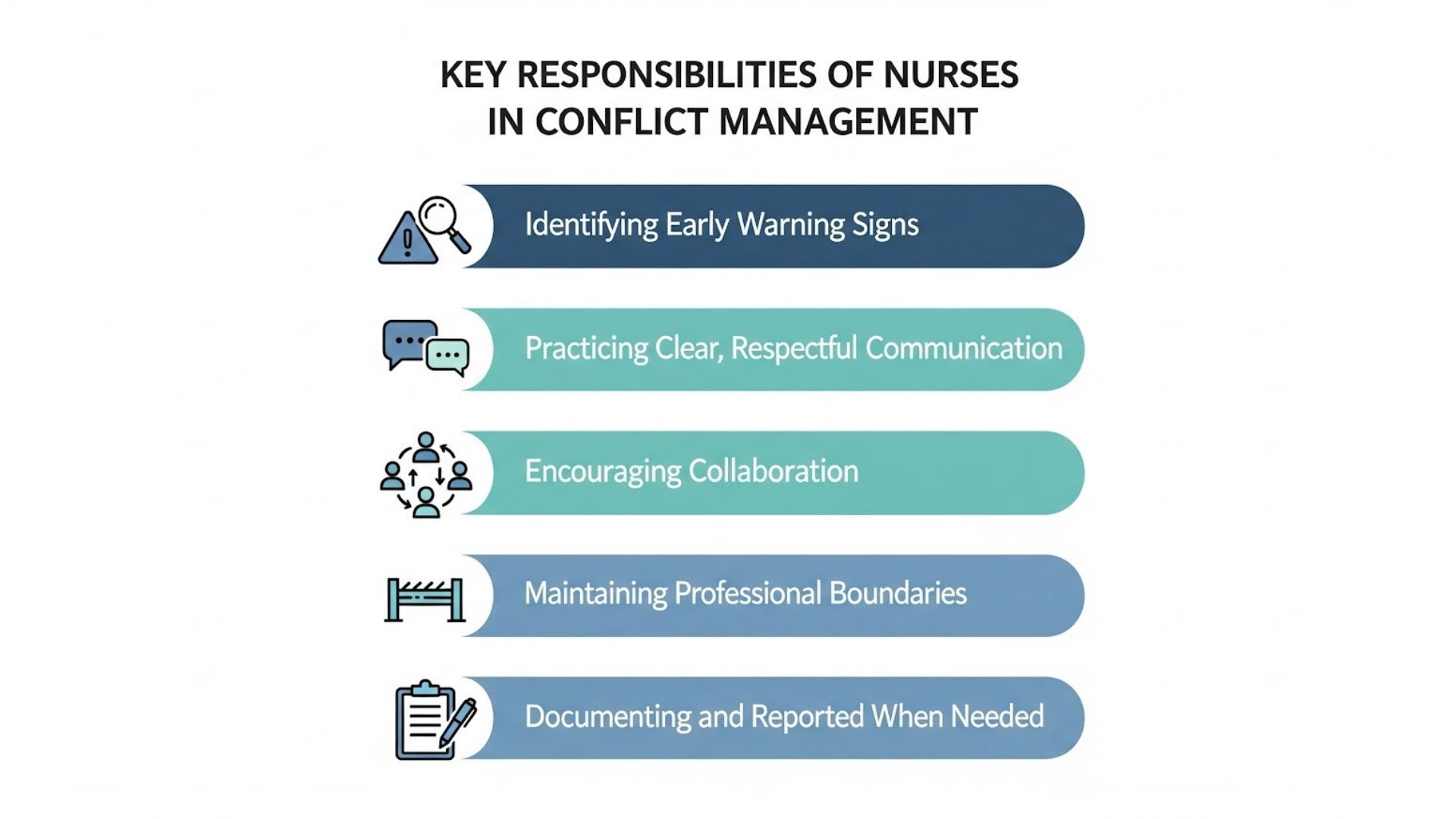
1. Identifying Early Warning Signs
Nurses notice early signs of tension—tone changes, frustration, or misunderstandings—and address issues quickly to prevent conflicts from growing and affecting patient care.
2. Practicing Clear, Respectful Communication
They use calm, respectful communication and active listening to clarify concerns, reduce miscommunication, and help team members understand each other better during stressful moments.
3. Encouraging Collaboration
Nurses guide team discussions, promote cooperation, and keep everyone focused on shared patient-care goals to resolve disagreements in a supportive and professional way.
4. Maintaining Professional Boundaries
They stay neutral, avoid taking sides, and respond professionally, helping prevent conflicts from becoming personal and keeping the conversation focused on solutions.
5. Documenting and Reporting When Needed
When conflicts affect care, nurses document the situation accurately and report it to supervisors to ensure proper follow-up and maintain patient and workplace safety.
Building Skills for Better Conflict Resolution
Developing strong conflict management skills doesn’t happen overnight. Many nurses strengthen their communication and teamwork abilities through education, hands-on practice, and continued professional development.
Students searching for anatomy and physiology classes near me often begin their journey by mastering foundational knowledge. But alongside academics, they’re also building the confidence and interpersonal skills that will help them handle disagreements in real-life clinical settings.
Define Effective Strategies to Combat Lateral Violence in Nursing
Helpful Conflict-Resolution Techniques for Nurses
- “Stop and Listen” Technique: Pausing before responding prevents emotional reactions.
- “I” phrases can be used to voice concerns without coming across as aggressive.
- Staying solution-focused: Keeps discussions professional and productive.
- Showing empathy: Validates the feelings of coworkers or patients.
- Seeking support: Involving supervisors when issues become unmanageable.
Benefits of Effective Conflict Management
When nurses handle conflict well, the entire healthcare environment improves:
- Better teamwork
- Safer patient care
- Reduced stress
- Fewer communication errors
- Higher job satisfaction
Conclusion
From mediating team disagreements to easing patient–family tensions, the role of nurse in conflict management is essential in every healthcare setting. Nurses often serve as the bridge between different members of the care team, using empathy, communication, and quick decision-making to prevent misunderstandings from escalating. Their ability to stay calm under pressure not only supports a healthier work environment but also strengthens patient safety and teamwork.
Strong interpersonal skills help nurses maintain harmony, reduce risks, and inspire confidence within their teams. By practicing active listening, showing respect, and focusing on solutions, nurses create a more positive and cooperative atmosphere for everyone involved.
As you continue your nursing journey, whether exploring LPN programs near me or preparing for clinical practice, developing conflict management skills will make you a stronger, more effective healthcare professional.
Want to Make a Career in Nursing? Get More Information About Our Courses!
FAQs
1. Why is conflict management important in nursing?
It improves teamwork, reduces medical errors, and helps create a positive, safe environment for both patients and staff.
2. What skills help nurses manage conflict effectively?
Key skills include communication, empathy, active listening, emotional control, and problem-solving.
3. How can nursing students prepare for workplace conflict?
By practicing communication techniques, learning through simulations, observing clinical interactions, and receiving feedback from instructors or mentors.
Most Popular Blogs Posts

Vital Signs Monitoring: A Complete Student…
March 26, 2026 Read More
Soft Skills That Make You a…
March 25, 2026 Read More
Compact Bone vs Spongy Bone: Key…
March 24, 2026 Read More
Can You Work While Studying LPN?…
March 24, 2026 Read More