- Oak Brook:(630) 705-9999
- Chicago:(312) 920-8822
- Email:inquiry@vervecollege.edu
- Make a Payment
 Sign up
 Login
Login
- Home
- Programs
- Admission
- Resources
- ATI Entrance Exam Resources
- New E-Digital Library
- Refer a Friend
- School Newsletter
- Events
- Employers
- Job-Network
- Alpha Beta Kappa Candidates
- Verve College Library
- Graduation and Pinning Ceremony Photo Galleries
- Textbook Information
- Career Services
- Tutoring
- School Catalog
- FAQ
- Constitution Day Program
- Alumni
- Verve College Plans
- Financial Aid
- HEERF Reporting
- Satisfactory Academic Progress
- Apply For Financial Aid
- Net Price Calculator
- Return of Title IV Funds (R2T4)
- Financial Aid Office Code of Conduct
- Contact
- FAQs
- Verification Policy
- Vaccination Policy
- Student Right-to-Know Act
- Misrepresentation
- Information Security Program
- Academic Award Year
- Availability of Employee
- Cost of Attendance
- Health & Safety Exemption Requirement
- Students Rights and Responsibilities
- Leave of Absence
- Pell Formula
- Military Students
- Grants/ Scholarship Policy
- Contact Us
- Testimonials
- Blog
Is a Nursing Career Right For You?
Take The Free Quiz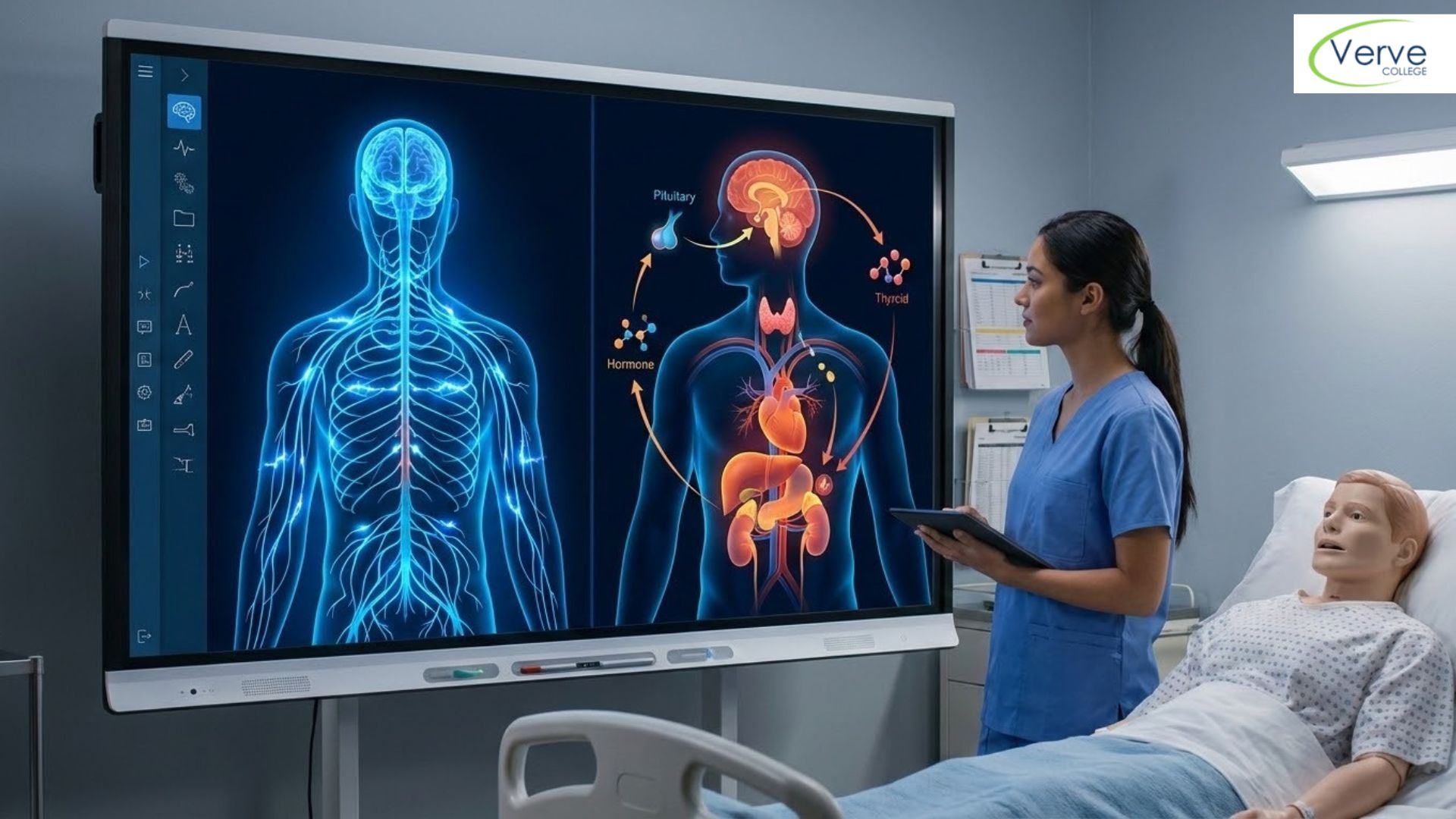
Nervous System vs Endocrine System: Who Controls What in Your Body?
Nervous System vs Endocrine System: Who Controls What in Your Body?
Ever wondered how your body reacts so fast to pain but takes longer to grow or heal? That’s because two different systems are working behind the scenes. Understanding the nervous system vs endocrine system can clear up a lot of confusion for aspiring healthcare students.
If you’re starting your journey in healthcare, especially through an A&P Prep Course at Verve College, this topic becomes even more important. Let’s break it down in a simple, real-world way.
Key Takeaways
- The nervous system controls fast, short-term actions like reflexes and movement
- The endocrine system controls slow, long-term processes like growth and hormones
- Both systems work together to maintain balance in the body
- Understanding this topic is key for anatomy, exams, and clinical skills
- This knowledge directly supports nursing training and patient care
What Is the Nervous System?
The nervous system is your body’s rapid response system. It sends electrical signals to control immediate actions.
Think about touching a hot surface. You pull your hand away instantly. That’s your nervous system at work.
Key Features
- Uses electrical signals
- Acts very fast (milliseconds)
- Effects are short-lived
- Includes the brain, spinal cord, and nerves
Real-Life Example
If your heart rate increases when you feel scared, that’s the nervous system reacting instantly.
What Is the Endocrine System?
The endocrine system works differently. It uses hormones, which are chemical messengers released into the bloodstream.
This system is slower but has longer-lasting effects.
Key Features
- Uses hormones (chemical signals)
- Acts slowly (seconds to days)
- Effects last longer
- Includes glands like the thyroid, pituitary, and adrenal glands
Real-Life Example
Growth during puberty or changes in metabolism are controlled by the endocrine system.
Nervous System vs Endocrine System: Key Differences
Understanding the difference is easier when you compare them side by side.
Speed of Response
- Nervous system: Very fast
- Endocrine system: Slow and steady
Type of Signal
- Nervous system: Electrical impulses
- Endocrine system: Hormones
Duration of Effect
- Nervous system: Short-term
- Endocrine system: Long-lasting
Target Area
- Nervous system: Specific (targeted cells)
- Endocrine system: Widespread (travels through blood)
If you’re preparing for nursing exams or considering an LPN program in Chicago, this comparison is one of the most tested and practical concepts.
Why Both Systems Matter in Healthcare
In real patient care, these systems don’t work alone. They are connected and often overlap.
For example:
- Stress triggers the nervous system first
- Then hormones like cortisol are released by the endocrine system
As a future nurse, you’ll see this connection in:
- Vital signs
- Medication effects
- Patient behavior and recovery
This is why understanding both systems is not just theory. It’s something you’ll apply every day.
How They Work Together
The body depends on balance. This balance is called homeostasis, which means keeping everything stable.
The nervous system handles quick changes.
The endocrine system manages long-term adjustments.
Example
During exercise:
- Nervous system increases heart rate instantly
- Endocrine system adjusts energy levels over time
This teamwork keeps your body functioning properly.
Common Mistake Students Make
Many students think these systems do the same thing. They don’t.
A simple way to remember:
- Nervous system = fast control
- Endocrine system = slow control
What This Means for Your Nursing Path
If you’re serious about entering healthcare, you need a strong base in anatomy and physiology.
Here’s what you can do next:
- Start with fundamentals like body systems
- Practice applying concepts to real-life situations
- Build confidence before clinical training
If you’re looking for a practical starting point, an LPN school in Chicago can help you move from theory to real patient care with structured support.
Conclusion
The difference between the nervous system and endocrine system is simple once you break it down. One works fast and short-term. The other works slowly but lasts longer.
Both are essential for keeping the body stable and functioning.
For anyone planning a healthcare career, especially in nursing, this knowledge is not optional. It’s foundational. The sooner you understand it, the easier your learning journey becomes.
Get Your Nursing Career Training Readiness Score Now!
FAQs
1. What is the main difference between the nervous system and endocrine system?
The nervous system uses electrical signals for fast responses, while the endocrine system uses hormones for slower, long-lasting effects.
2. Why is this topic important for nursing students?
It helps you understand how the body reacts to stress, medication, and disease. This is critical for patient care and exams.
3. How can I start learning anatomy and physiology effectively?
Start with basic concepts and build step by step. Enrolling in a structured prep course can make learning easier and more practical.
Most Popular Blogs Posts

Thyroid Disorders Nursing Guide: What Every…
April 16, 2026 Read More
Top Healthcare Jobs That Don’t Require…
April 15, 2026 Read MoreNervous System vs Endocrine System: Who…
April 15, 2026 Read More
Hidden Costs of Nursing School and…
April 14, 2026 Read More