- Oak Brook:(630) 705-9999
- Chicago:(312) 920-8822
- Email:inquiry@vervecollege.edu
- Make a Payment
 Sign up
 Login
Login
- Home
- Programs
- Admission
- Resources
- ATI Entrance Exam Resources
- New E-Digital Library
- Refer a Friend
- School Newsletter
- Events
- Employers
- Job-Network
- Alpha Beta Kappa Candidates
- Verve College Library
- Graduation and Pinning Ceremony Photo Galleries
- Textbook Information
- Career Services
- Tutoring
- School Catalog
- FAQ
- Constitution Day Program
- Alumni
- Verve College Plans
- Financial Aid
- HEERF Reporting
- Satisfactory Academic Progress
- Apply For Financial Aid
- Net Price Calculator
- Return of Title IV Funds (R2T4)
- Financial Aid Office Code of Conduct
- Contact
- FAQs
- Verification Policy
- Vaccination Policy
- Student Right-to-Know Act
- Misrepresentation
- Information Security Program
- Academic Award Year
- Availability of Employee
- Cost of Attendance
- Health & Safety Exemption Requirement
- Students Rights and Responsibilities
- Leave of Absence
- Pell Formula
- Military Students
- Grants/ Scholarship Policy
- Contact Us
- Testimonials
- Blog
Is a Nursing Career Right For You?
Take The Free Quiz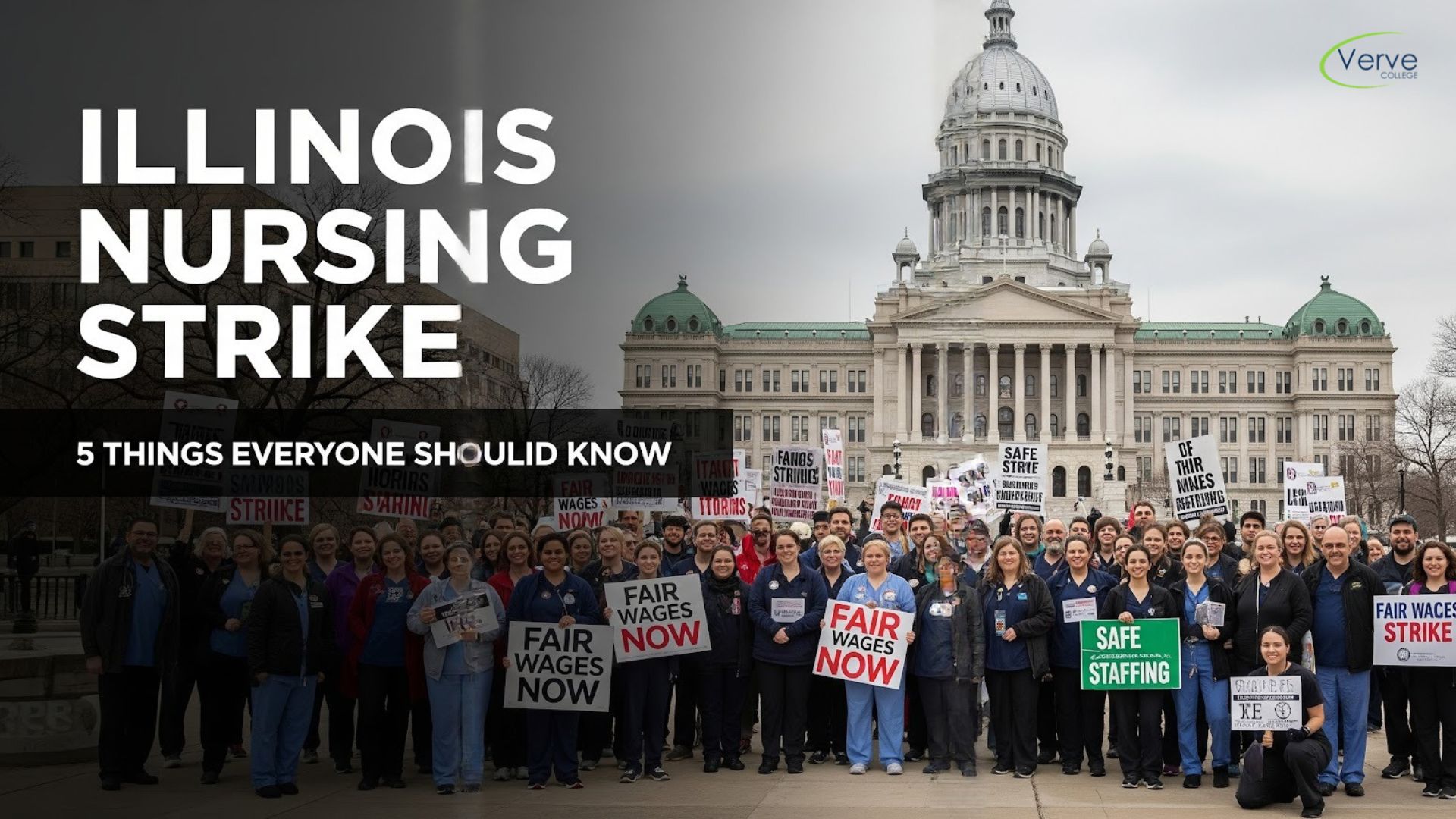
5 Things Everyone Should Know About the Illinois Nursing Strike
5 Things Everyone Should Know About the Illinois Nursing Strike
The Illinois nursing strike has captured widespread attention in hospitals, clinics, and nursing schools. This strike is not just a labor dispute; it highlights deeper issues in healthcare, including nurse staffing, patient safety, and fair compensation. For students exploring nursing careers, enrolling in a hybrid practical nursing program provides insight into the real-world challenges nurses face, including staffing shortages and altered clinical schedules. Understanding the strike also prepares future nurses to advocate for better working conditions while maintaining high-quality patient care.
Key Takeaways
- The strike reflects ongoing challenges with staffing, wages, and nurse safety.
- Patient care and hospital operations are temporarily disrupted during strikes.
- Labor disputes can influence healthcare policies and regulations.
- Nursing students experience changes in clinical rotations and learning opportunities.
- Resolutions often involve improved wages, staffing policies, and safety protocols.
Illinois Nursing Strike
The Illinois nursing strike is a significant event in the state’s healthcare system. Nurses strike to demand fair wages, safe staffing levels, and better workplace conditions. Long hours, burnout, and patient safety concerns are common reasons behind such strikes.
Hospitals often operate with reduced staff during strikes, which can delay elective procedures and increase stress on non-striking employees. The strike also brings public attention to systemic problems in healthcare. For nursing students in hybrid LPN programs near me, these strikes highlight the importance of flexibility, resilience, and understanding workforce challenges. Learning about these events helps students connect theory with real-world nursing practice.
5 Key Facts About the Strike
1. Causes of the Strike
At the core, the strike is about workplace fairness and patient safety. Nurses demand higher wages to match the increasing cost of living and reflect the critical nature of their work. Understaffing is another major concern, as it can compromise care and increase burnout. By addressing these issues, strikes aim to improve the overall quality of healthcare and protect both patients and nurses.
2. Impact on Patient Care
During strikes, hospitals and clinics may reduce elective procedures, cancel non-urgent appointments, and rely on temporary or non-striking staff. While emergency care continues, patients may experience longer wait times. Understanding this helps nursing students and the public appreciate the vital role nurses play in ensuring smooth hospital operations and safe patient outcomes.
3. Influence on Healthcare Policy
Strikes often drive policy changes, such as legislation for minimum staffing ratios, wage increases, or improved workplace safety regulations. These changes can have lasting effects on hospitals, clinics, and nursing education programs. Students entering healthcare learn early how advocacy and organized labor efforts can shape the industry.
4. Effects on Nursing Students
Students in nursing programs may face disruptions in clinical rotations, which are crucial for hands-on learning. For those enrolled in programs, strikes can require rescheduling clinicals, adapting to new mentors, or finding alternative training sites. While initially inconvenient, these experiences teach adaptability, problem-solving, and professional communication skills—essential traits for every nurse.
5. Resolution and Outcomes
Strikes typically conclude through negotiation between hospital administrators and nursing unions. Agreements usually address pay raises, improved staffing levels, and enhanced safety protocols. These outcomes benefit not only current nurses but also create a healthier, more supportive environment for students entering nursing programs. Such resolutions show how collective action can lead to meaningful, long-term improvements in healthcare.
Additional Insights
- Public Awareness: Strikes often spark public debate about healthcare priorities, bringing attention to issues like nurse burnout and staffing shortages.
- Economic Impact: Beyond healthcare, strikes can have economic effects on hospitals and surrounding communities, influencing employment and patient flow.
- Professional Development: Future nurses can learn negotiation skills, labor rights, and the importance of ethical advocacy through observing these events.
Conclusion
The Illinois nursing strike highlights the need for fair labor practices, safe staffing, and effective healthcare policies. Understanding these issues is essential for aspiring nurses and the general public alike. Students choosing the best nursing schools in Illinois gain both knowledge and practical experience to navigate real-world challenges in healthcare. Awareness of strikes not only informs students about workforce realities but also teaches them the importance of advocacy, patient safety, and professional resilience.
Want to Make a Career in Nursing? Get More Information About Our Courses!
FAQs
- How long do nursing strikes in Illinois usually last?
Strikes can last anywhere from a few days to several weeks, depending on the complexity of negotiations and the willingness of both parties to reach an agreement. - Will the strike affect my clinical rotations?
Yes. Nursing students may experience schedule changes, temporary relocation, or altered training methods, particularly in hybrid LPN programs. - Are nursing strikes common in the U.S.?
While not extremely frequent, strikes occur when nurses’ concerns about pay, staffing, or safety are not addressed through routine discussions. They are often a last resort to prompt systemic changes.
Most Popular Blogs Posts

Soft Skills That Make You a…
March 25, 2026 Read More
Compact Bone vs Spongy Bone: Key…
March 24, 2026 Read More
Can You Work While Studying LPN?…
March 24, 2026 Read More
Skeletal System: Everything Nursing Students Should…
March 23, 2026 Read More