- Oak Brook:(630) 705-9999
- Chicago:(312) 920-8822
- Email:inquiry@vervecollege.edu
- Make a Payment
 Sign up
 Login
Login
- Home
- Programs
- Admission
- Resources
- ATI Entrance Exam Resources
- New E-Digital Library
- Refer a Friend
- School Newsletter
- Events
- Employers
- Job-Network
- Alpha Beta Kappa Candidates
- Verve College Library
- Graduation and Pinning Ceremony Photo Galleries
- Textbook Information
- Career Services
- Tutoring
- School Catalog
- FAQ
- Constitution Day Program
- Alumni
- Verve College Plans
- Financial Aid
- HEERF Reporting
- Satisfactory Academic Progress
- Apply For Financial Aid
- Net Price Calculator
- Return of Title IV Funds (R2T4)
- Financial Aid Office Code of Conduct
- Contact
- FAQs
- Verification Policy
- Vaccination Policy
- Student Right-to-Know Act
- Misrepresentation
- Information Security Program
- Academic Award Year
- Availability of Employee
- Cost of Attendance
- Health & Safety Exemption Requirement
- Students Rights and Responsibilities
- Leave of Absence
- Pell Formula
- Military Students
- Grants/ Scholarship Policy
- Contact Us
- Testimonials
- Blog
Is a Nursing Career Right For You?
Take The Free Quiz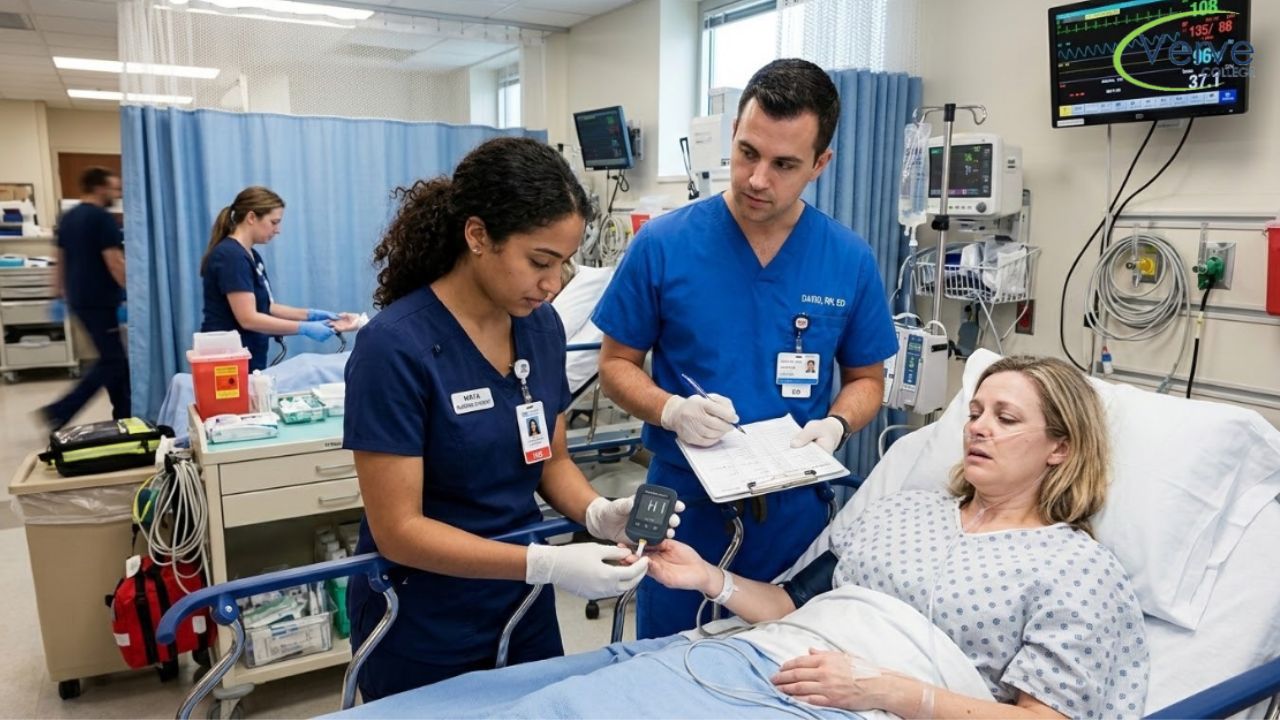
Hypoglycemia vs Hyperglycemia: Emergency Nursing Interventions for Diabetes
Hypoglycemia vs Hyperglycemia: Emergency Nursing Interventions for Diabetes
Dealing with a diabetic emergency can be scary if you do not know the signs. As a nurse, you will often need to tell the difference between low and high blood sugar quickly. Understanding hypoglycemia vs hyperglycemia is crucial for protecting your patients on the medical floor. This guide will show you exactly what to look for and how to respond safely.
Key Takeaways
- Learn the critical differences between cold, sweaty low blood sugar and hot, dry high blood sugar.
- Understand the immediate medical steps to take during a diabetic crisis to stabilize your patient.
- Discover how starting with basic anatomy and physiology classes builds the foundation for these vital clinical skills.
- Find out how hands on laboratory training prepares you for real world medical emergencies.
What Does Low Blood Sugar Look Like?
When a patient’s blood sugar drops too low, their body goes into panic mode. They might suddenly sweat, shake, or feel dizzy. A common nursing phrase to remember is “cold and clammy, need some candy.”
If your patient is confused or struggling to speak, you must act fast. Low glucose means their brain is not getting the fuel it needs to function properly. Spotting these physical clues early can stop a minor drop from becoming a severe medical crisis.
How Nurses Treat Low Blood Sugar Fast
If the patient is awake and can swallow safely, offer them a fast acting sugar like fruit juice or glucose tablets. You will then recheck their levels in fifteen minutes to make sure the numbers are going up. Repeating this process ensures their energy remains stable.
If the patient is unconscious, nurses use emergency medications like glucagon or special intravenous fluids to save their life. You will always document the exact time and intervention used. Keeping clear records protects the patient and informs the rest of the healthcare team.
Recognizing High Blood Sugar Symptoms
High blood sugar happens when the body does not have enough insulin to process glucose. This condition develops much slower than a low sugar crash. Patients will often feel extremely thirsty and need to use the bathroom frequently.
Remember the phrase “hot and dry, sugar high” to quickly identify this issue on the clinical floor. The patient might also complain of a headache or blurred vision. If left untreated over several days, high glucose can cause severe damage to internal organs.
Nursing Steps for Managing High Glucose
Treating high blood sugar requires careful monitoring and medication administration. Nurses will often give prescribed insulin to help the body absorb the extra sugar safely. You must also encourage the patient to drink water to flush out the excess glucose through their urine.
In structured practical nursing programs, you get to practice these exact emergency responses in safe simulation labs before working with real people. Instructors will guide you through calculating insulin doses correctly. This ensures you never make a math error during a stressful medical event.
Comparing the Two Diabetic Emergencies
Low sugar hits fast and causes sweating and confusion. High sugar builds up slowly, causing deep thirst and dry skin. It is very important to recognize the speed of these symptoms.
Low sugar needs immediate food or glucose to prevent brain damage. High sugar needs insulin and hydration to bring the body back to a normal state. Both situations require you to check the patient’s vital signs and report to the supervising doctor right away.
Your Next Steps in Healthcare Education
Mastering these medical emergencies takes practice, solid instruction, and a supportive learning environment. If you are ready to turn your passion for helping others into a secure career, Verve College is here to help. Our focused licensed practical nurse programs can be completed in just 12 to 14 months.
With flexible day, evening, and weekend schedules, working adults can earn their diploma without pausing their lives. You also get peace of mind knowing that tuition is an all-inclusive package. This covers your books, uniforms, and learning supplies so there are no hidden fees later.
Bridging Classroom Learning and Real Patient Care
Many students worry about remembering all these medical details under pressure. Do not stress about knowing everything on your first day. At Verve College, our strict 84 percent passing standard ensures you master these concepts thoroughly. You will practice managing diabetic crises on advanced medical mannequins long before your clinical externships begin.
Get Your Nursing Career Training Readiness Score Now!
Conclusion
Knowing how to handle diabetic emergencies makes you a highly trusted medical professional. By learning to spot the physical signs quickly, you can prevent serious complications for your patients and potentially save lives.
Taking the leap into nursing is a big decision, but it leads to a truly rewarding future. Verve College prepares you for these exact real world clinical moments in just 12 to 14 months. Reach out today to explore your training options at our Oak Brook or Chicago campus and start your journey with confidence.
Frequently Asked Questions
What is the most dangerous diabetic emergency?
Both low and high blood sugar are dangerous, but low blood sugar can cause brain damage or a coma much faster. Nurses must treat low blood sugar immediately to protect the patient’s brain function. Quick action is always required.
What should I do if I am not sure which emergency my patient is having?
Always check their blood sugar level with a monitor first. If you cannot check their level and they are passing out, medical protocols usually say to treat for low blood sugar first while calling for emergency help.
How long does it take to learn these clinical skills? You can learn to manage complex patient care in a relatively short time. The comprehensive training at Verve College takes just 12 to 14 months. You will be fully prepared for your state licensure exam and real floor duties.
Most Popular Blogs Posts
What Is Situational Awareness in Healthcare?
July 16, 2026 Read More

How Team Communication Prevents Errors in…
July 15, 2026 Read More
Why Observation Skills Matter in Nursing
July 14, 2026 Read More