- Oak Brook:(630) 705-9999
- Chicago:(312) 920-8822
- Email:inquiry@vervecollege.edu
- Make a Payment
 Sign up
 Login
Login
- Home
- Programs
- Admission
- Resources
- ATI Entrance Exam Resources
- New E-Digital Library
- Refer a Friend
- School Newsletter
- Events
- Employers
- Job-Network
- Alpha Beta Kappa Candidates
- Verve College Library
- Graduation and Pinning Ceremony Photo Galleries
- Textbook Information
- Career Services
- Tutoring
- School Catalog
- FAQ
- Constitution Day Program
- Alumni
- Verve College Plans
- Financial Aid
- HEERF Reporting
- Satisfactory Academic Progress
- Apply For Financial Aid
- Net Price Calculator
- Return of Title IV Funds (R2T4)
- Financial Aid Office Code of Conduct
- Contact
- FAQs
- Verification Policy
- Vaccination Policy
- Student Right-to-Know Act
- Misrepresentation
- Information Security Program
- Academic Award Year
- Availability of Employee
- Cost of Attendance
- Health & Safety Exemption Requirement
- Students Rights and Responsibilities
- Leave of Absence
- Pell Formula
- Military Students
- Grants/ Scholarship Policy
- Contact Us
- Testimonials
- Blog
Is a Nursing Career Right For You?
Take The Free Quiz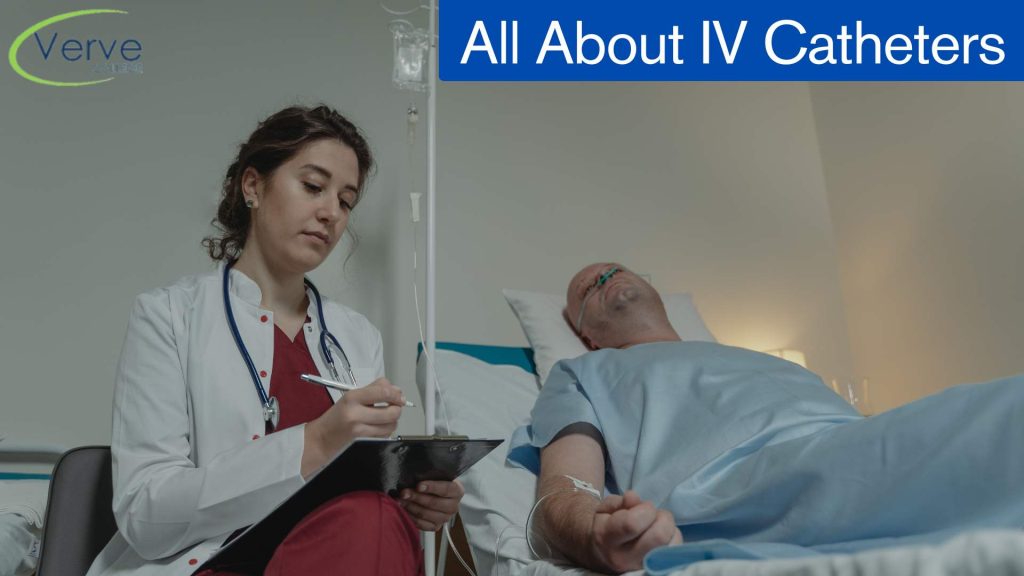
Everything You Need to Know About IV Catheters in 2025
Everything You Need to Know About IV Catheters in 2025
More than 80% of hospital patients receive some form of IV therapy during their stay, according to recent healthcare studies. That means understanding how a catheter IV works is a must if you’re learning to become a nurse. If you’re in an A&P class or thinking about starting one, this is one of the first clinical skills you’ll hear about and for good reason. IV catheters are used every day to give medicine, fluids, and even nutrition.
This guide will help you out to learn more about catheter IV. You’ll learn what a catheter IV is, the different types, how it’s used, how to care for it, and what problems to watch for. This will provide you with the fundamentals you need to feel secure, regardless of whether you’re just beginning off or preparing for your first clinical rotation.
What is an IV Catheter?
IV Cathetera thin, flexible tube placed into a vein to deliver fluids or medicine. It helps patients get what they need quickly, especially in emergencies or during hospital stays.
This tool is used often in hospitals and clinics. It’s a basic but important part of patient care. Learning how it works is one of the first steps in medical or nursing training.
IV Catheter Insertion Procedure
1.Gather Supplies
Prepare the following supplies: gauze, tape, antiseptic wipes, gloves, an IV catheter, and a tourniquet.
2.Prepare the Site
Clean the area with antiseptic and let it dry to lower infection risk.
3.Insert the Catheter
Until blood starts to return, carefully slide the needle into the vein.
4.Secure and Flush
To guarantee flow, secure the catheter with tape and flush with saline.
Before starting an IV, it’s important to know which catheter to choose. The decision depends on how long the treatment will last and what the patient needs. If you’re unsure, explore the types of catheters for IV to understand which one works best for each situation.
How to Choose the Right IV Catheter?
To choose the right catheter IV, think about how long the treatment will last and what it’s for. Look at the patient’s age, vein size, and overall condition. Peripheral lines work for short-term needs. Strong medications or long-term care are better served via central lines. LPNs may not insert every type, but they help monitor the site and report issues quickly. Always follow facility guidelines and care plans.
Conclusion
Learning how to care for a catheter IV is an important part of nursing. It’s a skill that helps save lives, reduce risks, and improve patient comfort. From insertion to maintenance, understanding each step can make a big difference in clinical care. Even though this guide didn’t cover the types of catheters, it gives you a solid start on how they’re used and why they matter. Knowing the basics now helps you grow faster during hands-on training.
If you’re looking to build your skills and knowledge, especially in medical procedures and anatomy, start with the right education. Searching for anatomy classes near me is a smart first move. At Verve College, we offer real-world training that prepares you for success as a practical nurse. Our courses are designed to make learning clear, simple, and focused.
Want to Make a Career in Nursing? Get More Information About Our Courses!
Get started today. Join Verve College and take the first step toward your nursing career with confidence.
Most Popular Blogs Posts

Complete Guide to Nutrition in Nursing…
March 10, 2026 Read More
Is Acute Care Experience Necessary for…
March 6, 2026 Read More
How Hospitals Manage Patient Flow During…
March 6, 2026 Read More
What Nursing Schools Don’t Always Tell…
March 6, 2026 Read More