- Oak Brook:(630) 705-9999
- Chicago:(312) 920-8822
- Email:inquiry@vervecollege.edu
- Make a Payment
 Sign up
 Login
Login
- Home
- Programs
- Admission
- Resources
- ATI Entrance Exam Resources
- New E-Digital Library
- Refer a Friend
- School Newsletter
- Events
- Employers
- Job-Network
- Alpha Beta Kappa Candidates
- Verve College Library
- Graduation and Pinning Ceremony Photo Galleries
- Textbook Information
- Career Services
- Tutoring
- School Catalog
- FAQ
- Constitution Day Program
- Alumni
- Verve College Plans
- Financial Aid
- HEERF Reporting
- Satisfactory Academic Progress
- Apply For Financial Aid
- Net Price Calculator
- Return of Title IV Funds (R2T4)
- Financial Aid Office Code of Conduct
- Contact
- FAQs
- Verification Policy
- Vaccination Policy
- Student Right-to-Know Act
- Misrepresentation
- Information Security Program
- Academic Award Year
- Availability of Employee
- Cost of Attendance
- Health & Safety Exemption Requirement
- Students Rights and Responsibilities
- Leave of Absence
- Pell Formula
- Military Students
- Grants/ Scholarship Policy
- Contact Us
- Testimonials
- Blog
Is a Nursing Career Right For You?
Take The Free Quiz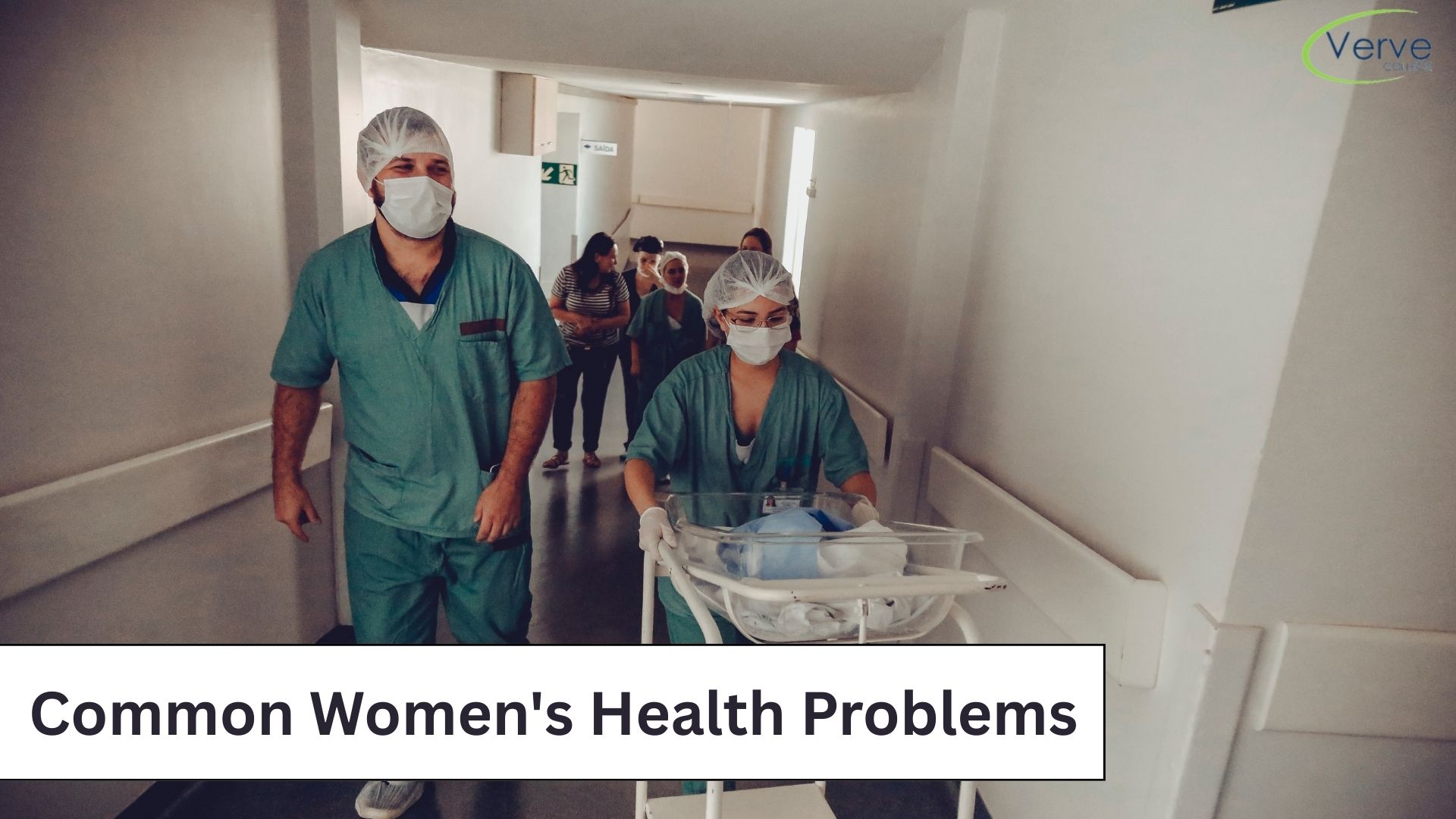
Common Women’s Health Problems: A Nurse’s Perspective
Common Women’s Health Problems: A Nurse’s Perspective
Recent reports show that nearly 1 in 3 women delay medical care because they are busy with family or work. As a nurse, I see how this often leads to bigger health challenges later. Recognizing symptoms early is key to preventing common women’s health problems. From period concerns to stress and fatigue, small issues can grow if ignored.
With nurse’s insights, this blog will share real guidance. Just like the best nursing schools in Illinois teach us, prevention starts with awareness. Let’s look at the most frequent women’s health issues today.
Common Women’s Health Problems Explained by a Nurse
When talking about common women’s health problems, it helps to look at them in groups. This makes it easier to understand how different areas of health connect and why early care matters. From my years in nursing, I have seen how timely support can change lives. Let’s walk through the main categories.
Reproductive and Gynecological Health Issues
Many women face menstrual disorders like irregular periods, polycystic ovary syndrome (PCOS), or endometriosis. These conditions often cause pain, mood changes, or heavy bleeding that affect daily life. Fertility struggles and menopause symptoms can also be overwhelming, especially when left unaddressed.
From a nurse’s perspective, the best step is early check-ups. Tracking cycles, seeking medical advice when patterns change, and making lifestyle adjustments such as healthy eating and stress control can ease symptoms. Regular visits also help detect problems before they become severe.
Chronic and Lifestyle-Linked Conditions
Some of the most serious women’s health issues are linked to long-term risks. Breast and cervical cancers remain leading concerns. Simple screenings such as mammograms and Pap smears save lives when done on time. Beyond cancer, osteoporosis, diabetes, and thyroid problems also impact women across different age groups. Nurses play a vital role in teaching women how small changes in diet, exercise, and daily routines can prevent complications. Education, early detection, and long-term care planning are all part of the support women need to stay healthy. For anyone studying health in depth, even searching for an anatomy and physiology course near me shows how awareness of the body’s systems leads to better decisions.
Mental and Emotional Wellbeing
Health is not only physical. Anxiety, depression, and postpartum depression are rising among women today. Stress from balancing work, home, and social pressures often worsens these conditions. Ignoring emotional health can also affect the body, leading to fatigue, poor sleep, or chronic pain.
Nurses take a holistic approach here. We listen, provide resources, and connect women to safe support systems. Talking openly about mental health reduces stigma and helps women find real solutions.
Nurse’s Perspective on the Bigger Picture
When you look at Women’s Health Issues from a Nurse’s Perspective, one theme stands out: early action matters. Whether it is cancer screening, managing PCOS, or addressing depression, small steps prevent larger problems. Nurses help guide women to care, support healthy habits, and give reassurance that they are not alone. Understanding and addressing common women’s health problems builds a foundation for stronger, healthier lives.
Conclusion
Women’s health issues are common but can be managed with early detection and the right guidance. With lifestyle changes, regular check-ups, and open conversations, better health is possible. Drawing from Nurse’s Insights on Common Women’s Health Issues, we know prevention matters. Just as accredited LPN programs in Chicago teach, awareness and support are the first steps to lasting wellness.
Most Popular Blogs Posts
Skeletal System: Everything Nursing Students Should…
March 23, 2026 Read More
Complete Guide to Skeletal Tissues, Bone…
March 19, 2026 Read More
Step-by-Step Guide to Symptom Assessment for…
March 18, 2026 Read More
Common IV Fluids and Their Role…
March 17, 2026 Read More