- Oak Brook:(630) 705-9999
- Chicago:(312) 920-8822
- Email:inquiry@vervecollege.edu
- Make a Payment
 Sign up
 Login
Login
- Home
- Programs
- Admission
- Resources
- ATI Entrance Exam Resources
- New E-Digital Library
- Refer a Friend
- School Newsletter
- Events
- Employers
- Job-Network
- Alpha Beta Kappa Candidates
- Verve College Library
- Graduation and Pinning Ceremony Photo Galleries
- Textbook Information
- Career Services
- Tutoring
- School Catalog
- FAQ
- Constitution Day Program
- Alumni
- Verve College Plans
- Financial Aid
- HEERF Reporting
- Satisfactory Academic Progress
- Apply For Financial Aid
- Net Price Calculator
- Return of Title IV Funds (R2T4)
- Financial Aid Office Code of Conduct
- Contact
- FAQs
- Verification Policy
- Vaccination Policy
- Student Right-to-Know Act
- Misrepresentation
- Information Security Program
- Academic Award Year
- Availability of Employee
- Cost of Attendance
- Health & Safety Exemption Requirement
- Students Rights and Responsibilities
- Leave of Absence
- Pell Formula
- Military Students
- Grants/ Scholarship Policy
- Contact Us
- Testimonials
- Blog
Is a Nursing Career Right For You?
Take The Free Quiz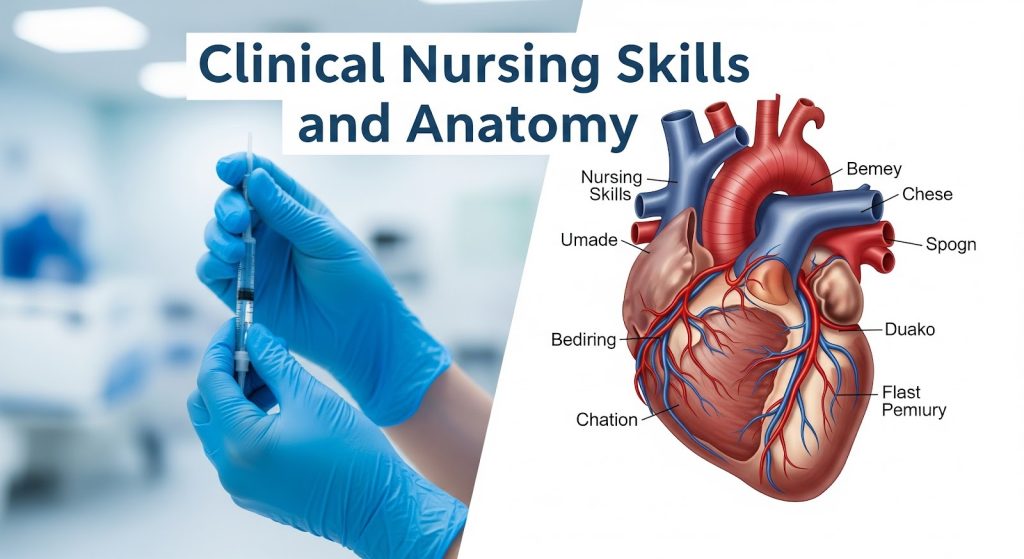
The Bridge Between Anatomy Class and Clinical Nursing Skills
The Bridge Between Anatomy Class and Clinical Nursing Skills
When students begin their nursing journey, one of the most important foundations they build is the connection between clinical nursing skills and anatomy. Understanding how the human body works helps future nurses perform accurate assessments, provide safe care, and respond effectively during emergencies. In simple terms, anatomy class gives you the “why,” while clinical training shows you the “how.” Together, they form the strong base every nurse needs.
If you’ve ever searched for the best nursing schools in Illinois or wondered where to take anatomy and physiology, you’ve likely noticed how most nursing programs include these subjects early on. That’s because classes are not just about memorizing body parts—they prepare students for hands-on learning in clinical settings. Lets understand nursing skills and human body systems in brief.
Key Takeaways
- Anatomy teaches the structure and function of the body, while nursing skills focus on applying that knowledge to patient care.
- Understanding nursing skills and human body systems helps nurses detect changes in patient conditions faster.
- Clinical experience connects theory to practice, making nurses confident and competent caregivers.
Why Anatomy and Physiology Are the Foundation of Nursing?
Before you can perform any nursing procedure, you must understand how the body works. Anatomy and physiology lessons give students this essential knowledge. For example, when you learn about the cardiovascular system, you understand why monitoring a patient’s pulse or blood pressure is vital. Similarly, studying the respiratory system explains the importance of checking oxygen levels.
These subjects also build the vocabulary nurses use daily. Terms like “arteries,” “neurons,” or “epithelial tissue” become second nature, helping you communicate clearly with other healthcare professionals.
How Anatomy Knowledge Shapes Clinical Nursing Skills?
Clinical nursing skills depend heavily on anatomical understanding. Let’s take examples:
- Injections and IVs: Knowing muscle and vein locations helps nurses insert needles safely.
- Wound Care: Understanding the layers of skin and tissue helps prevent infection and promote healing.
- Vital Signs: Recognizing normal ranges in body systems ensures early detection of health issues.
This connection shows why anatomy and physiology are taught before or alongside lab practice sessions, such as the anatomy of a lab course. These labs give students a visual and hands-on experience that later translates directly into clinical care.
The Role of Lab Practice in Skill Development
During your anatomy and physiology course near me, lab sessions often include models, diagrams, and even dissections. These exercises help students visualize the body’s complexity. When you move to clinical rotations, those visuals turn into real-life understanding—identifying veins, muscle groups, or organ areas on actual patients.
Lab practicals train your observation, precision, and hygiene habits, which are all essential during clinical procedures. For instance, when taking blood samples or inserting catheters, nurses must know both anatomy and sterile technique.
From Classroom to Clinic: Applying Theory in Real Scenarios
In clinical settings, you’ll see how everything you learned in anatomy applies. A nurse who understands how the lungs function can assess breathing sounds better. Knowledge of circulation helps in recognizing shock or dehydration early.
Nursing programs guide students step by step—from observing to performing procedures under supervision. This gradual learning bridge ensures that each nurse develops not only skill but also confidence.
The Long-Term Benefits for Nursing Careers
Strong anatomy knowledge doesn’t end after nursing school—it continues to support your career. Whether you work in pediatrics, geriatrics, or surgery, understanding nursing skills and human body systems allows you to adapt quickly to new patient needs. It also helps in decision-making, critical thinking, and patient education.
Employers value nurses who can connect science with skill because they deliver safer, more accurate care.
FAQs
- Why is anatomy important for nursing students?
Anatomy helps nursing students understand how the body works, which allows them to make better clinical decisions and care for patients safely. - How does anatomy relate to patient care?
When nurses understand organs, systems, and body functions, they can identify problems faster and apply proper treatments effectively. - Can I take anatomy and physiology before starting nursing school?
Yes, many students choose to complete anatomy and physiology early to make nursing school easier. You can find courses online or at local colleges that offer anatomy and physiology classes.
Get Your Nursing Career Training Readiness Score Now!
Conclusion
The connection between clinical nursing skills and anatomy is what turns classroom learning into real-world expertise. Anatomy provides the foundation of knowledge, while clinical practice brings it to life. Together, they shape nurses who are not only skilled but deeply aware of how the human body functions.
If you’re looking for an A&P prep course Illinois, choose one that includes lab sessions and clinical exposure. Building this bridge between theory and practice will prepare you for every challenge ahead and help you become a confident, capable nurse ready to care for others.
Most Popular Blogs Posts

Is Acute Care Experience Necessary for…
March 6, 2026 Read More
How Hospitals Manage Patient Flow During…
March 6, 2026 Read More
What Nursing Schools Don’t Always Tell…
March 6, 2026 Read More
Things Patients Taught Me About Being…
March 5, 2026 Read More