Sign up
 Login
Login
Is a Nursing Career Right For You?
Take The Free Quiz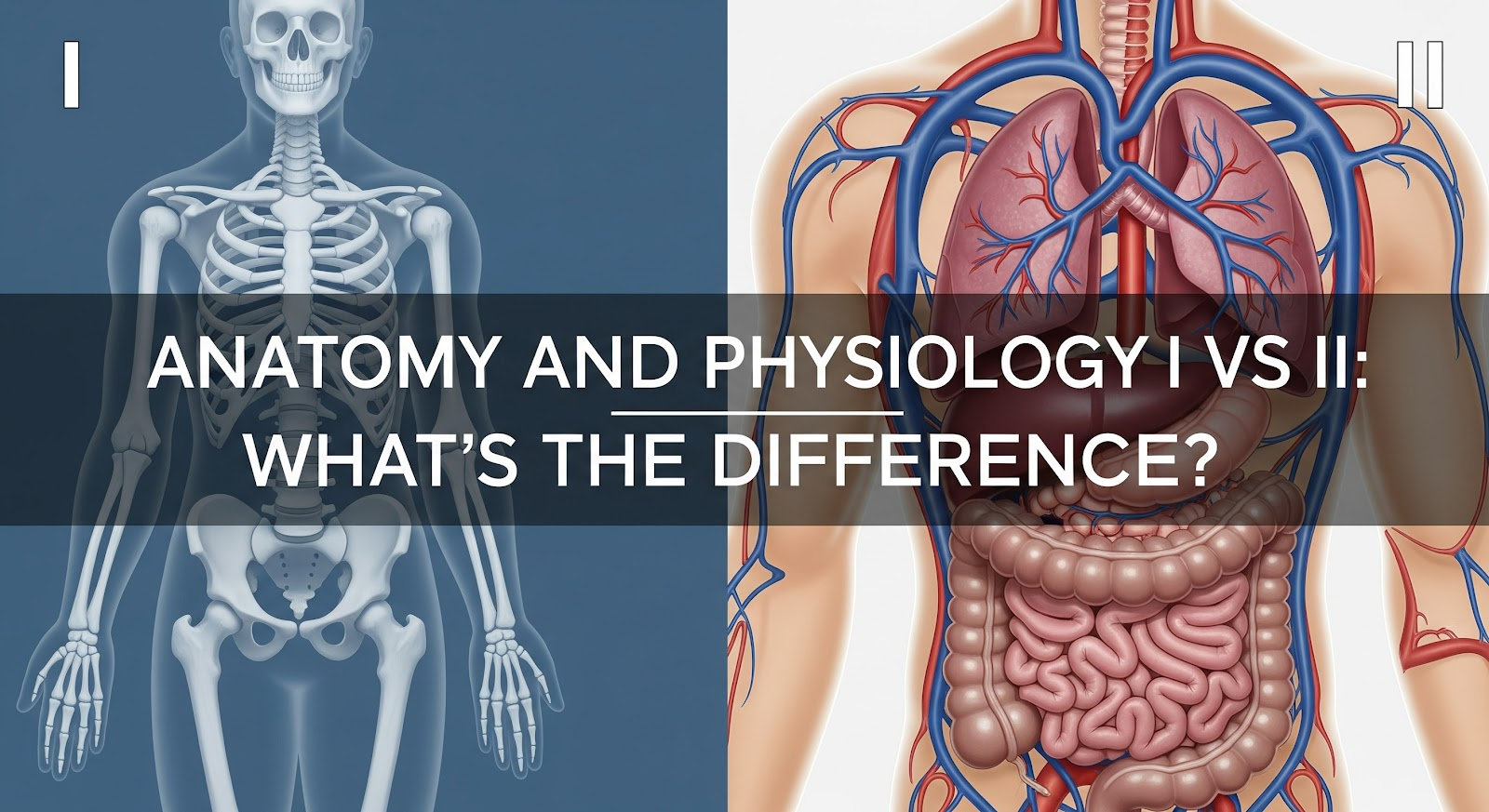
Anatomy and Physiology I vs II: What’s the Difference?
Anatomy and Physiology I vs II: What’s the Difference?
For students pursuing healthcare careers, understanding the difference between anatomy and physiology 1 and 2 is crucial. These courses are often the first step toward nursing, medical assistant, or allied health programs. In Illinois, many students start by enrolling in an A&P prep course Illinois to build confidence before jumping into college-level anatomy and physiology classes. Knowing what each course covers, how they differ, and how to prepare can help you succeed academically and in clinical settings.
Anatomy and Physiology I: Building the Foundation
Anatomy and Physiology I is designed for students new to healthcare studies. It focuses primarily on human body structure and introduces students to essential concepts needed for more advanced coursework.
Key Topics in A&P I:
- Cells and tissues: Learn how cells form tissues and perform essential functions.
- Skeletal and muscular systems: Understand bones, joints, and muscle structure to grasp movement and support.
- Basic organ systems: Introductory overview of cardiovascular, respiratory, and digestive systems.
- Body terminology and homeostasis: Learn standard medical terms and how the body maintains balance.
Labs and Practical Learning
Hands-on lab work is a major component of A&P I. Students dissect specimens, examine tissues under microscopes, and perform basic physiological experiments. This practical experience reinforces theoretical knowledge and is highly recommended for students looking for deeper understanding.
Many students search for an anatomy and physiology course near me to find programs that provide hands-on labs, personalized instruction, and small class sizes—helping them grasp challenging concepts more effectively.
Anatomy and Physiology II: Expanding Knowledge
After completing A&P I, students typically move on to Anatomy and Physiology II, which is more focused on system functions and interactions. This course is crucial for clinical preparation because it emphasizes how body systems work together to maintain health.
Key Topics in A&P II:
- Cardiovascular system: Detailed study of the heart, blood vessels, and circulation.
- Respiratory system: Gas exchange, lung function, and respiratory regulation.
- Nervous and endocrine systems: How the body communicates and regulates functions through nerves and hormones.
- Digestive, urinary, and reproductive systems: Function, regulation, and interaction of organs.
- System integration: Understanding how multiple systems collaborate to maintain overall body function.
Labs and Clinical Skills
A&P II labs are more advanced, often involving physiological experiments such as measuring blood pressure, analyzing heart rate, or simulating respiratory functions. Students apply concepts learned in A&P I to understand system-level operations.
Enrolling in an Illinois alongside A&P II can reinforce concepts and improve confidence, particularly if students are preparing for nursing programs or other healthcare certifications. Many students also want to know more about human biology vs anatomy and physiology which is also necessary in their nursing career
Difference Between Anatomy and Physiology 1 and 2
- Focus:
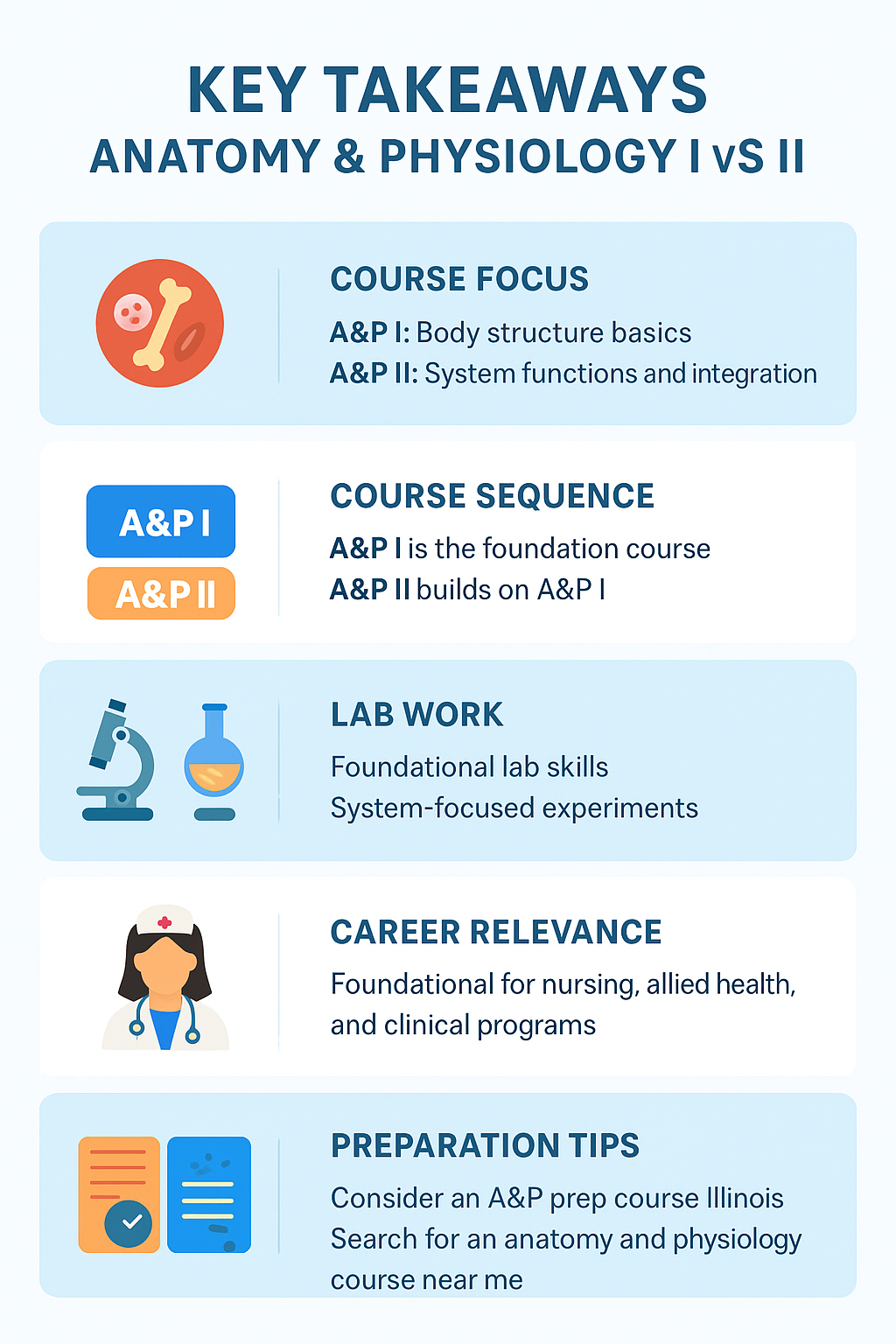
Anatomy & Physiology I primarily focuses on the basics of body structure. Students learn foundational concepts about the human body, including skeletal and muscular systems, as well as basic organ structures. On the other hand, Anatomy & Physiology II shifts focus to the functions and integration of body systems. - Depth of Study:
A&P I is introductory in nature, designed to provide students with a basic understanding of human anatomy and physiology. A&P II is more advanced, building on the foundational knowledge from A&P I and diving deeper into the complex interactions and functions of body systems. - Systems Covered:
In A&P I, students generally study the skeletal system, muscular system, and basic organ systems. In contrast, A&P II covers a broader range of systems, including cardiovascular, respiratory, nervous, endocrine, digestive, urinary, and reproductive systems, giving a more comprehensive view of the human body’s function. - Laboratory Work:
Laboratory sessions in A&P I focus on developing foundational lab skills, such as identifying structures and basic experiments. A&P II labs are more applied and system-focused, emphasizing practical application and understanding of physiological processes within each system. - Prerequisites: Anatomy & Physiology I has no prerequisites and is usually taken first. A&P II typically recommends completion of A&P I to ensure students have the foundational knowledge required for advanced topics.
In short, A&P I teaches “what the body is,” while A&P II focuses on “how it works.” Understanding this distinction helps students plan their academic path effectively and ensures readiness for clinical applications.
Why These Courses Matter?
Both A&P I and II are foundational for anyone entering healthcare:
- Preparation for Nursing Programs: Nurses must understand both anatomy (structure) and physiology (function) to provide safe and effective care.
- Clinical Readiness: Courses teach how systems interact, which is critical during patient assessments and interventions.
- Exams and Certification: Knowledge from these courses supports success in tests like the NCLEX-PN for practical nurses.
Tips for Success in A&P Courses
- Stay Consistent with Labs: Practical sessions reinforce lecture material.
- Use Flashcards for Terminology: A&P courses involve heavy memorization of terms and structures.
- Relate Systems to Real Life: Understanding how body systems interact in real patients helps retain information.
- Seek Prep Courses: An A&P prep course Illinois can clarify difficult concepts and offer study support.
Conclusion
Understanding the difference between Anatomy and Physiology 1 and 2 is essential for building a successful healthcare career. A&P I establishes the foundation by focusing on body structure, while A&P II emphasizes system function and integration. Illinois students benefit from taking an anatomy classes near me to gain practical experience and expert guidance, ensuring confidence and readiness for advanced healthcare studies.
Most Popular Blogs Posts
Vital Signs Monitoring: A Complete Student…
March 26, 2026 Read More
Soft Skills That Make You a…
March 25, 2026 Read More
Compact Bone vs Spongy Bone: Key…
March 24, 2026 Read More
Can You Work While Studying LPN?…
March 24, 2026 Read More