-
Oak Brook
📍📞 630-705-99992625 Butterfield Rd. Suite 102E
Oak Brook, IL 60523📠 Fax: 630-705-1422✉️ inquiry@vervecollege.edu 🗺️ Open in Google Maps 🍎 Open in Apple Maps🕒Office HoursMon–Fri: 9:30 AM – 6:00 PM
Sat: 8:00 AM – 12:00 PM
Sun: Closed -
Chicago
📍📞 312-920-8822216 W. Jackson Blvd. Suite 900
Chicago, IL 60606📠 Fax: 630-705-1422✉️ inquiry@vervecollege.edu 🗺️ Open in Google Maps 🍎 Open in Apple Maps🕒Office HoursMon–Fri: 9:30 AM – 6:00 PM
Sat: 8:00 AM – 12:00 PM
Sun: Closed - Email:inquiry@vervecollege.edu
- Make a Payment
 Sign up
 Login

- Home
- Programs
- Admission
- Resources
- ATI Entrance Exam Resources
- New E-Digital Library
- Refer a Friend
- School Newsletter
- Events
- Employers
- Job-Network
- Alpha Beta Kappa Candidates
- Verve College Library
- Graduation and Pinning Ceremony Photo Galleries
- Textbook Information
- Career Services
- Tutoring
- School Catalog
- FAQ
- Constitution Day Program
- Alumni
- Verve College Plans
- Financial Aid
- HEERF Reporting
- Satisfactory Academic Progress
- Apply For Financial Aid
- Net Price Calculator
- Return of Title IV Funds (R2T4)
- Financial Aid Office Code of Conduct
- Contact
- FAQs
- Verification Policy
- Vaccination Policy
- Student Right-to-Know Act
- Misrepresentation
- Information Security Program
- Academic Award Year
- Availability of Employee
- Cost of Attendance
- Health & Safety Exemption Requirement
- Students Rights and Responsibilities
- Leave of Absence
- Pell Formula
- Military Students
- Grants/ Scholarship Policy
- Contact Us
- Testimonials
- Blog
Is a Nursing Career Right For You?
Take The Free QuizEdema in Nursing Guide: Causes, Types, and Assessment
Edema in Nursing Guide: Causes, Types, and Assessment
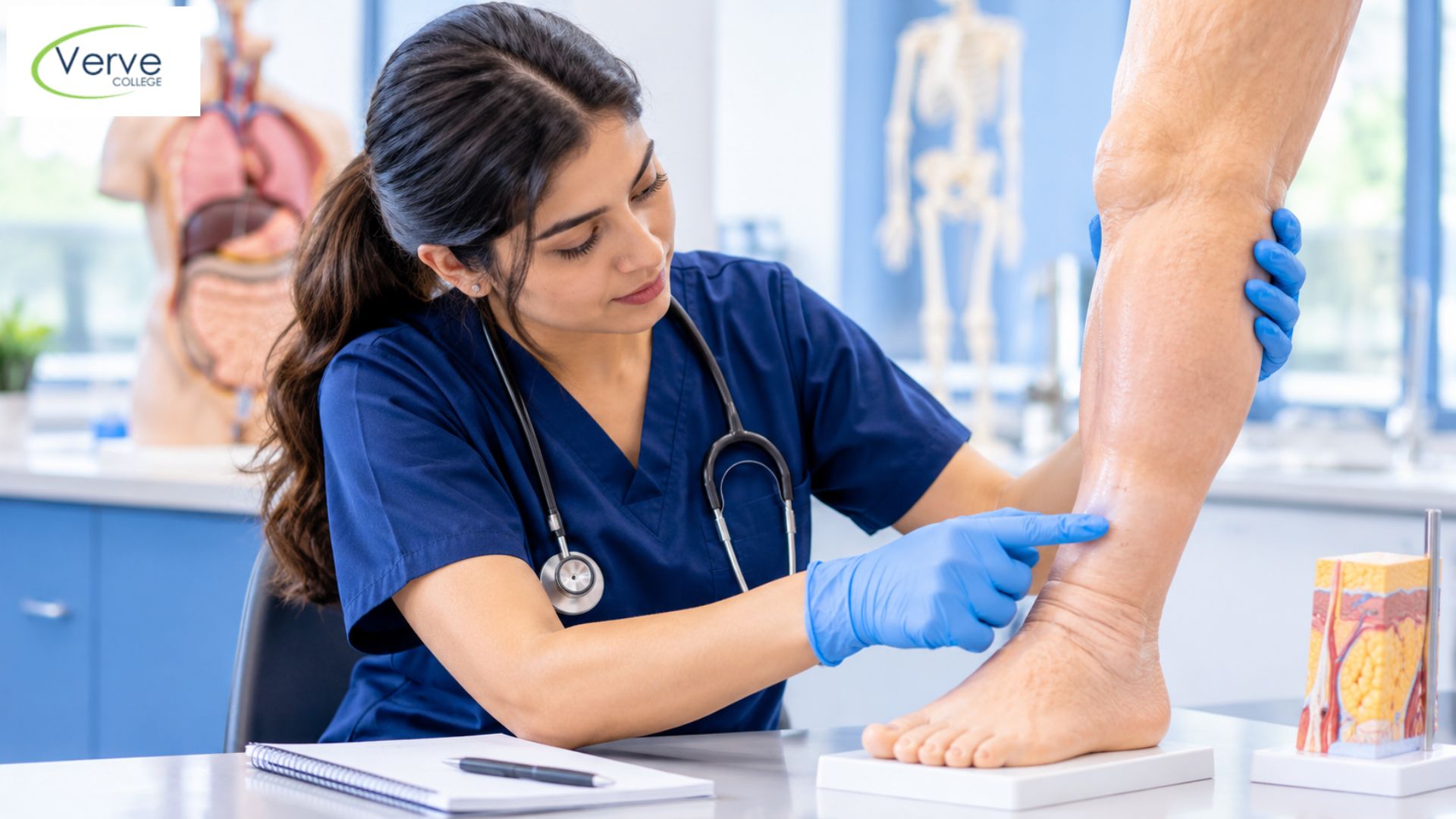
Swelling is one of the first things nurses notice when they examine a patient, and it often signals that fluid has collected in the body’s tissues. This edema in nursing guide explains what edema is, how fluid builds up between cells, the main causes and types, and how to assess swelling safely and accurately. Edema is a finding rather than a diagnosis, so it always needs to be understood in context. Read on to learn how to recognize it, document it, and know when it requires urgent attention.
Key Takeaways
Here are the main points to remember:
Edema is swelling caused by excess fluid in the spaces between body cells. It may be localized to one area or generalized across several regions. Peripheral edema commonly affects the feet, ankles, and legs. Pitting edema leaves a temporary indentation after pressure, while non-pitting edema does not. Heart, kidney, liver, circulation, and lymphatic problems can all contribute to edema. Sudden one-sided leg swelling, chest pain, or breathing difficulty requires prompt clinical evaluation.
What Is Edema?
Edema is the accumulation of excess fluid in the interstitial spaces, the areas between body cells. Normally, tissues contain a small amount of this fluid, and the body keeps it in balance. When more fluid collects than the body can remove, the tissue swells.
Swelling can appear in many places. It is most often noticed in the feet, ankles, and lower legs, but it can also affect the hands, arms, face, and areas around the eyes. Swelling in the abdomen may also occur. When swelling affects one specific area, it is called localized edema. When fluid accumulates across several body regions, it is called generalized edema.
How Does Edema Develop in the Body?
Several mechanisms work together to keep fluid where it belongs. An imbalance in any of them can lead to fluid building up in tissues.
Capillary hydrostatic pressure is the pressure inside blood vessels. Higher pressure pushes fluid out of the capillaries and into surrounding tissues.
Oncotic pressure is the pulling effect of blood proteins, especially albumin. This pull helps keep fluid inside the blood vessels. When protein levels fall, less fluid is drawn back in, and more remains in the tissues.
Capillary permeability refers to how leaky the vessel walls are. When the walls become more permeable, as can happen with injury or inflammation, more fluid passes into the tissues.
Lymphatic drainage is the system that collects excess tissue fluid and returns it to the bloodstream. If lymphatic flow is impaired, fluid may build up instead of being removed.
Sodium and water retention can increase the total amount of fluid in the body. Because sodium draws water with it, retaining sodium can contribute to swelling.
What Are the Common Causes of Edema?
Edema has many possible causes, and the same symptom can arise from different problems. The examples below are educational and do not represent a complete list.
Circulation Problems
When veins in the legs cannot return blood effectively to the heart, pressure in the lower leg veins rises. This is often described as venous insufficiency, and it can push fluid into the surrounding tissues and cause swelling, especially at the end of the day.
Heart Conditions
When the heart does not pump effectively, blood can back up in the venous system. Increased pressure in these vessels can push fluid into tissues. Swelling in the legs and abdomen can be associated with this type of problem.
Kidney Conditions
The kidneys regulate sodium and water. When kidney function is impaired, the body may retain more sodium and water, which can increase fluid volume and contribute to swelling. Kidney-related edema may also be linked to changes in blood protein levels.
Liver Conditions
The liver produces albumin, a protein that helps keep fluid in the blood vessels. Liver disease can reduce albumin production and affect other fluid-regulating processes, which can contribute to edema, often in the legs and abdomen.
Inflammation and Injury
Injury, infection, and inflammatory reactions can increase capillary permeability. This allows fluid and proteins to leak into nearby tissues, causing localized swelling, warmth, and tenderness.
Other Contributing Factors
Prolonged sitting or standing can increase pressure in the lower legs. Pregnancy, certain medications, and high dietary sodium intake can also contribute to fluid retention in some people. Because these factors vary widely, swelling should always be evaluated in the patient’s full context.
What Are the Different Types of Edema?
Peripheral Edema
Peripheral edema affects areas away from the body’s center, such as the feet, ankles, legs, hands, and arms. It is commonly noticed in the lower extremities, especially after long periods of standing or sitting.
Pitting Edema
Pitting edema is identified by pressing gently on the swollen area. The pressure leaves a temporary indentation that gradually fills back in. Healthcare professionals may use a grading scale to describe how deep the indentation is and how long it takes to recover. Follow the grading standards used in your clinical setting, because scales can vary.
Non-Pitting Edema
Non-pitting edema does not leave a noticeable indentation after pressure. The tissue may feel firm or hard. Non-pitting swelling is associated with certain lymphatic conditions and tissue changes, and it can require a different line of evaluation than pitting edema.
Generalized Edema
Generalized edema involves widespread fluid accumulation across multiple body areas. Severe, generalized edema is sometimes called anasarca. It usually reflects an underlying condition that affects fluid regulation throughout the body.
Pulmonary Edema
Pulmonary edema is fluid accumulation in the lungs. It can cause severe breathing difficulty and requires urgent medical attention. Recognizing this type of edema is about knowing when breathing changes must be escalated immediately.
What Are the Signs and Symptoms of Edema?
Common signs that nursing students should recognize include:
- Visible swelling or puffiness, often in the feet, ankles, or legs.
- Skin that appears stretched, tight, or shiny.
- A feeling of heaviness or tightness in the affected area.
- A temporary indentation in the skin when pitting edema is present.
- Shoes, rings, or clothing that suddenly feel tight.
- Changes in mobility or comfort.
- Rapid weight changes associated with fluid accumulation.
Symptoms vary depending on the cause and location of the edema. Some people have little discomfort, while others have significant pain or limited movement.
How Do Nursing Students Assess Edema?
A systematic assessment helps you find and describe swelling accurately. Start by identifying the location of the affected area. Then determine whether the swelling is on one side or both sides, since one-sided swelling can suggest a different cause than symmetrical swelling.
Observe the appearance of the area, including skin color, texture, and visible swelling. When pitting is present, follow the technique taught in your program and document the depth and recovery of the indentation. Look at the skin for tightness, discoloration, irritation, or breakdown, and ask the patient about discomfort, pain, heaviness, and any changes in breathing.
Review relevant intake and output records when they are required for the patient’s care. When daily weight monitoring is part of the care plan, compare measurements over time. Document objective findings clearly, and compare them with previous observations when available. A single assessment rarely tells the whole story, so trends are important.
When Should Edema Be Reported as a Warning Sign?
Sudden or unexplained swelling should never be ignored. Report changes to the appropriate supervising clinician according to facility protocol. Some findings require urgent action.
- Sudden swelling in one leg, especially with pain or tenderness, needs prompt clinical evaluation.
- Swelling accompanied by chest pain requires immediate emergency assessment.
- New or worsening shortness of breath with swelling requires immediate emergency assessment.
- Rapidly increasing swelling or significant weight gain should be reported promptly.
- Swelling that comes with concerning changes in the patient’s overall condition should be escalated.
Never assume that swelling is harmless because it looks familiar. Escalate concerns, even when you are not sure what they mean.
Why Is Understanding Edema Important in Nursing?
Edema is a useful window into how well the body is handling fluid. Understanding it helps you recognize changes in fluid distribution and see how circulation and lymphatic drainage affect swelling. It also helps you monitor patient condition, identify findings that need further assessment, and communicate changes clearly to the healthcare team.
Accurate documentation supports all of this. Building these skills takes practice and supervision, and the Verve College Practical Nursing Program is designed to help students develop them in a structured clinical setting.
How Is Edema Connected to Homeostasis?
Homeostasis is the body’s ability to maintain stable internal conditions, including the balance of water, sodium, and other substances. Edema occurs when that balance shifts and fluid moves out of the bloodstream into the tissues.
Several systems contribute to fluid regulation. The kidneys adjust how much sodium and water the body keeps. The cardiovascular system maintains the pressure that moves fluid through the body. Blood proteins help hold fluid within vessels, and the lymphatic system returns excess tissue fluid to circulation. To explore this connection further, read about homeostasis in human biology.
Get Your Nursing Career Training Readiness Score Now!
Frequently Asked Questions
What is the most common area affected by peripheral edema?
Peripheral edema most commonly affects the feet, ankles, and lower legs. Swelling can also occur in the hands and arms, and its location often provides clues about its possible cause.
What is the difference between pitting and non-pitting edema?
Pitting edema leaves a temporary indentation when gentle pressure is applied to the swollen area. Non-pitting edema does not leave that type of indentation. The distinction helps nurses describe findings accurately and understand what further evaluation may be needed.
Why is edema important for nursing students to understand?
Edema can be associated with changes in circulation, kidney function, heart function, liver function, or lymphatic drainage. Understanding it helps nursing students recognize swelling, document assessment findings accurately, and report concerning changes promptly.
Most Popular Blogs Posts
Edema in Nursing Guide: Causes, Types,…
November 4, 2026 Read More
Wound Healing Stages in Nursing: The…
November 3, 2026 Read More
LPN School Financial Planning Guide: 7…
November 2, 2026 Read More
Nursing Clinical Documentation Guide for Safe…
October 29, 2026 Read More