- Oak Brook:(630) 705-9999
- Chicago:(312) 920-8822
- Email:inquiry@vervecollege.edu
- Make a Payment
 Sign up
 Login
Login
- Home
- Programs
- Admission
- Resources
- ATI Entrance Exam Resources
- New E-Digital Library
- Refer a Friend
- School Newsletter
- Events
- Employers
- Job-Network
- Alpha Beta Kappa Candidates
- Verve College Library
- Graduation and Pinning Ceremony Photo Galleries
- Textbook Information
- Career Services
- Tutoring
- School Catalog
- FAQ
- Constitution Day Program
- Alumni
- Verve College Plans
- Financial Aid
- HEERF Reporting
- Satisfactory Academic Progress
- Apply For Financial Aid
- Net Price Calculator
- Return of Title IV Funds (R2T4)
- Financial Aid Office Code of Conduct
- Contact
- FAQs
- Verification Policy
- Vaccination Policy
- Student Right-to-Know Act
- Misrepresentation
- Information Security Program
- Academic Award Year
- Availability of Employee
- Cost of Attendance
- Health & Safety Exemption Requirement
- Students Rights and Responsibilities
- Leave of Absence
- Pell Formula
- Military Students
- Grants/ Scholarship Policy
- Contact Us
- Testimonials
- Blog
Is a Nursing Career Right For You?
Take The Free Quiz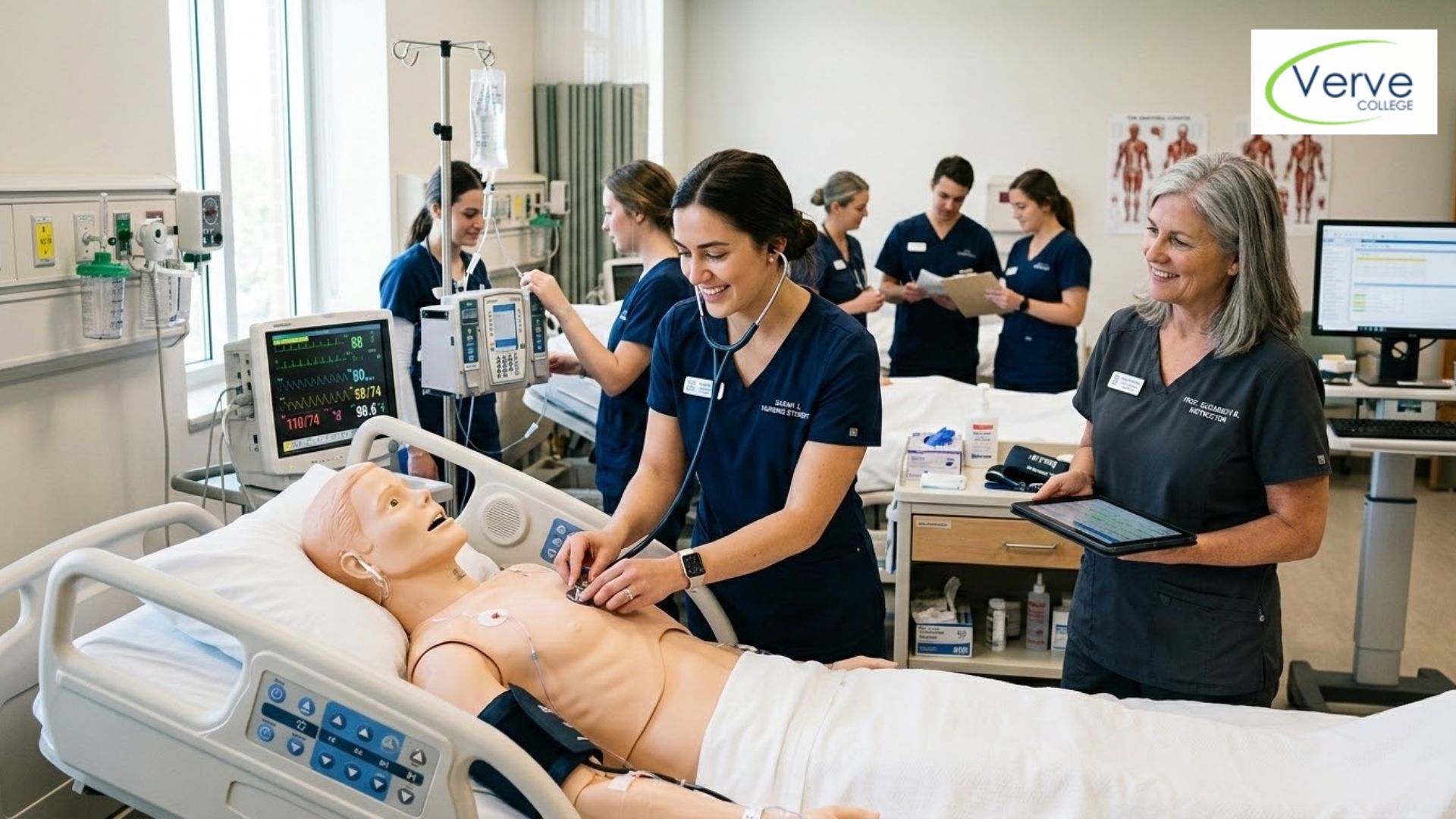
How Practical Nursing Programs Help Students Build Clinical Confidence
How Practical Nursing Programs Help Students Build Clinical Confidence
Walking into a real hospital patient room for the first time can cause immediate anxiety for a new medical student. You might worry about miscalculating a medication dosage, freezing during an evaluation, or fumbling basic charting tasks. Many beginners assume that experienced healthcare professionals were simply born with natural, fearless instincts at the bedside. In reality, competence is built step by step through a structured educational framework that turns nervous beginners into smooth operators. Enrolling in accredited practical nursing programs provides you with the interactive coaching and supportive environment required to build your skills over time.
Key Takeaways
- Gradual Skill Mastery: Learn why professional ease develops through steady, structured repetition rather than instant textbook recall.
- Controlled Lab Drills: Discover how managing high-fidelity mannequins on campus prepares your brain for real bedside emergencies.
- Constructive Mentorship: See how targeted instructor feedback guides your career path without making you feel discouraged.
- Adaptive Adult Learning: Find out how modern flexible paths help career changers transition into medicine without sacrificing current income.
What Is Clinical Confidence in Nursing?
Clinical confidence is the independent mental state that allows a healthcare professional to analyze patient data calmly, apply technical skills accurately, and execute safe treatments. This trait does not mean you never feel stressed or have questions during a busy shift.
Instead, it means you trust your training, recognize your limits, and know how to find answers under pressure. Nurturing clinical confidence in nursing is an ongoing, deliberate journey that connects classroom lectures directly to real-world patient interactions.
Why Repeat Tactile Drills Prevent Clinical Errors
When you are checking blood pressure, managing wound lines, or administering injections, minor hand movements matter immensely. Fumbling an instrument or missing a small baseline assessment cue can directly change a patient’s comfort level.
To prevent these mistakes, top-tier programs break complex operations down into manageable pieces before you ever approach a live individual. This progressive approach is exactly how you turn clumsy, uncertain actions into precise habits.
For busy working parents or adult learners balancing strict personal timelines, an accelerated hybrid practical nursing program delivers the ultimate educational balance. This flexible option combines convenient online lecture resources with heavily supervised, small-group on-campus lab sessions.
The Core Pillars of Professional Nursing Readiness
Building complete vocational assurance requires a carefully timed mix of academic theory, laboratory validation, and live hospital experiences.
Master Essential Bedside Routines First
Before diving into high-stress emergencies, you practice basic tasks until they become completely automatic. Mastering tasks like changing sterile dressings, counting respiratory rates, and logging fluid intakes removes mechanical hesitation. When your hands know exactly what to do, your mind is free to analyze changing patient data.
Developing Sharp Diagnostic Observation
Confidence requires knowing what to look for when you approach a sick patient. Through interactive case studies, you learn to spot trend deviations early, such as checking cap refill delayed times or noticing subtle changes in breathing depth. This training helps you move from simply checking off tasks to engaging in critical thinking.
Cultivating Modern Career Readiness
An often overlooked aspect of your nursing clinical skills involves how well you communicate with anxious family members or report updates to busy physicians. Instructors guide you through structured communication formats like the SBAR framework within campus labs. This continuous speaking practice is a core element of your nursing career readiness, removing social hesitation during major care transitions.
Navigating Constructive Critiques from Mentors
Many introductory science prep students worry about being evaluated or managed strictly by experienced hospital preceptors. It helps to understand that expert correction is a supportive tool designed to perfect your techniques, not a personal penalty.
When an instructor refines how you hold an instrument or double-checks a prescription label, they are giving you the exact data required to safeguard your future license. Embracing this steady loop of feedback is how top-tier medical decision makers are shaped.
Choosing a Dedicated Track for Long-Term Success
Transitioning into healthcare quickly and successfully means finding an institution that understands the practical needs of adult learners and career changers. Enrolling in top-tier licensed practical nurse programs ensures you receive personalized tutoring networks, professional lab equipment, and job placement assistance.
Verve College builds student-first support into every segment of our curriculum. Our experienced instructors maintain accessible study loops, helping you clear prerequisite sciences and licensing milestones efficiently. We eliminate general elective requirements to keep your focus entirely centered on passing your NCLEX-PN exam and entering the workforce with total professional certainty.
Misconceptions About Healthcare Assurance
A very common mistake that introductory nursing students make is assuming that true clinical comfort arrives like a sudden wave on graduation day. In reality, your assurance grows in small pieces during your first science prep class, your first successful blood pressure measurement, and your first simulation session. Every single mistake you make and correct in a safe campus lab builds your long-term diagnostic resilience. Trusting this steady, supervised growth process ensures you enter your medical career as a highly competent, self-aware professional.
Conclusion
Building your bedside clinical assurance is a highly rewarding, gradual process that shapes you into a reliable healthcare provider. Moving past the fear of initial mistakes allows you to welcome expert guidance and master complex biological systems step by step. Developing these precise physical and analytical habits takes patience, high-tech lab hours, and dedicated instructor mentoring. Investing your energy into a career-focused training pathway gives you a significant advantage during your hospital clinical rotations and future job transitions. Contact an admissions representative at Verve College today to explore our upcoming class timelines and start your journey toward workforce-ready success.
Get Your Nursing Career Training Readiness Score Now!
Frequently Asked Questions (FAQs)
How long does it typically take for a student to feel comfortable during physical assessments?
Most students start finding their rhythm after several weeks of consistent lab practice. Comfort grows naturally as you practice baseline skills repeatedly on classmates and realistic mannequins before entering real hospital settings.
How do simulation labs help reduce clinical anxiety for new students?
Simulation labs provide a completely safe, supportive space where you can experience realistic patient care scenarios without any risk to a live person. This zero-risk practice allows you to run through choices, make mistakes, and build structural habits comfortably.
What career placement services are available to help me find a job after graduation?
Verve College provides focused career support services, including personalized resume building, mock interview preparation, and direct job placement assistance. Our team connects you with premier healthcare networks throughout Illinois to help launch your career rapidly.
Most Popular Blogs Posts

What Is Case Management Nursing? A…
September 17, 2026 Read More
What Is the Blood-Brain Barrier? A…
September 16, 2026 Read More
Neonatal Nursing: What Does a NICU…
September 16, 2026 Read More
Oncology Nursing: What Nurses Do in…
September 15, 2026 Read More