-
Oak Brook
📍📞 630-705-99992625 Butterfield Rd. Suite 102E
Oak Brook, IL 60523📠 Fax: 630-705-1422✉️ inquiry@vervecollege.edu 🗺️ Open in Google Maps 🍎 Open in Apple Maps🕒Office HoursMon–Fri: 9:30 AM – 6:00 PM
Sat: 8:00 AM – 12:00 PM
Sun: Closed -
Chicago
📍📞 312-920-8822216 W. Jackson Blvd. Suite 900
Chicago, IL 60606📠 Fax: 630-705-1422✉️ inquiry@vervecollege.edu 🗺️ Open in Google Maps 🍎 Open in Apple Maps🕒Office HoursMon–Fri: 9:30 AM – 6:00 PM
Sat: 8:00 AM – 12:00 PM
Sun: Closed - Email:inquiry@vervecollege.edu
- Make a Payment
 Sign up
 Login
Login
- Home
- Programs
- Admission
- Resources
- ATI Entrance Exam Resources
- New E-Digital Library
- Refer a Friend
- School Newsletter
- Events
- Employers
- Job-Network
- Alpha Beta Kappa Candidates
- Verve College Library
- Graduation and Pinning Ceremony Photo Galleries
- Textbook Information
- Career Services
- Tutoring
- School Catalog
- FAQ
- Constitution Day Program
- Alumni
- Verve College Plans
- Financial Aid
- HEERF Reporting
- Satisfactory Academic Progress
- Apply For Financial Aid
- Net Price Calculator
- Return of Title IV Funds (R2T4)
- Financial Aid Office Code of Conduct
- Contact
- FAQs
- Verification Policy
- Vaccination Policy
- Student Right-to-Know Act
- Misrepresentation
- Information Security Program
- Academic Award Year
- Availability of Employee
- Cost of Attendance
- Health & Safety Exemption Requirement
- Students Rights and Responsibilities
- Leave of Absence
- Pell Formula
- Military Students
- Grants/ Scholarship Policy
- Contact Us
- Testimonials
- Blog
Is a Nursing Career Right For You?
Take The Free QuizHow Licensed Practical Nurse Programs Build Your Professional Presence
How Licensed Practical Nurse Programs Build Your Professional Presence
Stepping into a hospital for the first time as a caregiver can feel intimidating. Patients look to you for comfort and answers during some of their hardest days. Building a strong professional presence is just as important as mastering medical procedures. Top licensed practical nurse programs teach you exactly how to carry yourself with confidence on the clinical floor. This guide will show you how developing these soft skills prepares you for a successful healthcare career.
Key Takeaways
- Understand why nursing professionalism is vital for earning patient trust quickly.
- Learn the specific communication skills required to work seamlessly with doctors and other nurses.
- Discover how emotional intelligence helps you handle stressful medical situations calmly.
- Find out what hiring managers expect regarding accountability and ethical workplace behavior.
- See how guided clinical practice builds the professional nursing skills you need to succeed.
Why Professional Presence Matters in Healthcare
When a patient is sick or scared, they immediately look for someone they can trust. A nurse who looks neat, speaks clearly, and acts calmly instantly puts that patient at ease. This foundation of trust makes it much easier to provide care and gather accurate health information.
Professional presence also impacts how your coworkers and supervisors view you. Healthcare is a massive team effort, and your attitude directly affects the entire unit. When you show up as a reliable and composed professional, doctors and senior nurses will respect your clinical input.
What Is Professional Presence in Nursing?
Nursing professionalism is a combination of how you look, how you speak, and how you behave under pressure. It starts with the basics like wearing a clean uniform, keeping your hair pulled back, and maintaining good personal hygiene. These visual cues signal to patients that you are organized and capable.
Beyond appearances, it involves deep emotional intelligence and ethical behavior. A professional nurse treats every single patient with dignity, regardless of their background or attitude. It means staying accountable for your actions and protecting patient privacy at all times.
Communication Skills That Shape Professional Nursing Practice
Your ability to talk to people is your most powerful medical tool. Clear communication in healthcare settings prevents dangerous errors and ensures patients understand their treatment plans. You must learn to explain complex medical terms in simple, everyday language.
Good communication is also about active listening. You need to hear what the patient is saying and pay attention to their body language. When you listen closely, patients feel valued, and you can often catch hidden symptoms they might not mention outright.
Professional Behavior Employers Expect from New Nurses
Hospital managers want new hires who are dependable and ready to work as part of a cohesive team. They expect you to show up on time, take constructive feedback well, and step in to help your coworkers when the floor gets busy. Complaining or gossiping has no place in a professional medical environment.
Employers also highly value accountability. If you make a small mistake, owning up to it immediately is the mark of a true professional. Trying to hide an error puts patients at risk and destroys the trust of your entire medical team.
Building Confidence During Clinical Training
Nobody expects you to have perfect professional nursing skills on your very first day of school. Confidence is built slowly through guided, hands-on practice in a safe environment. Simulation labs allow you to practice talking to patients and handling stressful scenarios before you ever enter a real hospital.
Your instructors will act as your mentors, gently correcting your posture, tone, and approach. Over time, you will learn how to project calm authority even when you are feeling nervous inside. This guided repetition is what turns a timid student into a strong caregiver.
How Licensed Practical Nurse Programs Develop Professional Presence
A strong education goes far beyond reading textbooks and passing multiple-choice exams. Structured practical nursing programs intentionally weave professionalism into every single lesson. You are held to strict standards regarding attendance, dress code, and peer interactions from day one.
During your clinical rotations, you will work directly alongside experienced healthcare teams. You will observe how veteran nurses handle difficult patients and communicate with doctors. This real-world immersion is the most effective way to adopt professional workplace habits.
Professionalism Beyond Graduation: Preparing for Long-Term Career Success
The habits you build in nursing school will follow you for the rest of your career. A strong professional presence makes you a highly attractive candidate when it is time to apply for your first job. Hiring managers can easily spot a nurse who takes their role seriously during a brief interview.
As you gain experience, your professionalism will open doors for career advancement and leadership roles. Nurses who communicate well and stay calm under pressure are often chosen to train new staff or manage clinical shifts.
Taking the Next Step Toward Your Nursing Career
If you are ready to build a respected and rewarding career in healthcare, finding the right training environment is your first step. You need a school that values clinical safety, strict professional standards, and hands-on student support.
Verve College is one of the premier nursing schools in Chicago, IL, dedicated to helping adult learners and career changers succeed. Our diploma programs offer flexible day, evening, and weekend schedules to help you reach your goals without unnecessary stress.
Conclusion
Developing a strong professional presence is one of the most important steps you will take in your healthcare journey. By mastering clear communication, emotional intelligence, and calm confidence, you become an irreplaceable asset to any medical team. Your professionalism directly improves patient outcomes and builds deep trust within your community.
Stepping into the nursing profession is a life-changing decision that offers true job security and personal fulfillment. Verve College provides the comprehensive laboratory and clinical training required to build your professional confidence. Reach out today to explore your training options and start your new career path with pride.
Get Your Nursing Career Training Readiness Score Now!
Frequently Asked Questions
What does professional presence mean for a nurse?
It means carrying yourself with confidence, communicating clearly, and looking neat and organized. It involves treating patients with deep respect and working reliably with your healthcare team.
How do nursing schools teach professionalism?
Schools enforce strict standards for dress codes, attendance, and ethical behavior from the very first day. Students also practice communication and teamwork during guided clinical labs before working with real patients.
Why is communication so important in nursing?
Clear communication prevents medical errors and helps patients understand their care plans. Listening well and speaking plainly builds trust and keeps the entire medical team organized and safe.
Most Popular Blogs Posts

LPN School for Working Adults: What…
October 15, 2026 Read More
How to Prepare for Nursing School…
October 14, 2026 Read More
How Practical Nursing Students Build Clinical…
October 14, 2026 Read More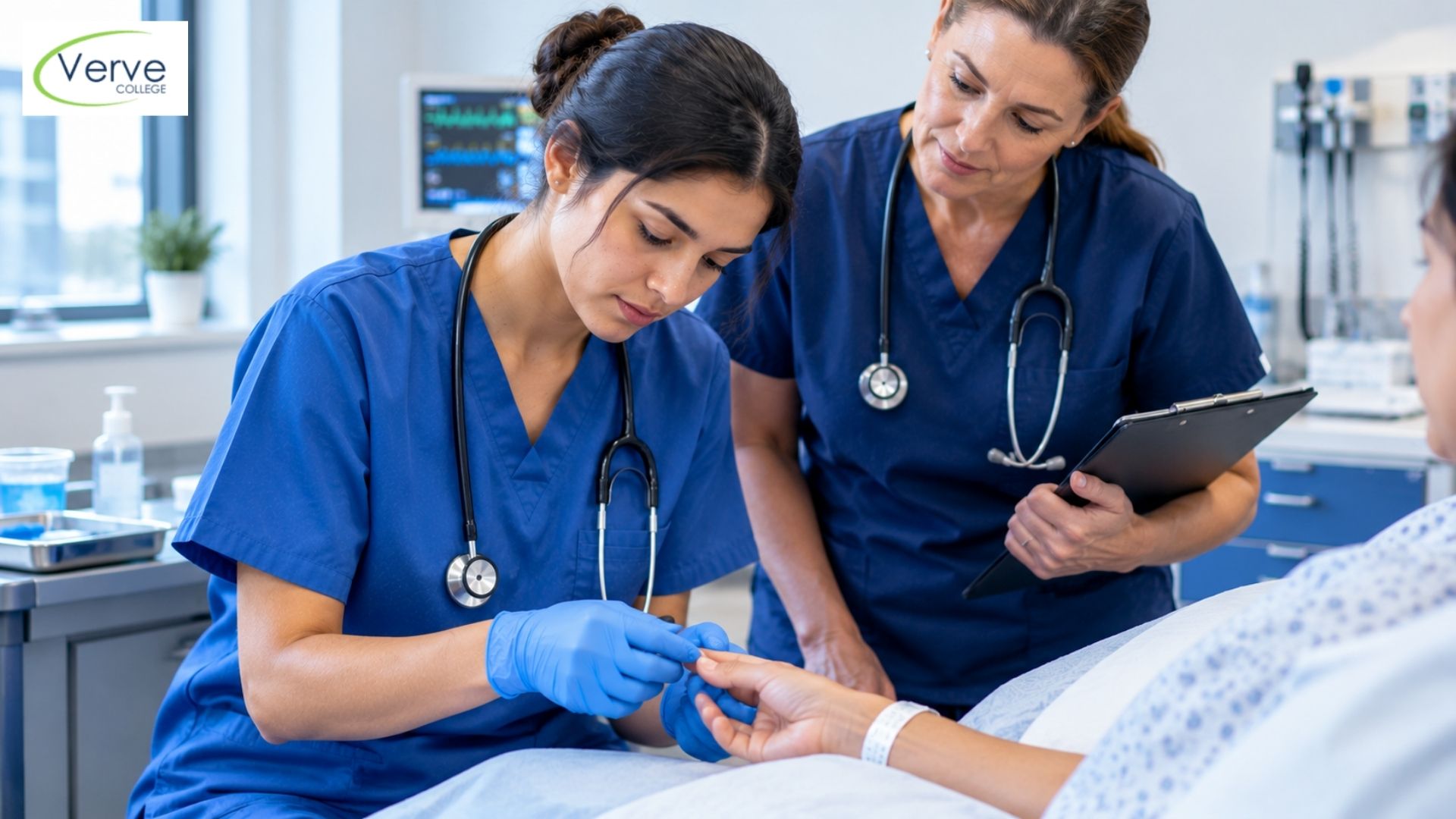
What Is Capillary Refill? A Guide…
October 13, 2026 Read More