-
Oak Brook
📍📞 630-705-99992625 Butterfield Rd. Suite 102E
Oak Brook, IL 60523📠 Fax: 630-705-1422✉️ inquiry@vervecollege.edu 🗺️ Open in Google Maps 🍎 Open in Apple Maps🕒Office HoursMon–Fri: 9:30 AM – 6:00 PM
Sat: 8:00 AM – 12:00 PM
Sun: Closed -
Chicago
📍📞 312-920-8822216 W. Jackson Blvd. Suite 900
Chicago, IL 60606📠 Fax: 630-705-1422✉️ inquiry@vervecollege.edu 🗺️ Open in Google Maps 🍎 Open in Apple Maps🕒Office HoursMon–Fri: 9:30 AM – 6:00 PM
Sat: 8:00 AM – 12:00 PM
Sun: Closed - Email:inquiry@vervecollege.edu
- Make a Payment
 Sign up
 Login
Login
- Home
- Programs
- Admission
- Resources
- ATI Entrance Exam Resources
- New E-Digital Library
- Refer a Friend
- School Newsletter
- Events
- Employers
- Job-Network
- Alpha Beta Kappa Candidates
- Verve College Library
- Graduation and Pinning Ceremony Photo Galleries
- Textbook Information
- Career Services
- Tutoring
- School Catalog
- FAQ
- Constitution Day Program
- Alumni
- Verve College Plans
- Financial Aid
- HEERF Reporting
- Satisfactory Academic Progress
- Apply For Financial Aid
- Net Price Calculator
- Return of Title IV Funds (R2T4)
- Financial Aid Office Code of Conduct
- Contact
- FAQs
- Verification Policy
- Vaccination Policy
- Student Right-to-Know Act
- Misrepresentation
- Information Security Program
- Academic Award Year
- Availability of Employee
- Cost of Attendance
- Health & Safety Exemption Requirement
- Students Rights and Responsibilities
- Leave of Absence
- Pell Formula
- Military Students
- Grants/ Scholarship Policy
- Contact Us
- Testimonials
- Blog
Is a Nursing Career Right For You?
Take The Free QuizTechnology Skills Every Future LPN Should Develop
Technology Skills Every Future LPN Should Develop
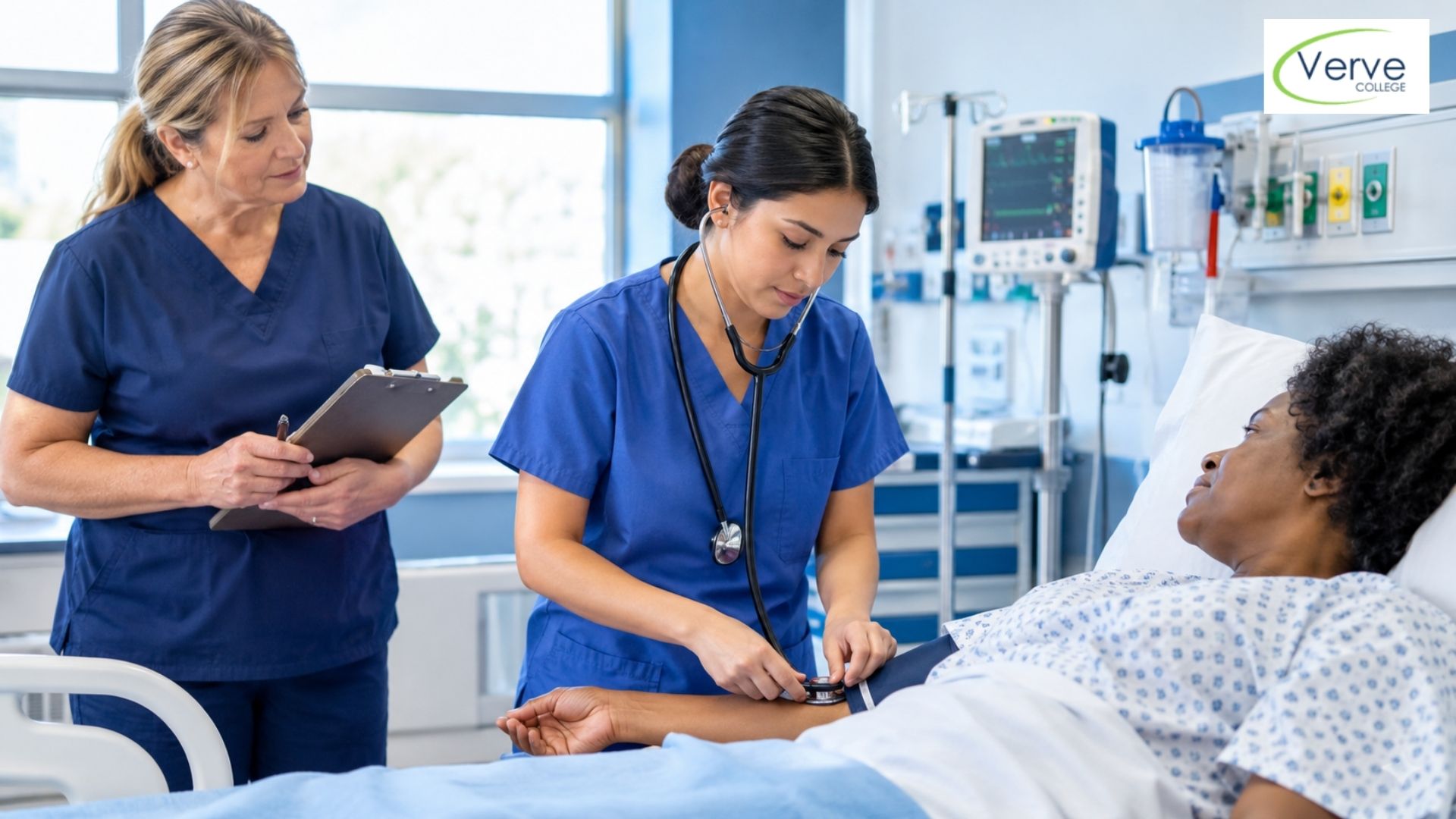
Healthcare is changing fast, and today’s nurses use computers just as much as stethoscopes. If you are worried about the digital side of healthcare, you are not alone. Top practical nursing programs teach you the exact technology skills you need to succeed on the clinical floor. This guide will show you which digital tools you will use daily to keep your patients safe.
Key Takeaways
- Understand why basic digital skills for nurses are now required in every hospital.
- Learn how electronic health records make patient care faster and much safer.
- Discover the automated tools that prevent dangerous medication errors.
- See how foundational anatomy and physiology classes help you interpret digital monitor readings.
- Find out how simulation labs prepare you for real-world medical software.
The Rise of Electronic Health Records
Gone are the days of reading messy handwriting on paper charts. Electronic health records nursing involves using secure software to track a patient’s medical history. This digital system allows doctors, nurses, and pharmacists to see updates instantly.
You will learn how to type in vital signs, update medication lists, and chart your daily assessments accurately. Keeping these digital records clean and up to date is a strict legal requirement that protects both you and your patient.
Advanced Patient Monitoring Systems
Modern hospital rooms are filled with digital screens that track heart rates, oxygen levels, and blood pressure continuously. As a nurse, you need to know how to read these monitors and set their safety alarms correctly.
If a patient’s breathing drops, the monitoring system alerts the nursing station immediately. You will practice using these exact machines in practical nursing programs before you ever step foot in a real hospital. This hands-on practice builds true clinical confidence.
Medication Administration Technology
Giving the wrong medication is a major safety risk, but technology has created powerful safety nets. Most facilities now use barcode scanning systems to verify medications. You will scan the patient’s wristband and then scan the pill bottle to ensure a perfect match.
Automated dispensing cabinets are also standard on medical floors. These secure digital cabinets track every single pill removed and alert you if a dosage seems incorrect. These tools remove the guesswork from passing out daily medications.
Telehealth and Digital Communication
Telehealth allows nurses and doctors to check on patients through secure video calls. This became incredibly popular recently and is now a standard way to manage chronic illnesses at home.
You will learn how to guide patients through virtual visits and teach them how to use their own health apps. Strong nursing technology skills also include sending secure digital messages to the rest of the healthcare team to coordinate daily care.
A Common Misconception About Technology
Many future students worry that because they are not computer experts, they will fail out of nursing school. You do not need to be a technology genius to be a great nurse. Medical software is designed to be user-friendly and easy to learn through repetition.
Your instructors will guide you step by step through every digital tool during your laboratory training. The focus is always on patient safety, and the software is simply there to help you do your job better.
Preparing for a Modern Healthcare Career
Building these digital competencies requires structured learning and expert guidance. If you are a career changer or a working adult, finding a school with modern equipment is vital. Verve College provides the high-tech simulation labs you need to master these exact skills.
Our licensed practical nurse programs can be completed in just 12 to 14 months. The all-inclusive tuition package completely covers your textbooks, uniforms, and ATI digital learning systems, so there are no surprises later.
Conclusion
Mastering modern medical technology allows you to protect your patients and provide the highest quality of care. By learning how to use electronic records and smart monitors, you become a highly efficient and trusted member of the medical team.
Stepping into the nursing profession is a life-changing decision that offers true job security and deep personal fulfillment. Verve College is here to support you with flexible day, evening, and weekend schedules tailored for working adults. Reach out today to book a tour at our Oak Brook or Chicago campus and start your journey with confidence.
Get Your Nursing Career Training Readiness Score Now!
Frequently Asked Questions
Do I need to be good at computers to become a nurse?
No, you do not need advanced computer skills before starting school. You will be taught exactly how to use nursing software step by step during your training. Basic typing and internet skills are usually all you need to begin.
What happens if the computer system crashes while I am working?
All hospitals have emergency backup plans for power outages or software crashes. Nurses are trained to use paper charting systems temporarily until the computers are back online. Patient care never stops.
How do I know if I am ready for a fast-paced nursing program?
Taking a readiness quiz or speaking with an admissions advisor can help you understand the commitment. Programs that offer flexible schedules and strong tutoring support are excellent choices for busy adults balancing work and family.
Most Popular Blogs Posts

LPN School for Working Adults: What…
October 15, 2026 Read More
How to Prepare for Nursing School…
October 14, 2026 Read More
How Practical Nursing Students Build Clinical…
October 14, 2026 Read More
What Is Capillary Refill? A Guide…
October 13, 2026 Read More