- Oak Brook:(630) 705-9999
- Chicago:(312) 920-8822
- Email:inquiry@vervecollege.edu
- Make a Payment
 Sign up
 Login
Login
- Home
- Programs
- Admission
- Resources
- ATI Entrance Exam Resources
- New E-Digital Library
- Refer a Friend
- School Newsletter
- Events
- Employers
- Job-Network
- Alpha Beta Kappa Candidates
- Verve College Library
- Graduation and Pinning Ceremony Photo Galleries
- Textbook Information
- Career Services
- Tutoring
- School Catalog
- FAQ
- Constitution Day Program
- Alumni
- Verve College Plans
- Financial Aid
- HEERF Reporting
- Satisfactory Academic Progress
- Apply For Financial Aid
- Net Price Calculator
- Return of Title IV Funds (R2T4)
- Financial Aid Office Code of Conduct
- Contact
- FAQs
- Verification Policy
- Vaccination Policy
- Student Right-to-Know Act
- Misrepresentation
- Information Security Program
- Academic Award Year
- Availability of Employee
- Cost of Attendance
- Health & Safety Exemption Requirement
- Students Rights and Responsibilities
- Leave of Absence
- Pell Formula
- Military Students
- Grants/ Scholarship Policy
- Contact Us
- Testimonials
- Blog
Is a Nursing Career Right For You?
Take The Free Quiz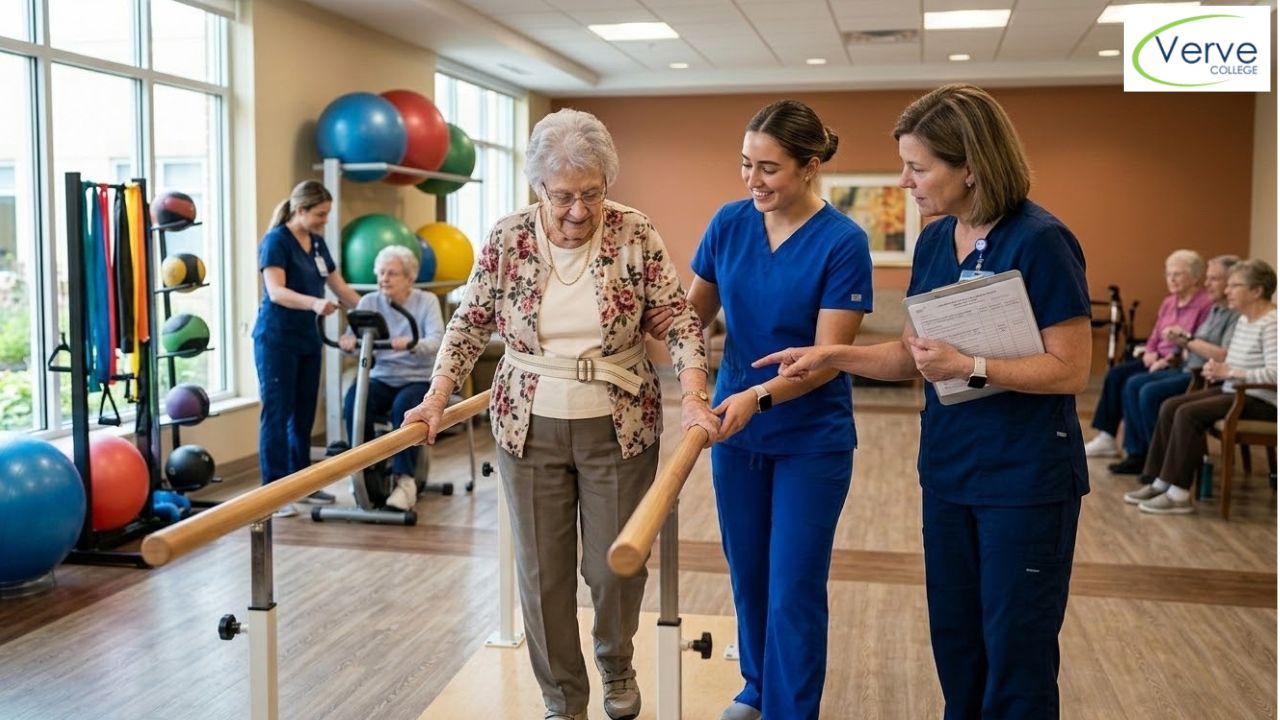
How to Master Essential Nursing Care for Older Adults as a Future LPN
How to Master Essential Nursing Care for Older Adults as a Future LPN
Caring for aging patients is one of the most rewarding parts of a nursing career, but it requires specific skills. As our population ages, the need for excellent care continues to grow rapidly. This guide will help you understand how to navigate the physical and emotional needs of geriatric patients successfully.
Whether you are currently working as a Certified Nurse Assistant (CNA) or looking to change careers, mastering these basic nursing principles will prepare you for a stable and fulfilling future in healthcare.
Key Takeaways
- Prioritize Medication Safety: Learn to monitor complex medication schedules and watch out for harmful drug interactions in aging individuals.
- Master Skin Integrity Protocols: Understand how to use standard assessment tools to prevent pressure sores and skin breakdowns.
- Enhance Fall Prevention: Implement active clinical strategies to protect senior mobility and keep healthcare environments free of physical hazards.
- Develop Clear Communication: Adapt your patient interaction methods to account for sensory loss, such as changes in hearing or vision.
- Choose the Right Training Path: Finding top-rated licensed practical nurse programs can help you learn these vital geriatric skills in a structured clinical setting.
Understanding the Physical Needs of Aging Patients
Geriatric care is unique because the aging body processes illnesses differently than a younger adult. To provide top-tier nursing care for older adults, an LPN must understand how internal organs and body systems slow down over time.
For instance, the skin becomes thinner and less elastic as people age. This makes older individuals highly vulnerable to skin tears and pressure wounds. Nurses must check skin conditions frequently during daily tasks like bathing or repositioning.
To build a strong educational foundation for these clinical concepts, taking an anatomy and physiology course near me can help you learn exactly how these body structures change over time.
Managing Medication Safety and Polypharmacy
Many older adults live with multiple chronic medical conditions, such as high blood pressure, diabetes, or arthritis. Because of this, they often take several different medications prescribed by different doctors. This situation is known as polypharmacy.
Managing polypharmacy is a major part of nursing care for older adults. LPNs must double-check medication lists during every shift to prevent dangerous drug interactions. Aging kidneys and livers process medications more slowly, which means side effects can happen easily.
Nurses must stay alert for sudden changes in a patient’s mental state or physical balance after a new medication is introduced. Keeping careful documentation protects the patient and keeps the entire medical team informed.
Fall Prevention and Environmental Adjustments
Falls are a leading cause of injury for older individuals in nursing homes, hospitals, and residential care environments. A single fall can lead to severe complications, such as hip fractures or a permanent loss of independence.
Practical nurses use standardized screening tools to rate a patient’s risk of falling during their initial assessment. These checks measure balance, walking patterns, and current medication side effects.
Simple, proactive steps can save lives. Keeping hospital beds at the lowest height, maintaining bright lighting, and removing cluttered objects from walking pathways are essential habits. Ensuring that call lights are always within a patient’s reach allows seniors to ask for assistance safely.
Communication and Emotional Support Systems
Providing excellent nursing care for older adults involves much more than just handling physical clinical tasks. Cognitive changes from conditions like dementia require deep empathy, patience, and clear communication techniques.
When speaking with a patient experiencing sensory loss, always face them directly and speak clearly without shouting. Give them plenty of time to process your questions and respond at their own comfortable speed.
For busy adults balancing job shifts or family responsibilities, finding a flexible hybrid practical nursing program allows you to master these communication methods through convenient online modules paired with hands-on weekend or evening lab sessions.
Choosing Your Next Steps in Geriatric Care
Mastering senior patient care requires real-world training, high academic standards, and supportive instructors. If you want to take your healthcare career to the next level, finding a dedicated program makes a massive difference.
Verve College offers an all-inclusive practical nursing track designed to fit your busy schedule. With campuses in Oak Brook and Chicago, Illinois, you can access top-tier simulation labs and local clinical externships.
The program takes just 12 to 14 months to complete, preparing you fully for the NCLEX-PN licensure exam. Financial aid options are also available for those who qualify, making your educational goals highly affordable.
Understanding the Link to Clinical Externships
Many students worry about how they will transition from textbook pages to real-world medical floors. If you want to understand how this connects to hands-on training, learning about clinical externships can give you a clearer picture.
At Verve College, your advanced coursework leads directly into supervised clinical shifts at regional hospitals and long-term care facilities. This gives you the direct, real-world experience needed to care for older individuals confidently before you graduate.
Conclusion
Mastering care for senior patients is a core skill that will make you a highly valued medical professional. By focusing on medication safety, fall prevention, skin care, and clear communication, you can improve patient recovery outcomes significantly.
Choosing a high-quality educational provider is the best way to turn your passion for helping others into a secure career path. Take a closer look at local training tracks today to start your nursing journey.
Get Your Nursing Career Training Readiness Score Now!
Frequently Asked Questions (FAQs)
What is the most common safety risk when providing nursing care for older adults?
Falls are the most frequent safety hazard for older patients due to changes in balance, muscle weakness, and medication side effects. Nurses prevent these incidents by conducting regular risk screenings, keeping pathways clear, and ensuring walking aids are within reach.
How does polypharmacy impact the daily duties of an LPN?
Polypharmacy requires an LPN to review medication lists closely to prevent negative side effects. Because older bodies clear drugs slowly, nurses must monitor vital signs and cognitive changes carefully whenever a patient takes multiple prescriptions.
Can I work full-time while completing my practical nursing training?
Yes, many students balance work and school by enrolling in flexible training tracks. Programs that offer day, evening, or weekend class schedules make it much easier for working adults to finish their diplomas successfully.
Most Popular Blogs Posts
What Is Case Management Nursing? A…
September 17, 2026 Read More
What Is the Blood-Brain Barrier? A…
September 16, 2026 Read More
Neonatal Nursing: What Does a NICU…
September 16, 2026 Read More
Oncology Nursing: What Nurses Do in…
September 15, 2026 Read More