- Oak Brook:(630) 705-9999
- Chicago:(312) 920-8822
- Email:inquiry@vervecollege.edu
- Make a Payment
 Sign up
 Login
Login
- Home
- Programs
- Admission
- Resources
- ATI Entrance Exam Resources
- New E-Digital Library
- Refer a Friend
- School Newsletter
- Events
- Employers
- Job-Network
- Alpha Beta Kappa Candidates
- Verve College Library
- Graduation and Pinning Ceremony Photo Galleries
- Textbook Information
- Career Services
- Tutoring
- School Catalog
- FAQ
- Constitution Day Program
- Alumni
- Verve College Plans
- Financial Aid
- HEERF Reporting
- Satisfactory Academic Progress
- Apply For Financial Aid
- Net Price Calculator
- Return of Title IV Funds (R2T4)
- Financial Aid Office Code of Conduct
- Contact
- FAQs
- Verification Policy
- Vaccination Policy
- Student Right-to-Know Act
- Misrepresentation
- Information Security Program
- Academic Award Year
- Availability of Employee
- Cost of Attendance
- Health & Safety Exemption Requirement
- Students Rights and Responsibilities
- Leave of Absence
- Pell Formula
- Military Students
- Grants/ Scholarship Policy
- Contact Us
- Testimonials
- Blog
Is a Nursing Career Right For You?
Take The Free Quiz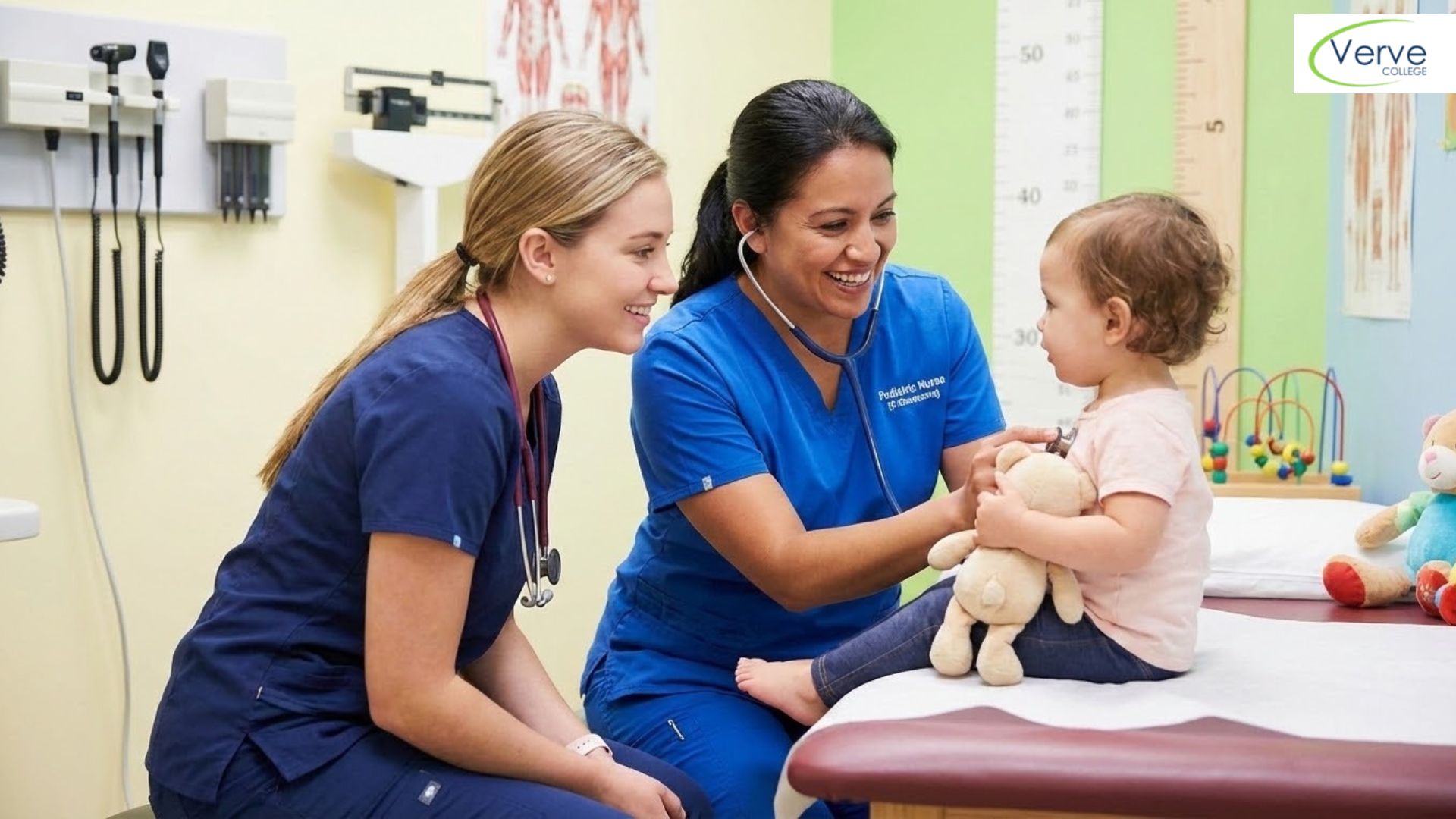
Essential Pediatric Nursing Skills Every Student Should Learn
Essential Pediatric Nursing Skills Every Student Should Learn
Healthcare systems around the world continue to place strong emphasis on pediatric care because children require specialized medical attention that differs from adult healthcare. According to pediatric health research, early and effective care during childhood can significantly influence long-term health outcomes, development, and disease prevention. Because of these factors, nurses who work with children must develop specific abilities that help them understand the unique physical and emotional needs of young patients.
For nursing students, learning Pediatric Nursing skills is an important step toward providing safe and compassionate care in hospitals, clinics, and community health settings. These skills include clinical observation, communication with children and families, accurate assessment of pediatric vital signs, and the ability to respond quickly to medical changes.
Many students begin developing these abilities while studying in programs offered by licensed practical nursing schools, where foundational knowledge and hands-on clinical practice are combined to prepare students for real healthcare environments. Understanding Essential Pediatric Nursing Skills Every Student Should Learn helps students recognize how education and practice shape their ability to care for children effectively.
Key Takeaways
- Pediatric care requires specialized nursing abilities because children’s bodies and emotional needs differ from adults.
- Pediatric nurses must learn to assess growth, development, and vital signs accurately.
- Communication with children and families is a core skill in pediatric nursing.
- Observational and critical thinking abilities help nurses identify early health concerns in young patients.
- Developing strong Pediatric Nursing skills improves patient safety and healthcare outcomes.
Understanding Growth and Development
One of the most important Pediatric Nursing skills is understanding how children grow and develop. Unlike adults, children experience rapid physical and psychological changes during infancy, childhood, and adolescence. Nurses must recognize normal developmental milestones so they can identify any delays or health concerns early.
For example, a toddler’s physical coordination, language development, and emotional behavior change quickly within a short period. Pediatric nurses observe these milestones during routine assessments and report unusual findings to the healthcare team.
Knowledge of development also helps nurses provide age-appropriate care. The way a nurse communicates with a toddler will be very different from how they explain procedures to a teenager. By understanding these developmental stages, nurses can ensure children receive care that supports both medical treatment and emotional comfort.
Accurate Assessment of Pediatric Vital Signs
Monitoring vital signs is a core nursing responsibility, but assessing children requires additional attention and precision. Heart rate, respiratory rate, and blood pressure vary significantly depending on a child’s age. For example, infants normally have faster heart rates than older children or adults.
Because of these differences, nurses must learn how to measure and interpret pediatric vital signs correctly. They must also recognize subtle changes that may indicate infection, dehydration, or respiratory problems.
During clinical training, students practice these assessments in supervised environments to strengthen their Pediatric Nursing skills. Careful observation, accurate documentation, and quick response to abnormal findings are essential for maintaining patient safety.
By mastering these assessments early, nursing students become better prepared to identify health risks in pediatric patients.
Communication with Children and Families
Communication is another essential component of pediatric nursing practice. Children often feel anxious or frightened in medical environments, especially when they do not understand what is happening around them. Nurses must learn how to explain procedures in simple and reassuring ways.
For younger children, communication may involve using comforting language, toys, or visual explanations. Older children and adolescents may require clear discussions about their treatment and recovery.
Equally important is communication with parents or caregivers. Families rely on nurses for updates about their child’s condition, treatment plans, and home care instructions. Strong communication builds trust and helps families feel more confident about their child’s care.
Students who complete structured education programs, including lpn training illinois, often practice these communication strategies during clinical rotations where they interact with both patients and families in real healthcare settings.
Observation and Early Detection of Health Problems
Children may not always be able to describe their symptoms clearly. Because of this, observation becomes one of the most valuable Pediatric Nursing skills a student can develop.
Pediatric nurses carefully watch for physical and behavioral changes such as unusual fatigue, irritability, breathing difficulties, or changes in appetite. These small signs may indicate underlying medical issues that require further evaluation.
For instance, a nurse might notice a child breathing faster than usual or appearing unusually quiet. These observations could signal respiratory distress, infection, or other medical concerns.
Early detection is important because prompt treatment often prevents complications. Through continuous monitoring and documentation, nurses help the healthcare team respond quickly to pediatric health issues.
Building Emotional Support and Trust
Providing emotional support is another key element of pediatric nursing. Children may experience fear, pain, or confusion when visiting hospitals or receiving medical treatment. Nurses play an important role in helping them feel safe and supported.
This skill involves patience, empathy, and the ability to create a comforting environment. Simple actions such as maintaining eye contact, speaking gently, or allowing parents to stay close during procedures can reduce anxiety for young patients.
Developing these supportive approaches strengthens Pediatric Nursing skills and improves the overall healthcare experience for children. When children feel comfortable, they are more cooperative during treatment, which helps medical procedures proceed more smoothly.
For nursing students, learning how to combine clinical knowledge with emotional care is an important step toward becoming a compassionate healthcare professional.
Conclusion
Developing strong Pediatric Nursing skills is essential for students who plan to work with children in healthcare settings. Pediatric care requires a combination of medical knowledge, careful observation, communication abilities, and emotional understanding.
Through classroom learning, clinical training, and supervised patient interactions, nursing students gradually learn how to assess pediatric health, recognize developmental changes, and support families during medical care. Educational pathways such as practical nursing programs in chicago provide the structured training that helps students gain confidence and competence in pediatric care.
Ultimately, Essential Pediatric Nursing Skills Every Student Should Learn Focus on ensuring that children receive safe, compassionate, and effective healthcare throughout every stage of development.
Get Your Nursing Career Training Readiness Score Now!
FAQs
1. Why do children require specialized nursing care?
Children have different physiological responses, emotional needs, and developmental stages compared to adults. Specialized nursing care ensures that treatments and communication methods are appropriate for their age and health condition.
2. What challenges do pediatric nurses commonly face?
Pediatric nurses may encounter challenges such as managing anxious patients, communicating with worried families, and responding quickly to rapidly changing health conditions in children.
3. Do pediatric nurses work only in hospitals?
No. Pediatric nurses may also work in schools, community health centers, pediatric clinics, rehabilitation facilities, and home healthcare environments.
Most Popular Blogs Posts

What Is Inflammation? A Simple Guide…
October 1, 2026 Read More
What Are Synovial Joints? Types and…
September 30, 2026 Read More
What Is a Nursing Compact License?…
September 30, 2026 Read More
Forensic Nurse Career Path: Education, Skills,…
September 29, 2026 Read More