-
Oak Brook
📍📞 630-705-99992625 Butterfield Rd. Suite 102E
Oak Brook, IL 60523📠 Fax: 630-705-1422✉️ inquiry@vervecollege.edu 🗺️ Open in Google Maps 🍎 Open in Apple Maps🕒Office HoursMon–Fri: 9:30 AM – 6:00 PM
Sat: 8:00 AM – 12:00 PM
Sun: Closed -
Chicago
📍📞 312-920-8822216 W. Jackson Blvd. Suite 900
Chicago, IL 60606📠 Fax: 630-705-1422✉️ inquiry@vervecollege.edu 🗺️ Open in Google Maps 🍎 Open in Apple Maps🕒Office HoursMon–Fri: 9:30 AM – 6:00 PM
Sat: 8:00 AM – 12:00 PM
Sun: Closed - Email:inquiry@vervecollege.edu
- Make a Payment
 Sign up
 Login
Login
- Home
- Programs
- Admission
- Resources
- ATI Entrance Exam Resources
- New E-Digital Library
- Refer a Friend
- School Newsletter
- Events
- Employers
- Job-Network
- Alpha Beta Kappa Candidates
- Verve College Library
- Graduation and Pinning Ceremony Photo Galleries
- Textbook Information
- Career Services
- Tutoring
- School Catalog
- FAQ
- Constitution Day Program
- Alumni
- Verve College Plans
- Financial Aid
- HEERF Reporting
- Satisfactory Academic Progress
- Apply For Financial Aid
- Net Price Calculator
- Return of Title IV Funds (R2T4)
- Financial Aid Office Code of Conduct
- Contact
- FAQs
- Verification Policy
- Vaccination Policy
- Student Right-to-Know Act
- Misrepresentation
- Information Security Program
- Academic Award Year
- Availability of Employee
- Cost of Attendance
- Health & Safety Exemption Requirement
- Students Rights and Responsibilities
- Leave of Absence
- Pell Formula
- Military Students
- Grants/ Scholarship Policy
- Contact Us
- Testimonials
- Blog
Is a Nursing Career Right For You?
Take The Free Quiz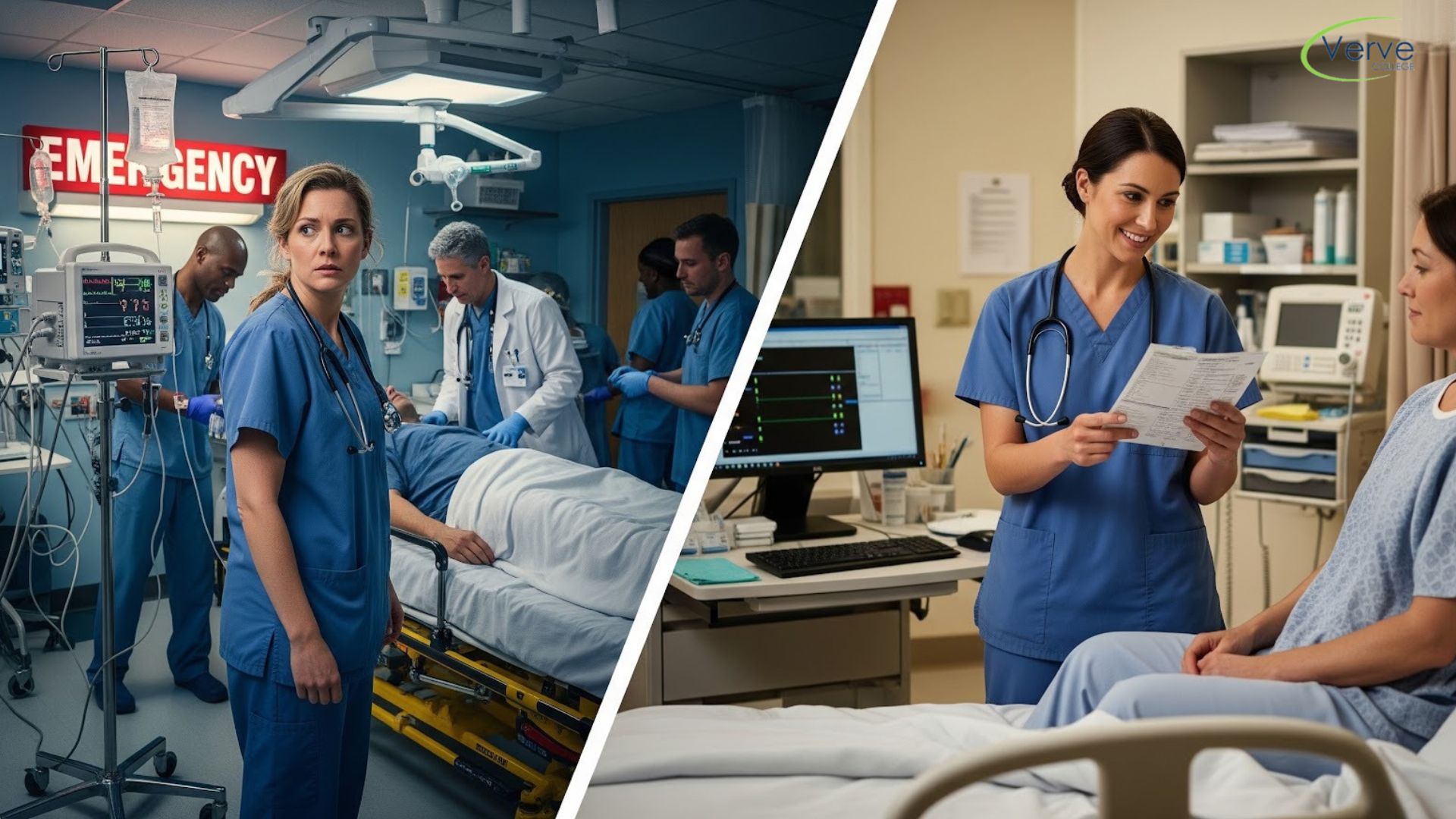
Emergency Room vs Medical-Surgical Floor: Where Do LPNs Fit?
Emergency Room vs Medical-Surgical Floor: Where Do LPNs Fit?
According to the U.S. Bureau of Labor Statistics, employment for licensed practical and vocational nurses is projected to grow steadily through the next decade, with thousands of openings each year due to retirements and rising healthcare needs. Hospitals remain one of the top employers of LPNs. As patient volumes increase in emergency departments and inpatient units, many students ask: Emergency Room vs Medical-Surgical Floor: Where Do LPNs Fit?
If you plan to become a licensed practical nurse, understanding these two hospital environments can help you choose the right career path and training focus.
Key Takeaways
- LPNs work in both emergency rooms and medical-surgical floors, but their responsibilities vary based on state laws and hospital policies.
- Emergency rooms are fast-paced and focus on urgent, life-saving care.
- Medical-surgical floors provide ongoing care for patients recovering from illness, surgery, or chronic conditions.
- Strong clinical knowledge, communication skills, and time management are essential in both settings.
- Your education and clinical training will influence where you feel most confident and prepared to work.
Emergency Room vs Medical-Surgical Floor: Where Do LPNs Fit?
When comparing the emergency room (ER) and the medical-surgical (med-surg) floor, the biggest difference is the type and speed of care provided.
Role of LPNs in the Emergency Room
The emergency room handles trauma cases, sudden illnesses, heart attacks, strokes, and accidents. In major hospitals, ER teams often include RNs, physicians, nurse practitioners, and support staff. LPNs may assist with:
- Monitoring vital signs
- Performing wound care
- Administering medications (depending on scope of practice)
- Preparing patients for procedures
- Supporting triage and patient flow
Because ER settings move quickly, LPNs must think clearly under pressure. They may not always take the lead in critical cases, but they play a supportive and essential role in stabilizing patients and keeping workflows organized.
Hospitals may limit some advanced tasks to RNs, especially in trauma centers. However, LPNs with strong clinical skills and emergency training can thrive in this environment.
Role of LPNs on the Medical-Surgical Floor
The medical-surgical floor is often considered the backbone of hospital care. Patients admitted here may be recovering from surgery, managing infections, or dealing with chronic illnesses like diabetes or heart disease.
LPNs on med-surg floors often have more consistent patient assignments. Their responsibilities typically include:
- Administering medications
- Monitoring patient progress
- Dressing changes and wound care
- Assisting with mobility and hygiene
- Documenting patient updates
- Communicating with families and healthcare teams
Compared to the ER, med-surg care is less chaotic but still demanding. LPNs build closer relationships with patients because they provide ongoing care over several days.
This setting helps many new graduates strengthen foundational skills before moving into specialty units.
Skills That Help LPNs Succeed in Both Settings
Whether working in the ER or med-surg, LPNs must master core clinical knowledge. A strong understanding of body systems, vital signs, and medication safety is critical.
Many students strengthen their foundation by enrolling in an A&P prep course Illinois before entering clinical training. Anatomy and physiology knowledge improves confidence, especially when caring for complex patients in hospital environments.
In the ER, quick assessment skills and emotional control are essential. On the med-surg floor, organization and long-term care planning matter more.
Both environments require:
- Clear communication
- Accurate documentation
- Compassion for patients
- Team collaboration
- Infection control knowledge
Your personality can also guide your choice. If you enjoy fast decisions and high energy, the ER may suit you. If you prefer structured care and patient continuity, med-surg could be a better fit.
Work Environment Differences
Pace and Stress Level
The ER is unpredictable. Some shifts may be calm, while others are filled with emergencies. Stress levels can rise quickly.
The med-surg floor has steady patient loads. While busy, it follows a more routine schedule with medication passes and rounds.
Patient Interaction
In the ER, patient interactions are short and focused on stabilization.
On the med-surg floor, LPNs often form stronger patient connections because they provide care over several days.
Career Growth
Med-surg experience builds strong general nursing skills. Many nurses consider it a foundation for long-term career growth.
ER experience develops rapid assessment and crisis management abilities.
Both paths offer valuable learning opportunities depending on your career goals.
Education and Preparation Matter
Hospitals prefer LPNs who have strong clinical preparation and hands-on experience. Programs that include hospital-based clinical rotations give students exposure to both emergency and med-surg environments.
If you are researching Emergency Room vs Medical-Surgical Floor: Where Do LPNs Fit?, remember that your training quality directly affects your readiness.
Solid preparation in anatomy, medication safety, and patient assessment increases your confidence. Many students begin by searching for anatomy and physiology classes near me to strengthen their science foundation before entering LPN programs.
Conclusion
Choosing between these two hospital settings depends on your personality, skills, and long-term goals. The emergency room offers high-energy, rapid-response care. The medical-surgical floor provides structured, continuous patient management.
When asking Emergency Room vs Medical-Surgical Floor: Where Do LPNs Fit?, the answer is clear: LPNs are valuable in both settings. With proper training, strong clinical knowledge, and hands-on experience, LPNs contribute significantly to patient safety and recovery in hospitals.
By building a solid educational foundation and gaining real-world clinical exposure, you can confidently decide which path aligns with your strengths and career vision.
FAQs
1. Can LPNs transfer from med-surg to the emergency room later in their career?
Yes. Many LPNs start in med-surg to gain experience and later move into ER roles after developing stronger assessment and time-management skills. Hospitals may require additional training or certifications.
2. Do emergency rooms pay LPNs more than med-surg floors?
Pay differences depend on hospital policies, shift differentials, and geographic location. Night and weekend shifts may offer higher compensation in either department.
3. Is hospital experience required before working in an ER?
Some hospitals prefer prior inpatient experience, especially for high-volume emergency departments. Smaller facilities may hire new graduates if they demonstrate strong clinical readiness.
Most Popular Blogs Posts

What Is Capillary Refill? A Guide…
October 13, 2026 Read More
How to Evaluate an LPN Program’s…
October 13, 2026 Read More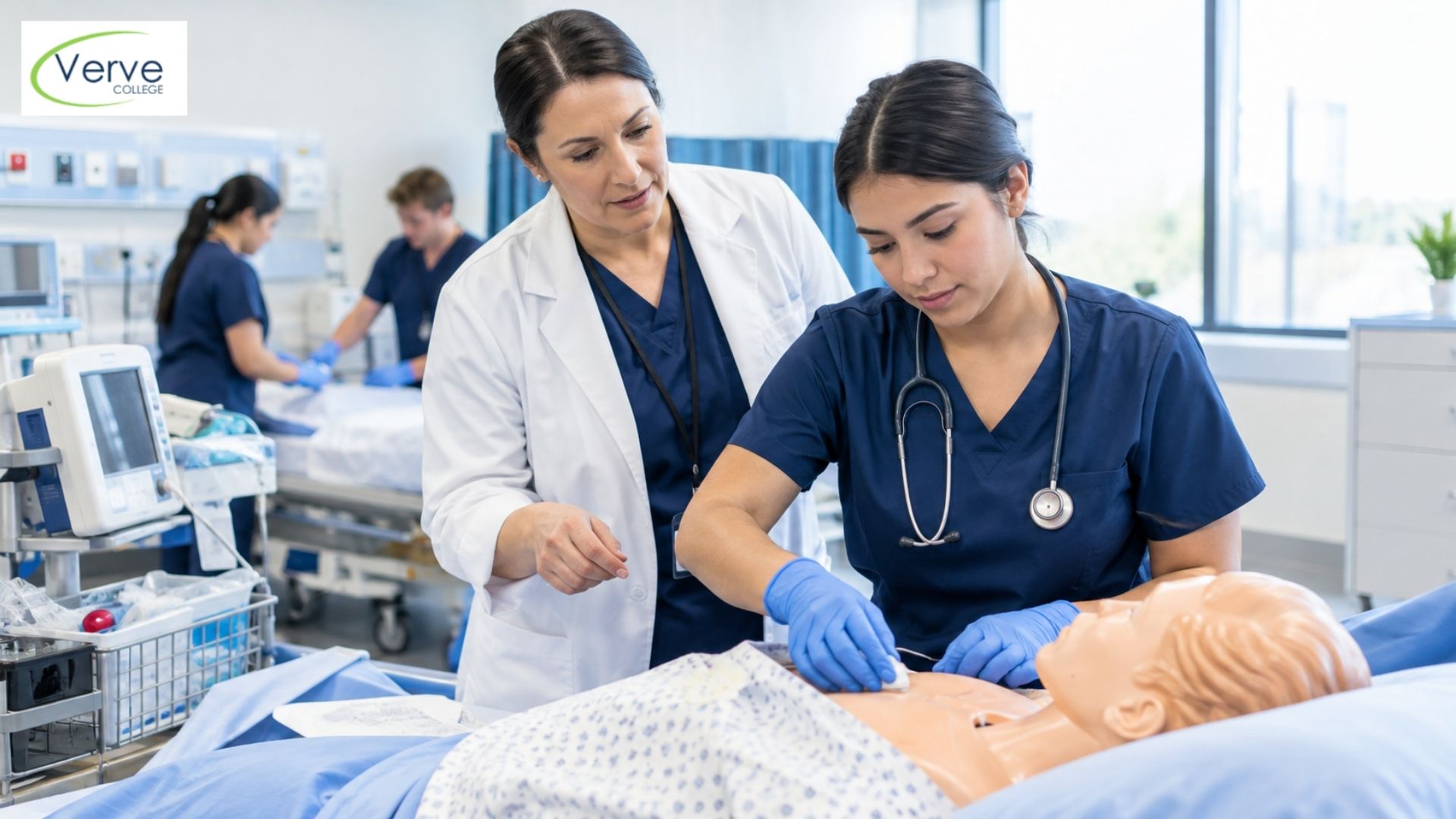
7 Benefits of Hands-On Nursing Education…
October 12, 2026 Read More
What Is Tissue Perfusion? A Simple…
October 12, 2026 Read More