Sign up
 Login
Login
Is a Nursing Career Right For You?
Take The Free Quiz
How CPT Codes Work in Healthcare: A Simple Breakdown
How CPT Codes Work in Healthcare: A Simple Breakdown
Understanding medical billing is important for anyone entering the healthcare field. Whether you’re preparing through an A&P prep course Illinois or learning about clinical workflows, knowing how CPT codes work in healthcare helps you understand what happens behind the scenes each time a patient receives care.
CPT codes, also known as Current Procedural Terminology codes, are used by doctors, nurses, hospitals, and insurance companies to describe medical services in a standard, universal way. This blog breaks down what they are, why they matter, and how they keep the healthcare system running smoothly.
Key Takeaways
- CPT codes describe the medical services a patient receives.
- They help with billing, insurance claims, and accurate medical records.
- There are three main categories of CPT codes: standard procedures, performance measures, and emerging technology.
- Understanding CPT codes helps healthcare workers avoid billing mistakes and improve patient care.
How CPT Codes Work in Healthcare?
CPT codes are five-digit numbers assigned to every medical service a provider performs. From simple exams to complex surgeries, every action has a code that explains what was done.
These codes help healthcare providers and insurance companies “speak the same language,” preventing confusion and ensuring correct payments.
For example:
- A routine checkup has a CPT code.
- A blood test has a CPT code.
- Stitches, X-rays, and injections also have their own CPT codes.
Without this level of structure, medical billing would be messy and inconsistent.
Why CPT Codes Matter (Expanded)
1. They Ensure Accurate Billing
Every medical service has its own CPT code, whether it’s a basic checkup, blood test, injection, or procedure. These codes tell insurance companies exactly what the provider did. When the correct CPT code is used, the bill matches the service accurately. This prevents underbilling (healthcare facility losing money) and overbilling (patient being charged too much).
Accurate billing also reduces the need for appeals or corrections later, making the financial process smoother for everyone involved.
2. They Speed Up Insurance Processing
Insurance companies depend on CPT codes to review claims quickly. When a claim has clear, correct codes, it tells the insurance reviewer exactly what they need to know without extra explanation. This leads to faster approval, faster payment to the healthcare provider, and fewer delays for patients.
Incorrect or missing CPT codes often lead to claim rejections, which slows down the entire process and increases paperwork. That’s why accurate CPT coding is essential for efficiency.
3. They Improve Medical Records
CPT codes help maintain detailed and consistent patient records. Each code represents a service, so when coded correctly, a patient’s medical history becomes easier to understand. Clear records allow future healthcare providers to see what treatments were done, when they happened, and why.
This helps prevent duplicate tests, supports proper follow-up care, and improves safety by giving every provider access to accurate information. Good records also help hospitals track patterns and improve care quality.
4. They Create Nationwide Standardization
CPT codes are used all across the United States — in hospitals, clinics, urgent care centers, labs, and even telehealth platforms.
No matter where a patient goes, the codes mean the same thing everywhere. This universal system reduces confusion between different providers and insurance companies. Because the codes are standard nationwide, a patient changing doctors or moving to another state still receives consistent billing and service documentation.
The Three Main Categories of CPT Codes
Category I — Common Medical Procedures
These codes represent everyday services like:
- Lab tests
- Physical exams
- Imaging (X-rays, CT scans)
- Minor surgeries
These make up most of the coding work in healthcare.
Category II — Quality Tracking Codes
These optional codes track performance measures such as counseling, blood pressure checks, or medication tracking.
They are not used for billing.
Category III — New and Advanced Procedures
These temporary codes describe modern or experimental treatments, helping the AMA monitor new healthcare technologies.
CPT Code Structure: Understanding the Numbers
CPT codes are always five digits, and different number ranges represent different types of medical services. Here’s a simple breakdown in easy words:
- 10000–19999: Surgery
These codes cover surgical procedures. They can be minor procedures like stitches or more complex surgeries. - 70000–79999: Radiology
This range includes imaging services such as X-rays, CT scans, ultrasounds, and MRIs. - 80000–89999: Laboratory and Pathology
These codes are used for lab tests — for example, blood work, urine tests, biopsies, and other diagnostic studies. - 90000–99999: Evaluation and Management (E/M)
These are codes for doctor visits, consultations, follow-up visits, and other face-to-face evaluations.
Each range helps healthcare workers quickly understand what type of service was provided. With practice, recognizing these number groups becomes easier and helps speed up documentation and billing.

How CPT Coding Works: Step-by-Step
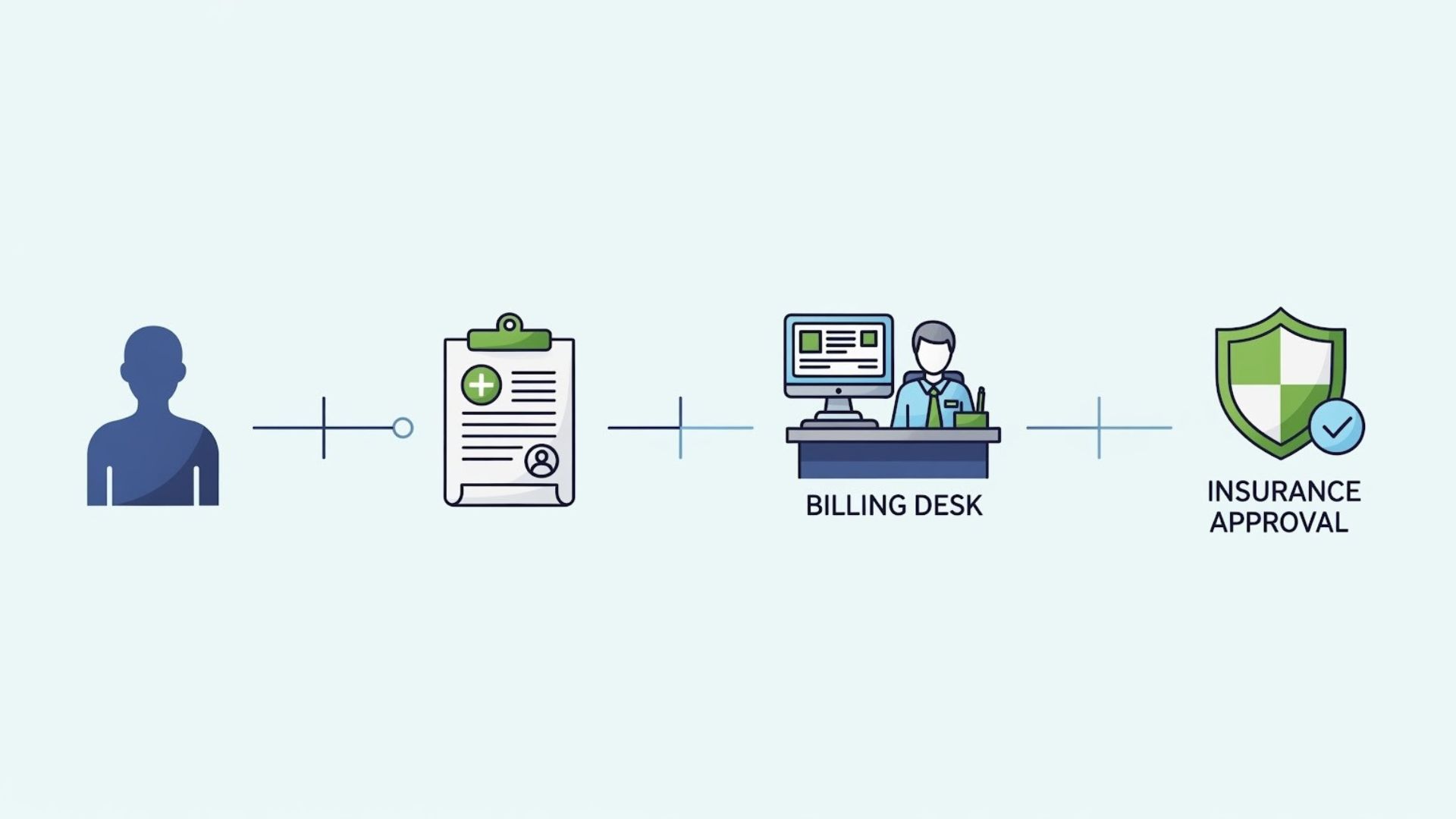
- Patient receives a service
- Provider documents everything
- Coder reads the notes and picks the correct CPT code
- The code is sent to insurance with the claim
- Insurance reviews the code and pays
- Patient receives bill or explanation of benefits
This system only works well when documentation is complete and codes are chosen correctly.
Common Problems with CPT Coding
Even though CPT codes bring clarity, challenges are common:
- Incorrect coding → claim denial
- Incomplete documentation → confusion and billing delays
- Using outdated codes → rejected claims
- Miscommunication between clinical and billing teams
Training and accuracy are essential. Healthcare professionals learn these skills early through their education and clinical experiences.
Why Students Should Learn CPT Codes Early
Many roles — nursing, clinical assisting, billing specialist, medical office administration — require a strong understanding of coding basics.
Learning how CPT codes work in healthcare helps students:
- Understand patient documentation
- Communicate better with billing teams
- Support accurate insurance processing
- Reduce errors during clinical charting
This knowledge becomes even more important during clinical rotations and advanced coursework.
Conclusion
Understanding how CPT codes work in healthcare gives you a clearer picture of the medical system. These codes keep billing accurate, insurance claims smooth, and patient records reliable. Whether you’re studying in an A&P class or preparing for a future role in healthcare, learning CPT coding basics now will help you succeed later. A strong foundation in coding supports safer care, faster communication, and better outcomes for both providers and patients.
Want to Make a Career in Nursing? Get More Information About Our Courses!
FAQs
1. Who updates CPT codes each year?
The American Medical Association (AMA) updates CPT codes annually to keep them accurate and current.
2. What’s the difference between CPT and ICD codes?
CPT codes describe procedures done to a patient.
ICD codes describe diagnoses or reasons why the patient was treated.
3. Can wrong CPT codes delay insurance payments?
Yes. Incorrect coding is one of the most common reasons claims are denied or delayed.
Most Popular Blogs Posts

What Is Capillary Refill? A Guide…
October 13, 2026 Read More
How to Evaluate an LPN Program’s…
October 13, 2026 Read More
7 Benefits of Hands-On Nursing Education…
October 12, 2026 Read More
What Is Tissue Perfusion? A Simple…
October 12, 2026 Read More