- Oak Brook:(630) 705-9999
- Chicago:(312) 920-8822
- Email:inquiry@vervecollege.edu
- Make a Payment
 Sign up
 Login
Login
- Home
- Programs
- Admission
- Resources
- ATI Entrance Exam Resources
- New E-Digital Library
- Refer a Friend
- School Newsletter
- Events
- Employers
- Job-Network
- Alpha Beta Kappa Candidates
- Verve College Library
- Graduation and Pinning Ceremony Photo Galleries
- Textbook Information
- Career Services
- Tutoring
- School Catalog
- FAQ
- Constitution Day Program
- Alumni
- Verve College Plans
- Financial Aid
- HEERF Reporting
- Satisfactory Academic Progress
- Apply For Financial Aid
- Net Price Calculator
- Return of Title IV Funds (R2T4)
- Financial Aid Office Code of Conduct
- Contact
- FAQs
- Verification Policy
- Vaccination Policy
- Student Right-to-Know Act
- Misrepresentation
- Information Security Program
- Academic Award Year
- Availability of Employee
- Cost of Attendance
- Health & Safety Exemption Requirement
- Students Rights and Responsibilities
- Leave of Absence
- Pell Formula
- Military Students
- Grants/ Scholarship Policy
- Contact Us
- Testimonials
- Blog
Is a Nursing Career Right For You?
Take The Free Quiz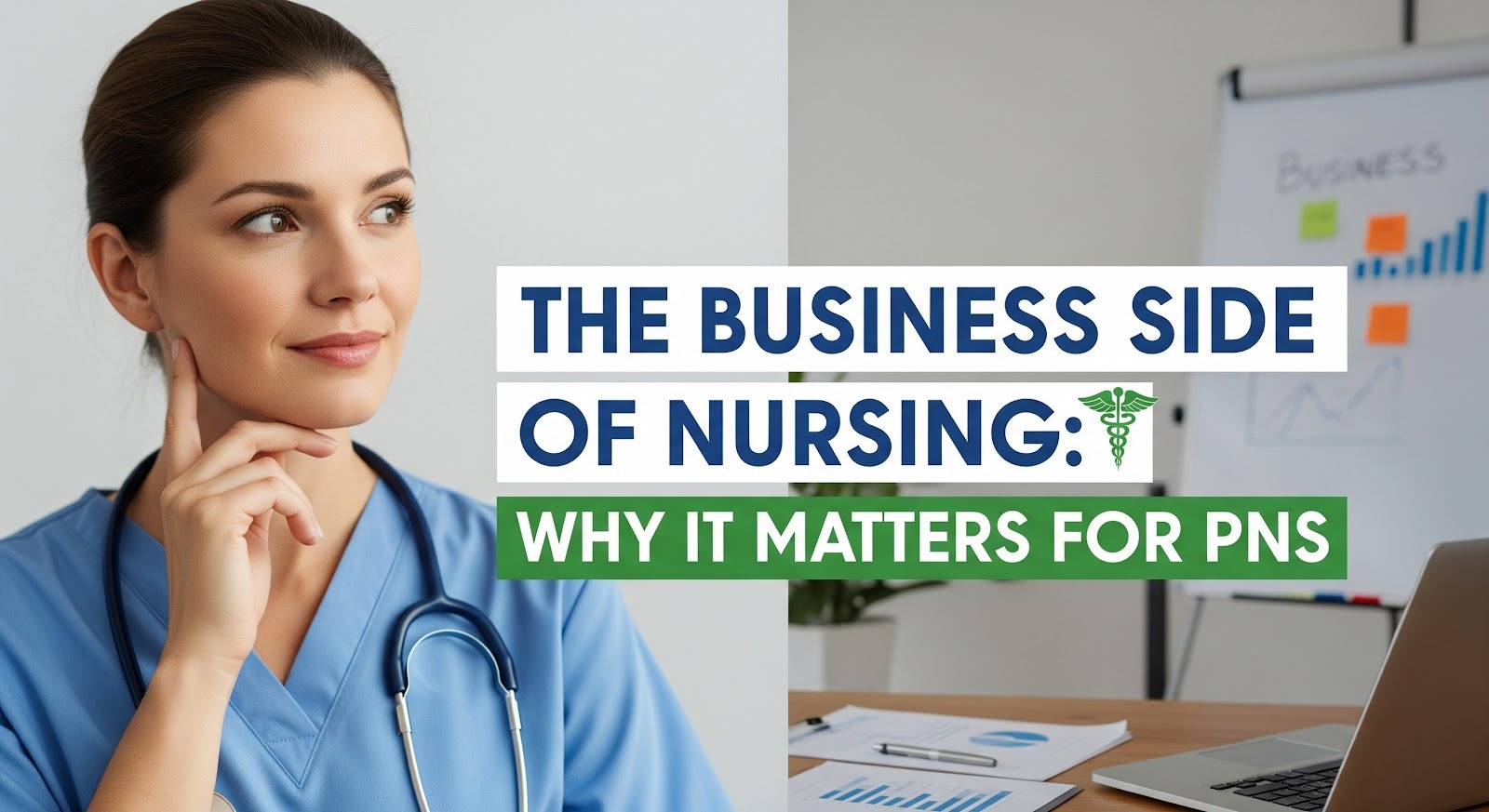
The Business Side of Nursing: Why It Matters for PNs
The Business Side of Nursing: Why It Matters for PNs
Many people think of nursing as only patient care, but understanding the business side of nursing is just as important. Practical Nurses (PNs) work in a healthcare system that combines compassion with organization, budgeting, and teamwork. Knowing how the business aspects work helps PNs deliver better care and support their workplaces more effectively. Students pursuing nursing degrees in Illinois often learn how business and medical care are connected, helping them prepare for real-world nursing environments.
Key Takeaways
- The business side of nursing teaches PNs how healthcare facilities run efficiently.
- Budgeting, scheduling, and teamwork skills are as important as clinical care.
- Understanding healthcare policies and resource management improves patient outcomes.
- PNs who learn business basics can grow into leadership or management roles.
Why Business Side of Nursing Matters?
In every hospital, clinic, or nursing home, daily operations depend on more than patient care. Nurses are part of a larger system that must manage resources, costs, and time effectively. When PNs understand how budgets, supply orders, and staff schedules work, they can make smarter decisions and provide better care.
For example, being aware of supply usage helps prevent shortages, while good time management ensures that every patient receives attention without rushing. This balance between compassion and organization makes nursing both caring and efficient.
How PNs Contribute to Healthcare Operations?
PNs may not handle financial reports directly, but they play a big role in keeping healthcare services running smoothly. They help maintain accurate records, use equipment wisely, and follow documentation standards. This helps managers make better financial and staffing decisions.
Students enrolled in online hybrid LPN programs often study healthcare operations, learning how small business skills support the overall healthcare system. These lessons teach nurses how to think practically and contribute to a well-organized workplace.
Developing Leadership and Communication Skills
Strong communication and teamwork are also part of the business side of nursing. Nurses work closely with doctors, patients, and administrators. Being able to share information clearly and professionally helps avoid mistakes and builds trust.
Many nurses who start as PNs use these skills to move into supervisory or administrative positions. Understanding basic business practices such as scheduling, reporting, and budgeting helps them grow into leadership roles and improve workplace efficiency.
Balancing Care and Costs
Every healthcare facility must balance patient care with financial responsibility. This means providing high-quality care while managing resources wisely. PNs who understand this balance can help improve both patient satisfaction and workplace efficiency.
Students exploring hybrid LPN programs near me often find that their curriculum includes lessons on how healthcare organizations make decisions, manage teams, and track performance. This knowledge helps nurses see the bigger picture behind the care they provide.
Conclusion
The business side of nursing is what keeps medical care systems running smoothly. For Practical Nurses, understanding how management, budgeting, and teamwork fit into patient care builds confidence and opens doors to career growth. When nurses understand both the caring and operational sides of their work, they can make a bigger difference in patients’ lives.
By learning how medical facilities function behind the scenes, PNs become more than caregivers, they become valuable team members who help improve the entire system. The business side of nursing truly shapes a nurse’s success, from the classroom to the clinic.
FAQs
- Do PNs need to learn about the business side of nursing?
Yes. Even though PNs focus on patient care, understanding management, scheduling, and budgeting helps them work more effectively in healthcare settings. - Can business knowledge help nurses advance their careers?
Absolutely. Nurses with strong organizational and leadership skills are more likely to move into supervisory or administrative roles. - How can nursing students learn about healthcare operations?
Many nursing programs include courses on healthcare management, teamwork, and ethics to help students understand both patient care and the business side of the profession.
Most Popular Blogs Posts
What Is Forensic Nursing? Roles, Training,…
September 3, 2026 Read More
Mitosis vs Meiosis: Key Differences Nursing…
September 2, 2026 Read More
How Long Does an LPN Program…
September 2, 2026 Read More
What Are Electrocardiogram Leads?
September 1, 2026 Read More