Sign up
 Login
Login
Is a Nursing Career Right For You?
Take The Free Quiz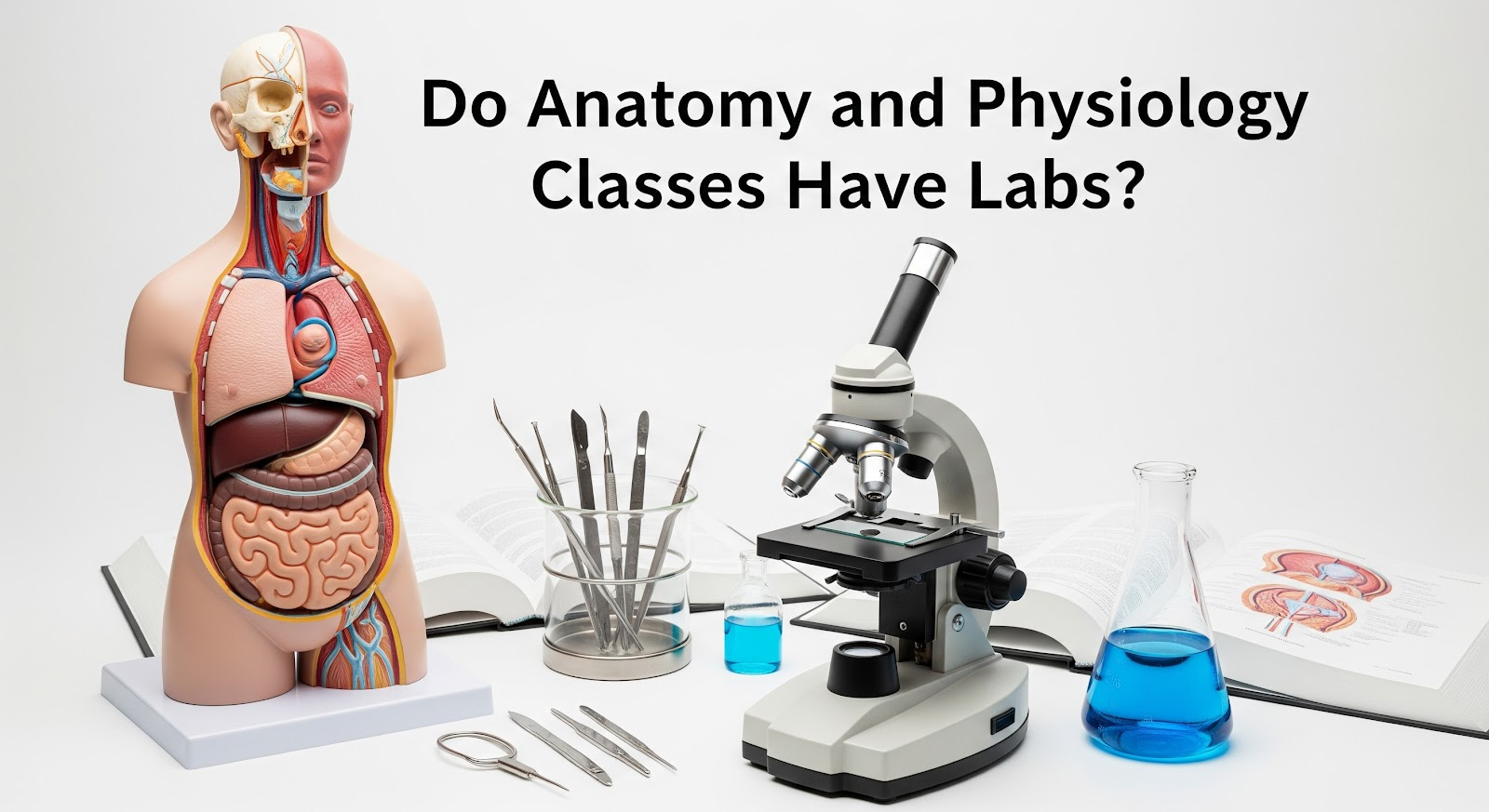
Do Anatomy and Physiology Classes Have Labs?
Do Anatomy and Physiology Classes Have Labs?
If you’re considering a career in nursing or health sciences, understanding the practical 1 anatomy and physiology is essential. Labs are a core component of most programs, giving students the chance to see and interact with human body structures firsthand. For anyone preparing for a clinical career, knowing what to expect in an anatomy and physiology lab can help you succeed. Programs at best nursing colleges in Illinois often emphasize these hands-on experiences to bridge the gap between theory and practice.
Key Takeaways
- Labs provide hands-on experience to understand the human body.
- Lab manuals guide students through safe and structured activities.
- Practical exams assess both knowledge and applied skills.
- Choosing programs with lab components strengthens readiness for clinical work.
Why Anatomy and Physiology Labs Are Important?
An anatomy and physiology lab gives students the chance to observe the human body directly. Activities like examining tissue samples, using models, and studying organ systems make the concepts learned in lectures tangible. Labs are designed to build critical skills for future clinical settings, helping students visualize and understand the body in ways that theory alone cannot.
Each lab session is typically guided by an anatomy and physiology lab manual, which outlines experiments, safety instructions, and detailed procedures. This structured approach ensures students can perform exercises safely while gaining practical knowledge. From identifying skeletal structures to monitoring physiological processes, these labs encourage active learning and skill development.
What Happens During Lab Sessions?
During an anatomy and physiology course with labs, students can expect a variety of hands-on experiences:
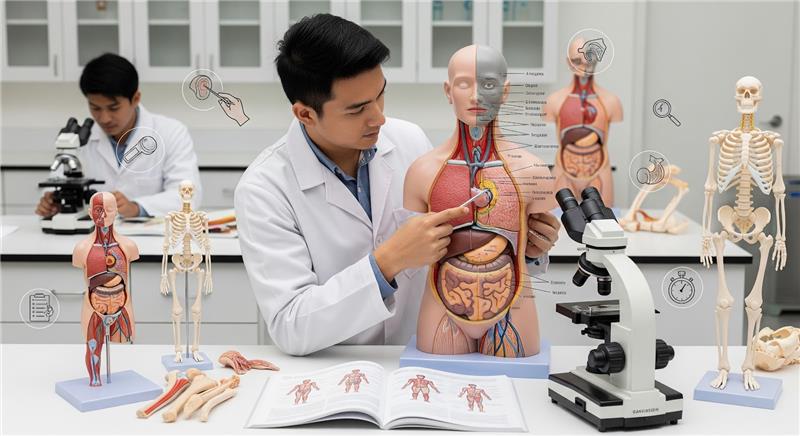
- Dissection and Observation: Examining models or cadavers to identify muscles, bones, and organs.
- Physiological Experiments: Measuring heart rate, blood pressure, reflexes, or respiratory function.
- Data Analysis: Recording and interpreting results to understand body systems.
- Practical Assessments: Completing a lab practical anatomy and physiology, which evaluates applied knowledge of human anatomy.
Early in the course, many programs require a lab practical 1 anatomy and physiology to test foundational skills. These timed practicals often include stations covering different systems, requiring students to demonstrate both identification and functional understanding.
How Labs Support Clinical Readiness?
Lab experiences help students transition smoothly into clinical roles. By practicing techniques and identifying structures in a controlled environment, students develop confidence and accuracy. Following a lab manual ensures that learning is consistent and safe, which is especially important when working with human specimens or biological models.
Hands-on learning also reinforces lecture content. Students who actively participate in labs often perform better in both theoretical exams and clinical assessments. The combination of lab practice and practical exams equips future nurses with essential skills for patient care.
Choosing the Right Program
When selecting a nursing program, consider those that emphasize lab work. A&P prep course Illinois provide structured lab components, combining lectures with hands-on exercises and practical assessments. A program with comprehensive lab experiences ensures you are better prepared for exams, clinical rotations, and your eventual nursing career.
Conclusion
Anatomy and physiology labs are a crucial part of nursing education. They offer students hands-on learning, reinforce theoretical knowledge, and develop essential clinical skills. Whether it’s following an anatomy of a lab manual, participating in lab practical anatomy and physiology, or taking your first lab practical 1 anatomy and physiology, these experiences prepare you for real-world nursing challenges.
Choosing programs with strong lab components, ensures you gain both knowledge and practical competence needed for a successful nursing career.
Most Popular Blogs Posts
Travel Nursing for LPNs: How Travel…
September 8, 2026 Read More
How Students Are Learning With Artificial…
September 8, 2026 Read More
What Is Nursing Informatics? How Technology…
September 7, 2026 Read More
Nursing Shortage Explained: Why Healthcare Needs…
September 7, 2026 Read More