- Oak Brook:(630) 705-9999
- Chicago:(312) 920-8822
- Email:inquiry@vervecollege.edu
- Make a Payment
 Sign up
 Login
Login
- Home
- Programs
- Admission
- Resources
- ATI Entrance Exam Resources
- New E-Digital Library
- Refer a Friend
- School Newsletter
- Events
- Employers
- Job-Network
- Alpha Beta Kappa Candidates
- Verve College Library
- Graduation and Pinning Ceremony Photo Galleries
- Textbook Information
- Career Services
- Tutoring
- School Catalog
- FAQ
- Constitution Day Program
- Alumni
- Verve College Plans
- Financial Aid
- HEERF Reporting
- Satisfactory Academic Progress
- Apply For Financial Aid
- Net Price Calculator
- Return of Title IV Funds (R2T4)
- Financial Aid Office Code of Conduct
- Contact
- FAQs
- Verification Policy
- Vaccination Policy
- Student Right-to-Know Act
- Misrepresentation
- Information Security Program
- Academic Award Year
- Availability of Employee
- Cost of Attendance
- Health & Safety Exemption Requirement
- Students Rights and Responsibilities
- Leave of Absence
- Pell Formula
- Military Students
- Grants/ Scholarship Policy
- Contact Us
- Testimonials
- Blog
Is a Nursing Career Right For You?
Take The Free Quiz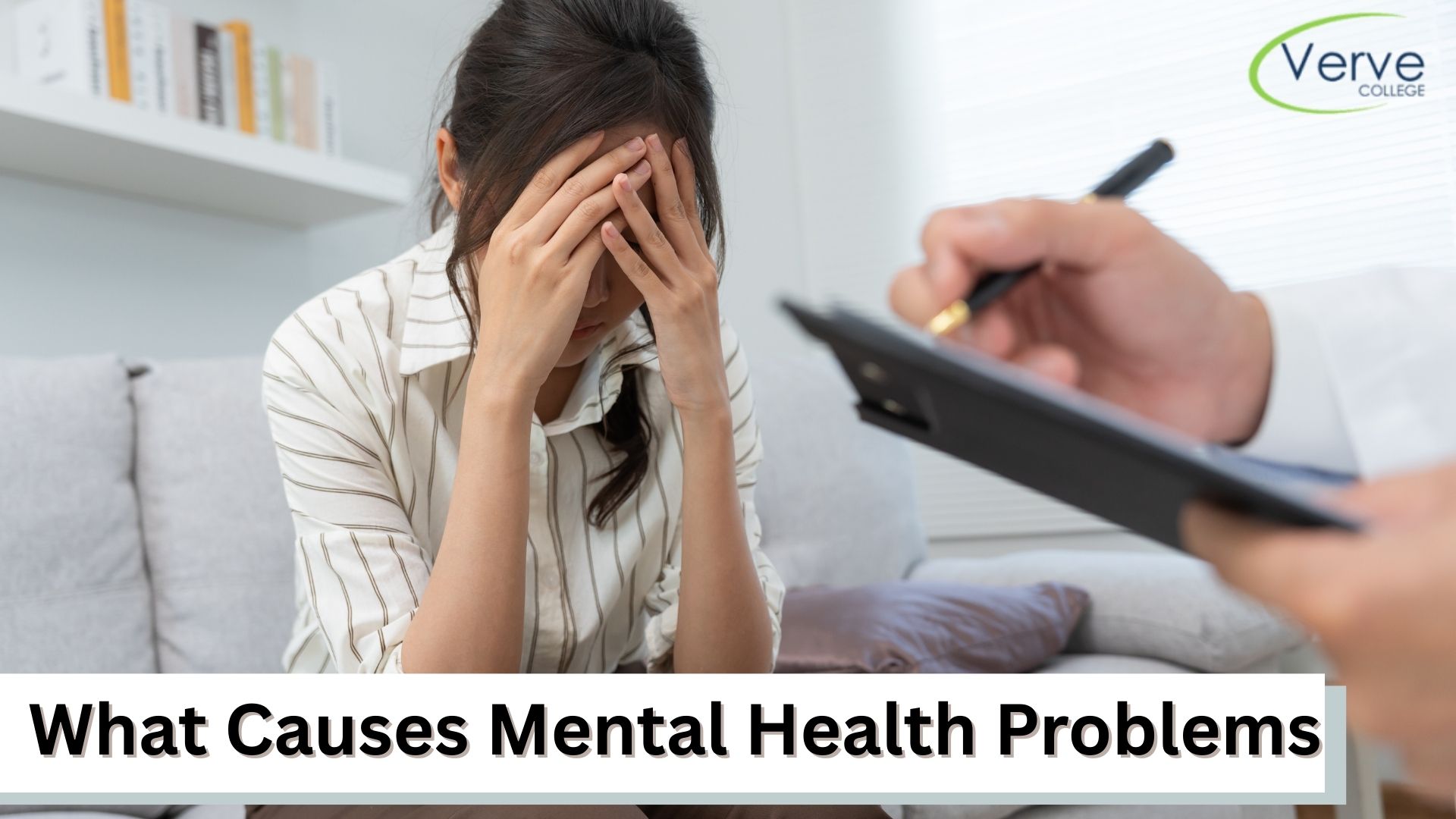
Causes of Mental Health Problems: Chicago Nursing Guide
Causes of Mental Health Problems: Chicago Nursing Guide
Nearly 1 in 5 adults in the U.S. lives with a mental health condition, and Chicago is no exception. The city’s fast-paced lifestyle, economic inequality, and diverse neighborhoods add unique stress that affects everyday well-being.
From a nursing point of view, it’s important to ask what causes mental health problems and how we can respond with care. This guide takes a patient-centered approach, much like in anatomy and physiology classes, to explain key causes and support both families and nurses.
Major Causes of Mental Health Problems Nurses See in Chicago
When we look at what causes mental health problems, nurses in Chicago often see a mix of biological, environmental, and social factors. Mental health is never shaped by one single reason. Instead, it develops from many influences that affect people differently. By understanding these, nurses can better guide patients and families toward care and support.
Biological Factors
Biology plays a large role in mental health. Genetics can increase the risk of conditions like depression, bipolar disorder, or anxiety. Chemical imbalances in the brain may affect how people feel and think. Chronic illnesses such as diabetes or heart disease can also weigh heavily on mental well-being.
Nurses in Chicago hospitals and community clinics often meet patients struggling with both physical and mental health challenges. These cases show how biology can be one of the strongest factors leading to mental health problems.
Environmental Stressors
The city itself adds pressure. Chicago’s urban setting comes with constant noise, crowded spaces, and exposure to crime in some neighborhoods. Financial struggles add more stress, especially in areas with high unemployment or unstable housing.
Nurses often see how these daily stressors build up and affect mood, sleep, and coping skills. Mental health is just as important as physical health.Patients may not realize how much their surroundings contribute to their mental health, but nurses often help connect those dots.
Psychological and Social Triggers
Life experiences shape mental health in powerful ways. Trauma, grief, or ongoing conflicts in relationships can trigger depression or anxiety. Social isolation is another serious concern, especially among older adults and immigrant communities in Chicago.
Cultural stigma also plays a part. In some neighborhoods, people may avoid seeking help because mental illness is not openly discussed. Nurses work hard to break that stigma by offering compassionate and practical support.
Lifestyle and Substance Use
Lifestyle choices can influence what causes mental health problems. Alcohol and drug misuse are major concerns in Chicago and are strongly linked to anxiety, depression, and other conditions.
Many patients struggle to cope with stress by turning to substances, which often makes their mental health worse. Nurses play a key role in screening for substance use and guiding patients toward healthier ways to cope. Intervention at the right time can change lives.
Technology and Modern Pressures
Younger Chicagoans face unique challenges from technology. Heavy screen time, online bullying, and the pressure of social media can cause stress, loneliness, and anxiety. Nurses often remind patients to balance digital life with real-life activities. Just like in an A&P Class, where balance in the body is key, finding balance in daily habits is critical for mental health.
By understanding these causes, nurses in Chicago help patients face their struggles with clarity and care.
Want to Make a Career in Nursing? Get More Information About Our Courses!
Conclusion
The main causes of mental health issues may differ for each person, but early recognition and nursing support can make recovery possible. Families in Chicago should seek help without fear of stigma. With trusted clinics, local resources, and skilled nurses trained through LPN courses, patients can find the guidance they need for better mental health.
Most Popular Blogs Posts

Cognitive Development: How Thinking Changes Across…
September 28, 2026 Read More
Virtual Reality in Nursing : How…
September 28, 2026 Read More
High-Fidelity Simulation in Nursing: How Realistic…
September 24, 2026 Read More
How to Compare Nursing Programs Before…
September 23, 2026 Read More